
Black Torch
Flowers and fruits every month of the year, and actually grows at a reasonable pace
Erithalis fruticosa
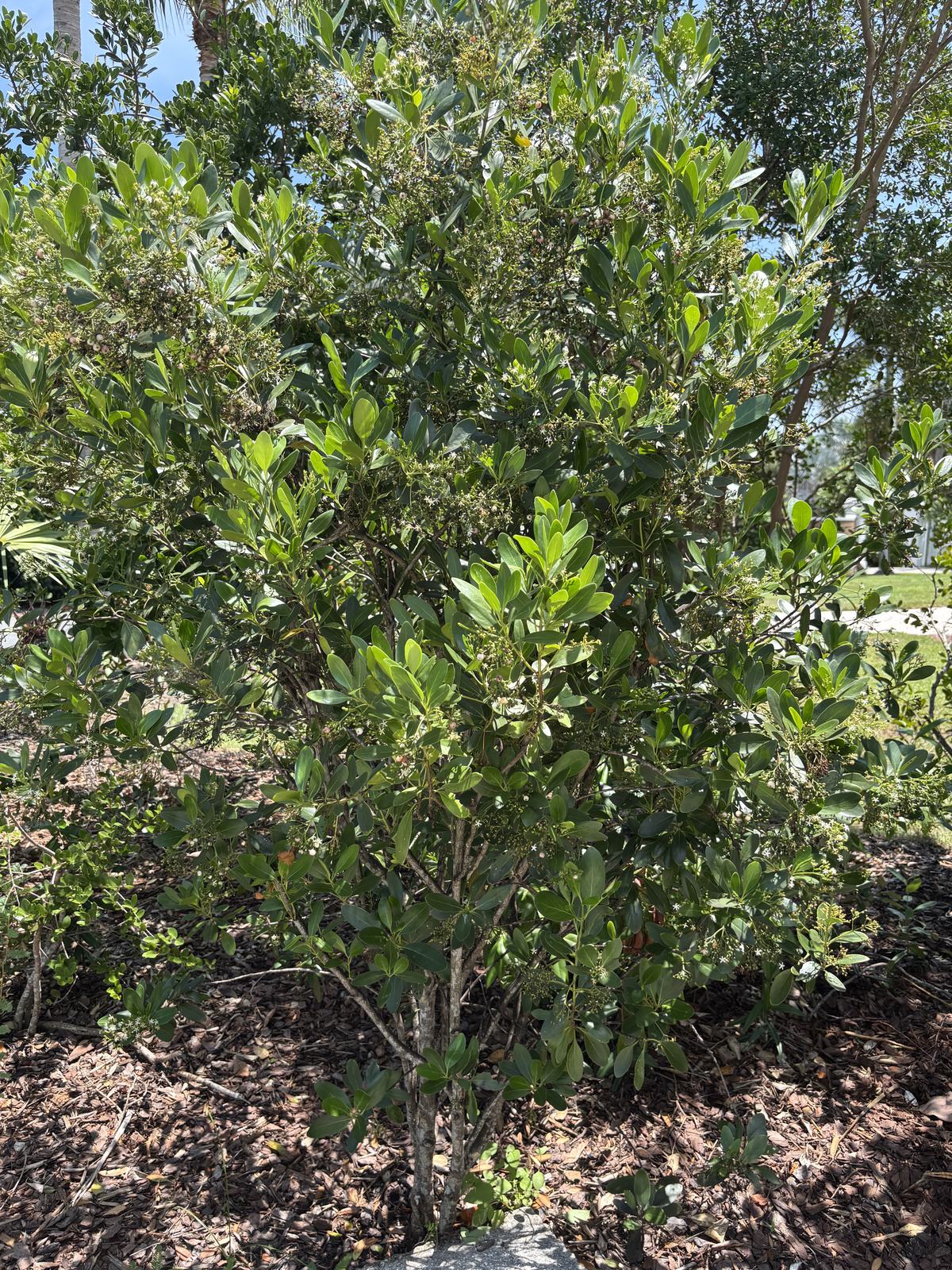
Photo: Longleaf Design
Why it works here
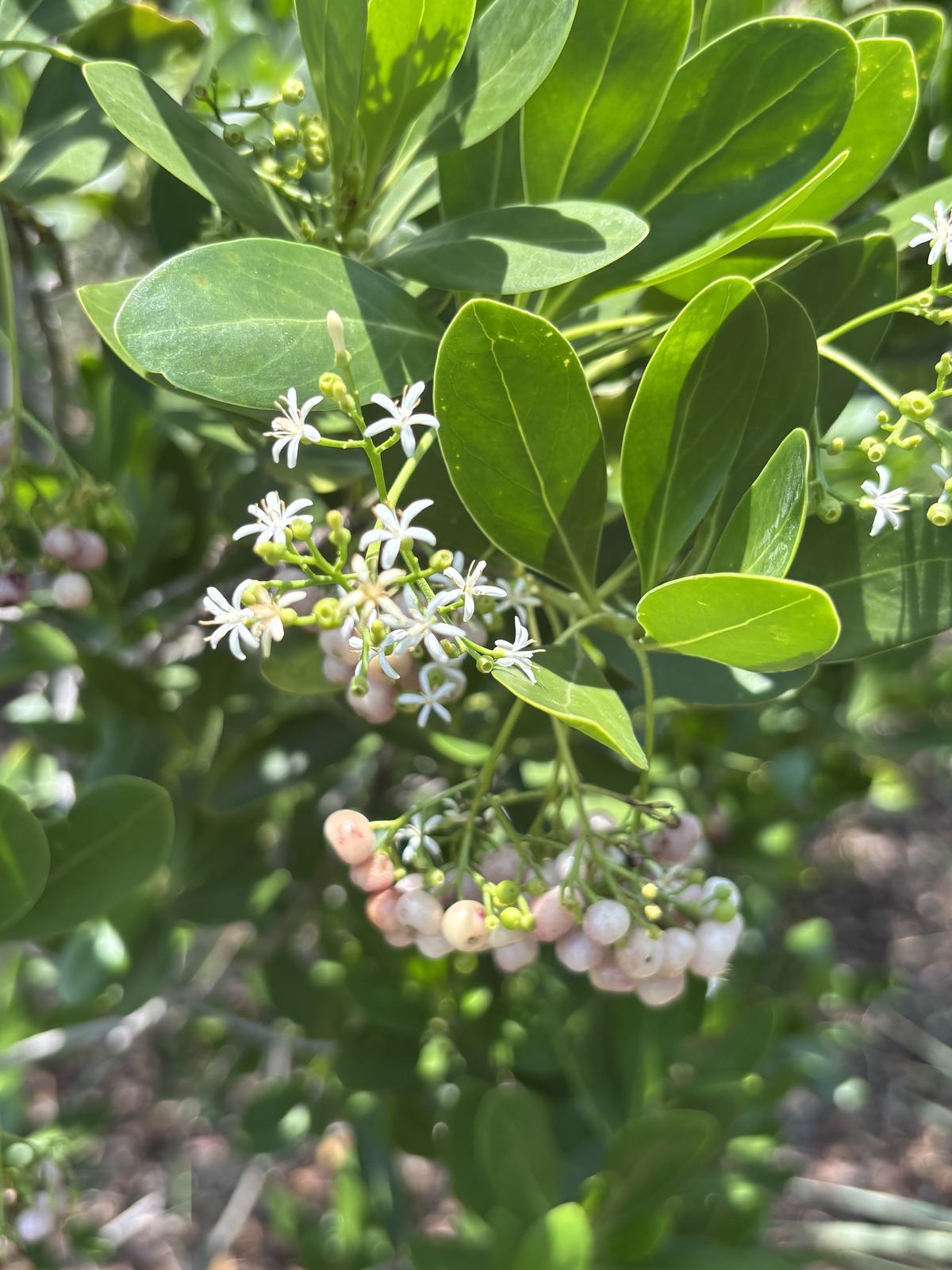
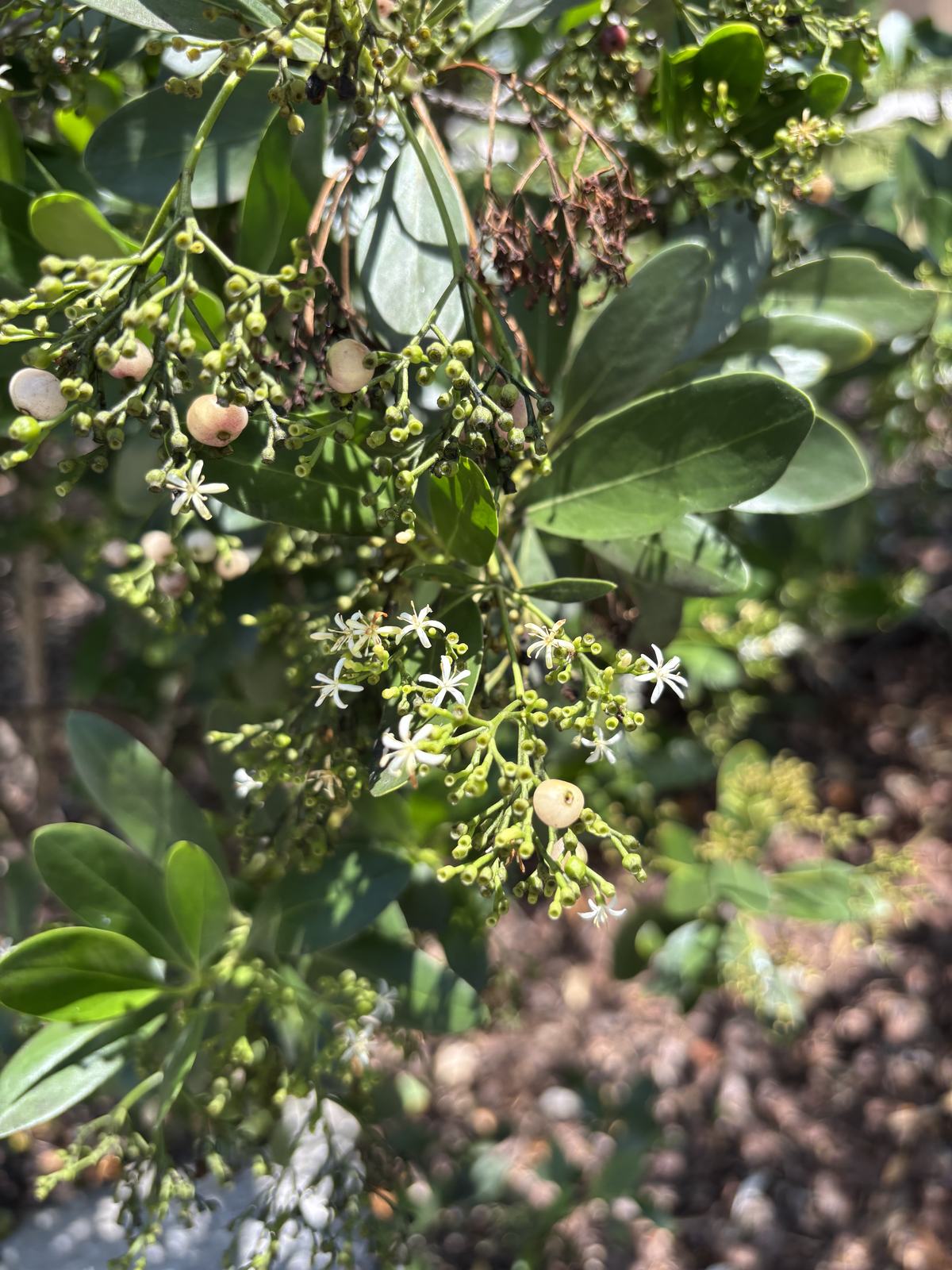
Of all the rare coastal natives on this list, this is the one that actually grows. Roughly two feet a year, which after joewood and lignum vitae feels like a miracle. Small white flowers in clusters and shiny purple black fruit, both going at the same time, every month of the year. That continuous bloom is the real design value: it is feeding pollinators in February when almost nothing else is open, and the birds work the black drupes year round. The name comes from the resinous wood, which people used to burn as a torch, not from anything about how it looks. It is state listed threatened. A Keys area grower specifically says it works along coastal areas and near the Intracoastal north to Martin County, which is the most Stuart relevant thing I found on any of these plants.
Care
Well drained soil, full sun, water to establish and then back way off. It likes a little organic matter more than joewood does, so compost once a year is fine. Prune to hold it wherever you want it between four and eight feet. That is the whole program.
Common problems
No documented pest or disease complex. Like most of these coastal natives, the ways to kill it are drainage and cold, not bugs.
People plant it in a low wet spot because it is a coastal plant. It tolerates salt, not standing water. Those are different things and mixing them up kills more coastal natives than anything else I see.
Its actual cold floor is not documented anywhere I can find, so I site it thoughtfully rather than deploying it in a row across an exposed front yard.
Common questions
Is it a showy plant?
No, and I would rather say so. The flowers are small and white and the fruit is dark. This plant earns its spot on evergreen texture, on flowering and fruiting every month of the year, and on being one of the few rare coastal natives that actually fills in. It is a quiet plant that does a lot of work.
Why is it called black torch if it is not black and not a torch?
The wood is resinous and burns, so people used it as a torch. The fruit is black. Put those together and you get a name that describes nothing you will notice in your yard.
Will it screen my neighbor?
At five to eight feet and two feet of growth a year, it can be part of a screen. I would mix it rather than run a solid row, both because monocultures are a bad idea generally and because a state listed plant is not something you want to bet a whole hedge on.
Interested in a black torch in your landscape?
We plan, install, and care for it. Start with a paid consultation.