Railroad Vine
Pink morning glories on the dune, and it will absolutely smother whatever you plant next to it
Ipomoea pes-caprae
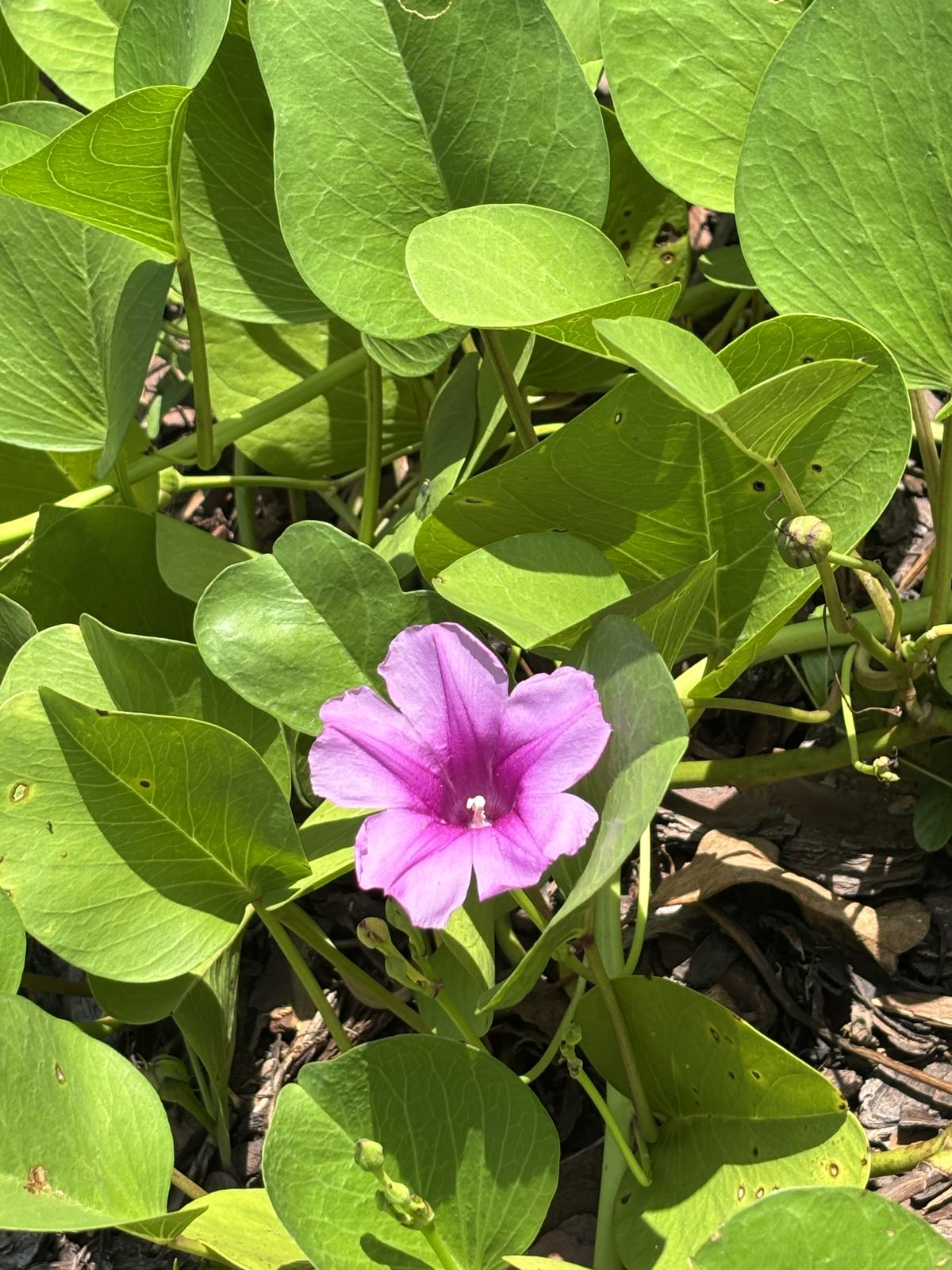
Photo: Longleaf Design
Why it works here
This is the plant running across the sand at every beach access on the Treasure Coast, with the notched leaf that looks like a goat's hoof, which is where pes-caprae comes from. Big funnel shaped pink to lavender morning glories, blooming year round with a peak from May through November. Each individual flower opens in the morning and is done by evening, but there are so many that the show never stops. It is a pioneer dune stabilizer, it is fast, and the seeds float, which is how it colonizes new sand. Bees are the main pollinators, with butterflies, moths, beetles, and wasps working the big nectaries too. It is not listed and it is easy to buy. Here is what you need to know before you plant it: it is aggressive. Not invasive, it is native, just fast. It will cover anything smaller than it.
Care
Full sun and free draining sand. Water to establish, then nothing. Do not fertilize it, because soft flush growth is what draws scale and mealybugs on this plant. Plan the edge before you plant, because the runners will not respect your bed line. When it gets scraggly in a dry spring, cut it back hard rather than watering it into softness.
Common problems
It smothers its neighbors. UF is blunt about this: the aggressive growth needs frequent pruning to keep it off other plants. Never plant it as a groundcover under small perennials.
It is not a permanent planting. UF notes that plantings rarely exceed eight years. Budget for eventual replacement instead of expecting it to be there forever.
Scale and mealybugs. Almost always a symptom of too much water and feed on a dune plant. Spot treat with horticultural oil or insecticidal soap if you must, but the real fix is to stop babying it.
Cercospora leaf spot and white rust are both wet foliage diseases. Turn off the overhead irrigation and thin the mat. Do not spray.
Chewing from sweet potato beetles and slugs is cosmetic on something growing this fast. Cut the chewed section and let it regrow.
Common questions
Can I dig some up at the beach?
Please do not. The dune vegetation is what keeps the sand where it is, and it is protected for that reason. It is easy to buy and stem cuttings root in about a week, so there is no reason to.
Is it invasive? It is taking over.
It is native, and it is not invasive. It is just fast, and it was probably put in the wrong place. In an ordinary irrigated bed it will run everything over. On a dune or a big open sunny slope, that is exactly what you want from it.
It is a morning glory and it looks like sweet potato. Can I eat it?
No. UF says all parts are potentially poisonous if consumed. I do a lot of edible landscaping and I want that stated plainly, because the foliage genuinely does look like sweet potato.
Interested in a railroad vine in your landscape?
We plan, install, and care for it. Start with a paid consultation.