
Fakahatchee Grass
A big native grass with sharp edged leaves, and its smaller cousin that is usually the better call
Tripsacum dactyloides
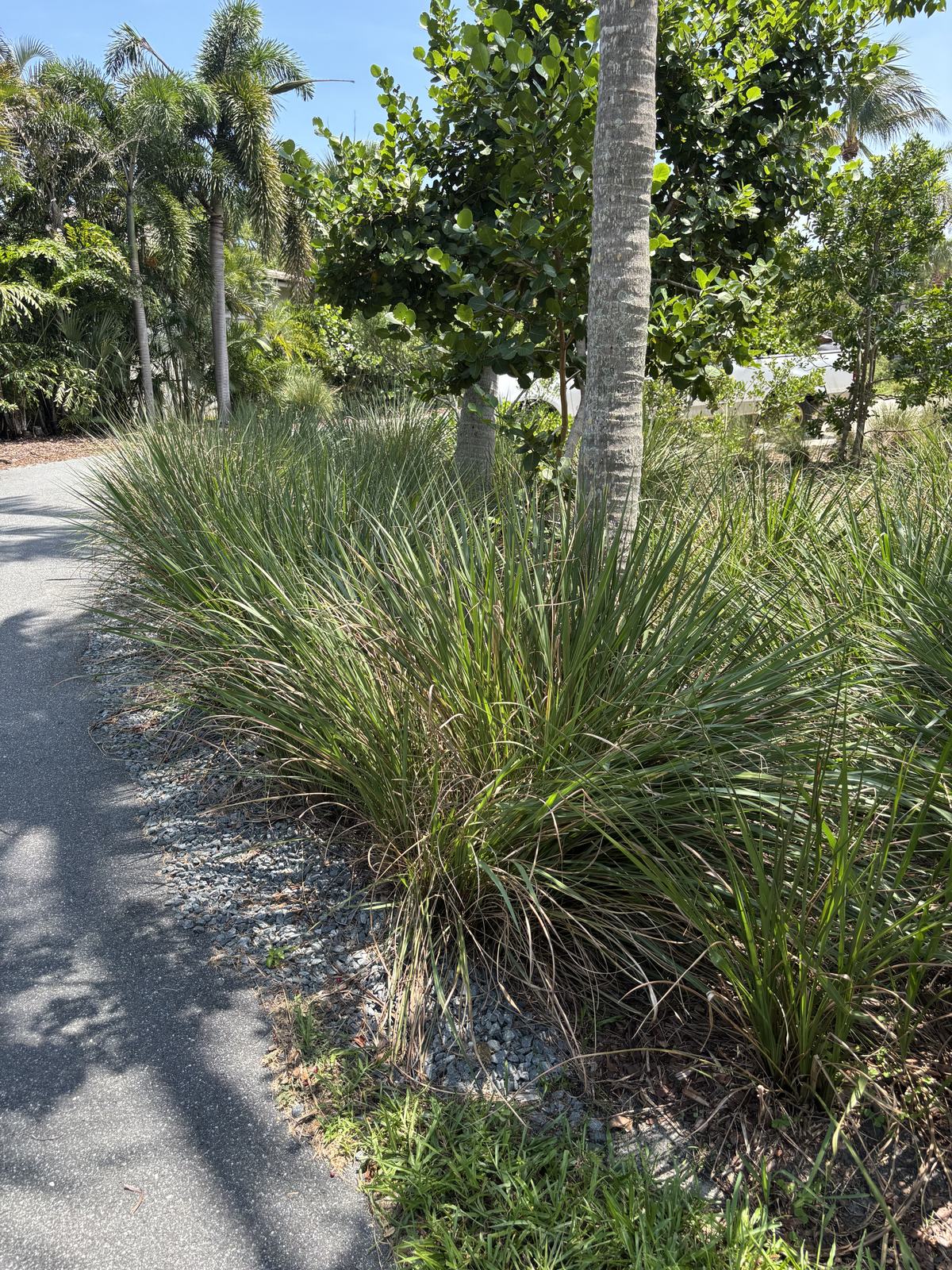
Photo: Longleaf Design
Why it works here
This is a close wild relative of corn, and up close the flower spike is genuinely worth looking at, with orange anthers and purple stigmas. It is the larval host for byssus, clouded, and three spotted skippers, songbirds eat the seed, and the dense clump gives cover to lizards, small birds, and small mammals. It is the one plant on this whole list that actually wants a moist site, so it is my answer for a swale, a pond edge, a rain garden, or the low wet corner where nothing else is happy. It is easy to buy in quantity and it is not listed. Two honest things. First, the leaves have small sharp teeth along the edges and UF specifically says to be careful handling it. Second, it is bigger than people plan for, and it is routinely planted at the wrong scale.
Care
Full sun to light shade, and give it moisture. It is the exception to the drainage rule on most of this list. No annual shearing is required, and UF says pruning is not required at all. In our climate it stays evergreen so there is often nothing to cut. Tidy it at the end of winter if a cold snap browns it, and then plan on cutting it to the ground and dividing every three to four years in spring, because old clumps hollow out in the center. Wear sleeves and gloves when you divide it.
Common problems
The sharp leaf edges. This is the real world complaint. Never plant it against a walkway, pool deck, mailbox, or driveway edge, and set it back at least three feet from anywhere people or dogs push through.
Wrong scale. A clump four to six feet wide with six foot flower stems is a landscape element, not a filler. It belongs on property lines, pond and swale edges, rain gardens, and slopes. It does not belong in a three foot builder bed under a window.
Clumps dying out in the center as they age. That is division work, not disease.
Salt. It will burn in salt wind. Keep it interior.
Volunteers. It self seeds readily enough that you should expect seedlings in nearby beds and songbirds moving seed around. Whether that becomes a nuisance in an irrigated bed is not documented anywhere I can find, so I would not call it aggressive, I would just say expect some and pull them.
Common questions
Is it too big for my yard?
Often, yes. And there is a better option most of the time: dwarf fakahatchee, Tripsacum floridanum, is 2 to 3 ft and about 4 ft in flower, with finer foliage, and it fits a normal bed. But read the next answer before you swap, because they are not interchangeable.
So should I just always use the dwarf?
No, and this trips people up because it is backwards from what you would expect. The big one wants moist to wet and takes flooding. The dwarf is a pine rockland plant that wants it dry, is not salt tolerant, and is a short lived perennial. Choose by hydrology, not by size. If it is a rain garden or a wet swale, the big one is correct and the dwarf will fail there. One nice bonus on the dwarf: it is state listed threatened, and there is a documented outlier population right here in Martin County, so planting nursery grown dwarf fakahatchee in Stuart is putting a locally rare plant back in the ground.
Do I have to cut it back every year?
No. UF says pruning is not required. Tidy it after a cold snap if you want to, and plan on a real cut back and division every three or four years.
Interested in a fakahatchee grass in your landscape?
We plan, install, and care for it. Start with a paid consultation.