
Varnishleaf
The one UF actually recommends for hedges, and there is a purple imposter sold under the same name
Dodonaea viscosa
Why it works here
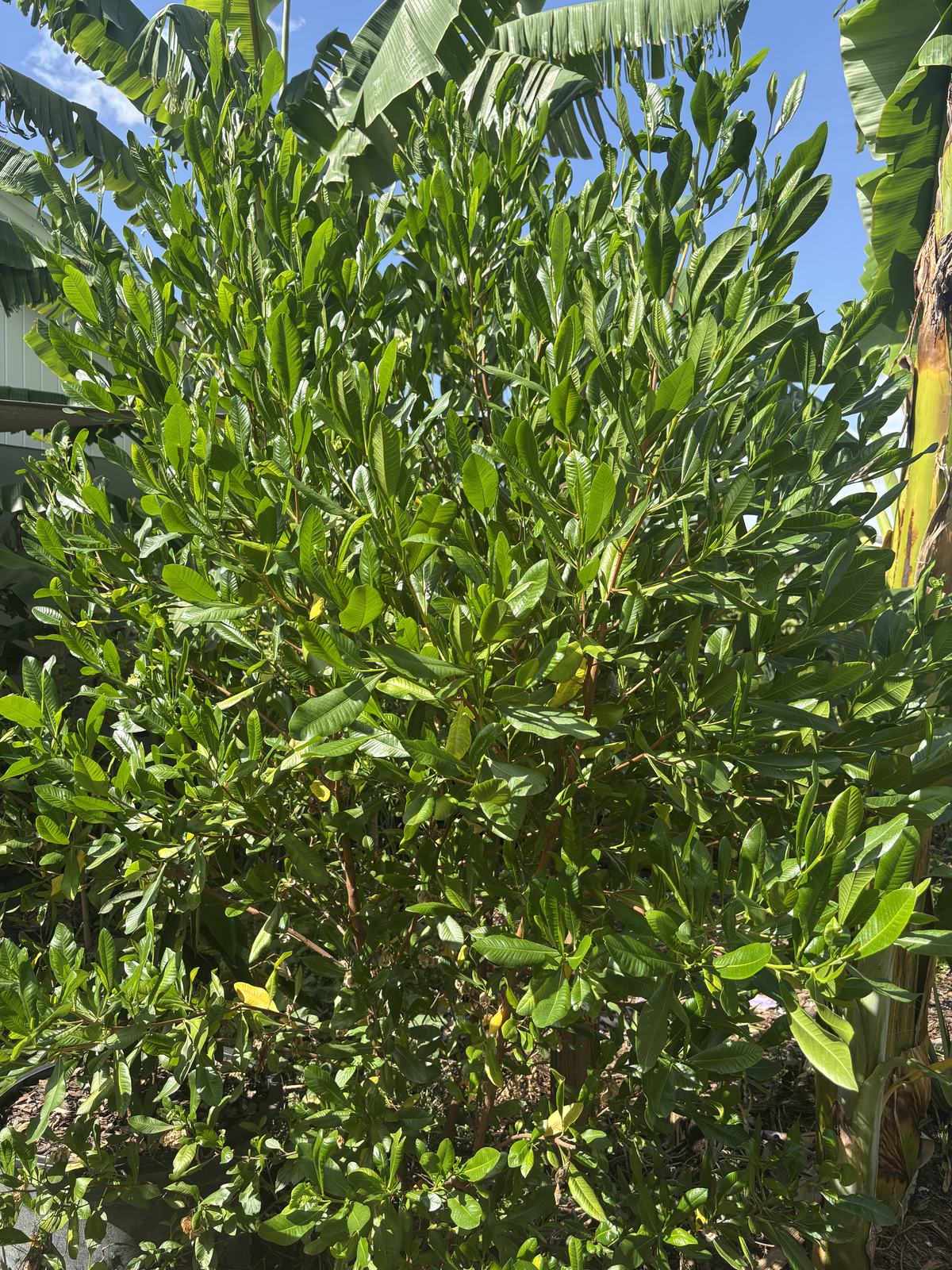
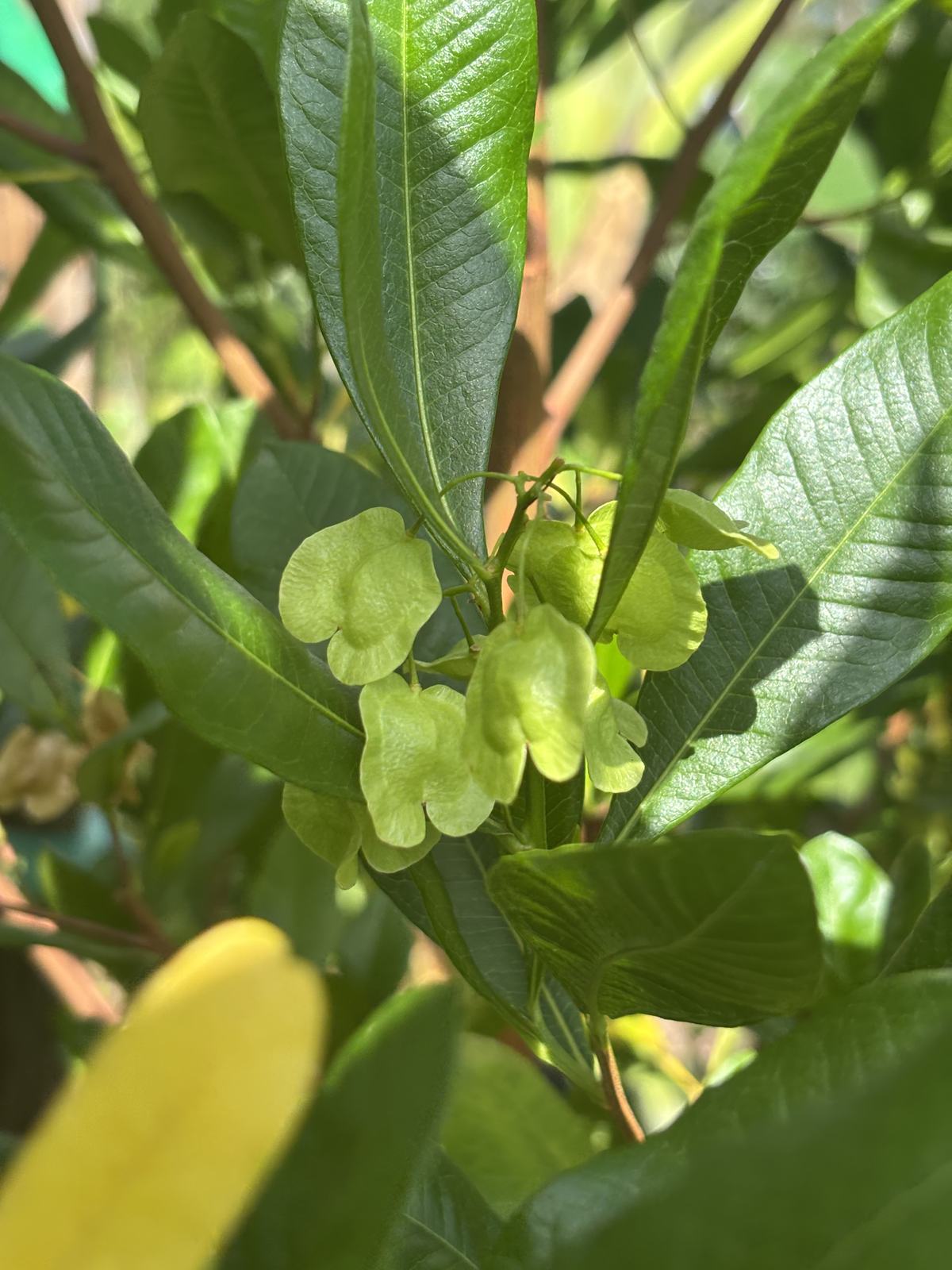
Of everything on my hedge list, this is the one where UF/IFAS comes right out and says use it for screening, hedges and fence rows, and even gives you the spacing: 5 to 8 feet apart. That is rare. Most native plant fact sheets will not commit like that. And it earns it. The foliage is narrow, bright green and glossy with a sticky varnished feel, it is evergreen, it holds a dense upright shape, and it takes wind about as well as anything I plant. Then in the warm months it hangs papery inflated seed capsules that start green and turn yellow green, then pink, then red, then brown. From a distance a plant in full capsule reads like it is flowering. The flowers themselves are tiny and greenish and you will never notice them.
Two honest things. First, the purple leaf version sold at every garden center is a cultivar out of New Zealand, not our plant. Ours has bright green leaves. If the tag says 'Purpurea' or the leaves are purple or bronze, that is a different plant. UF's own woody plant page for "varnish leaf" is actually written about the purple one, which is how confusing this has gotten. Second, it wants to be left alone. Give it too much water or plant it in rich amended soil and you get a big floppy mess instead of a hedge.
Care
Full sun, well drained soil, no soil amendment, and no fertilizer. Water it through establishment and then stop, because this is a plant that gets worse the more you do for it. UF's hedge spacing is 5 to 8 feet apart, and I would run the tighter end of that if you want the screen to close. It is naturally taller than wide, so a screen from this plant fills in vertically first and you have to keep an eye on the bottom.
Common problems
Buying the purple cultivar by accident. This is the number one issue and it is a nursery problem, not a plant problem.
Overwatering and rich soil. It sprawls, gets weak, and flops.
Salt in the ground, which is a real question mark. UF rates the plant's salt tolerance as unknown and leaves it off its coastal salt tolerant list, the native nursery association says not salt tolerant, and FNPS says highly tolerant of salty soil. On salt spray everybody agrees it is fine. So: great on a windy site a block back from the water, and I would not gamble it right on the ditch.
It may never make the capsules. It is mostly dioecious, which means individual plants are male or female, and nobody labels them. If the papery capsules are why you want it, buy more than one.
UF says no pests or diseases of major concern. A USDA fact sheet does name a virus called Dodonaea yellows plus scales and sooty mold, so it is not literally trouble free, just close.
Common questions
Is this the fastest of the native hedge plants?
Probably, and the record disagrees with itself about it. UF and the conservation folks call it moderate, FNPS and USDA call it fast. What I can tell you from planting it is that it is on the quick end of this list, and next to redberry stopper it may as well be a weed.
What about wildlife?
Here is where I have to be careful. FNPS credits it with attracting pollinators, but the flower has no petals and it is wind pollinated, which is not what a nectar plant looks like. I could not find a single named butterfly, moth or bird for it anywhere. What it clearly does give you is dense evergreen cover for nesting birds. If you are planting for pollinators, put firebush, blackbead or beautyberry in the mix with it.
Can I keep it at 6 feet?
Yes, and that is close to where UF says it usually settles anyway. It wants to be tall and narrow more than wide, so plan on tipping the leaders and running your plants close together.
Interested in a varnishleaf in your landscape?
We plan, install, and care for it. Start with a paid consultation.