
Prairie Clover
A sprawling pink legume that makes its own nitrogen and handles our floods and our droughts
Dalea carnea var. carnea
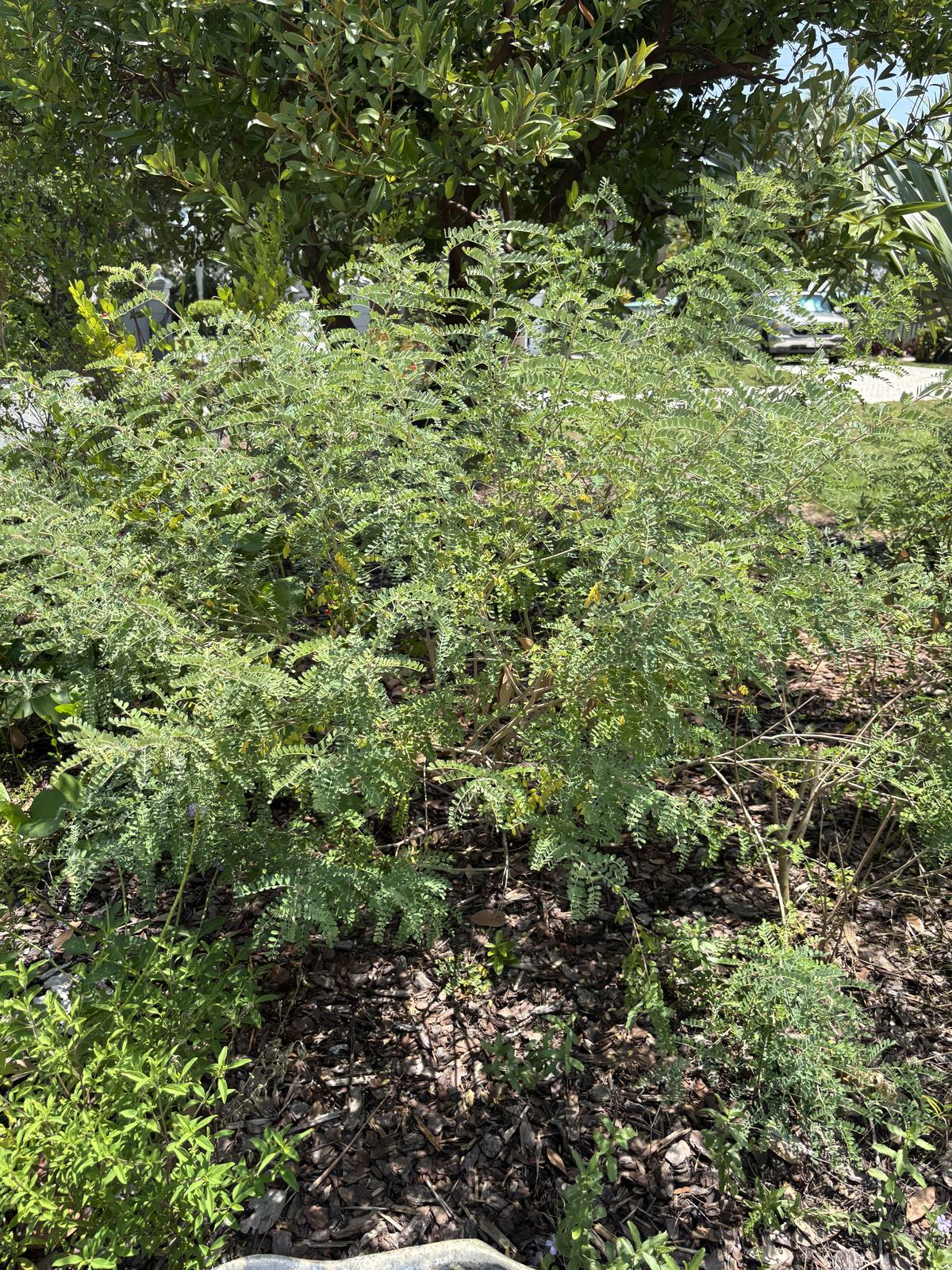
Photo: Longleaf Design
Why it works here
Here is the technical argument for this plant, and it is a good one: high drought tolerance and seasonal flood tolerance in the same plant. That combination is unusual, and it happens to describe exactly what a Treasure Coast yard does, which is flood in August and bake in April. It grows in mesic flatwoods, which is the direct habitat analog for most Stuart lots. Dense cone shaped pink to pinkish white flower spikes with bright yellow anthers, late spring through early fall. It is a legume, so it fixes its own nitrogen out of the air and feeds its neighbors. It is the larval host for the southern dogface butterfly, native bees work it hard, and birds and small mammals take the seed. It is not listed, but it is genuinely uncommon in the wild, which I think is a legitimate reason to put it in a garden without dressing it up as anything more than that. Worth naming the species: there are three Florida prairie clovers and they want completely different sites, so make sure you are getting Dalea carnea var. carnea and not one of the scrub species.
Care
Full sun, sandy or limestone soil with no humus in it, and nothing else. Do not fertilize it, because it makes its own nitrogen and feeding it makes it soft, leggy, and short lived. Do not amend the bed. Water only to establish. Keep the mulch thin and give it two to three feet of clear space, because at a foot tall and sprawling it loses to deep mulch and aggressive neighbors.
Common problems
Getting buried or outcompeted. Thin mulch, clear space, hand weed instead of blanket mulching around it.
Overfeeding and overwatering, which is the same mistake in two forms.
Sourcing. This is thin in the trade. It is described as occasionally available from native specialists, and seed is available through the Florida Wildflowers Growers Cooperative. Order ahead.
No documented pest or disease problems, though I will say plainly that this is a lightly grown plant and the literature on it is thin, so absence of documented problems is not quite the same as absence of problems.
Common questions
Is it a clover I can walk on?
No. The name is misleading. It is a fine textured, ferny, open sprawler, and it looks sparse for its first season. If you are expecting a tidy lawn substitute you will think it failed.
Should I fertilize it?
Never. It is a legume pulling nitrogen out of the air. Fertilizer shortens its life and makes it flop over.
Will it come back on its own?
FNPS calls it a short lived perennial, and honestly nobody has documented how it reseeds in a landscape, so I am not going to promise you a self perpetuating colony. Plan on adding to it over time.
Interested in a prairie clover in your landscape?
We plan, install, and care for it. Start with a paid consultation.