
Starry Rosinweed
Yellow daisies from spring to November, and it will seed itself all over your bed
Silphium asteriscus
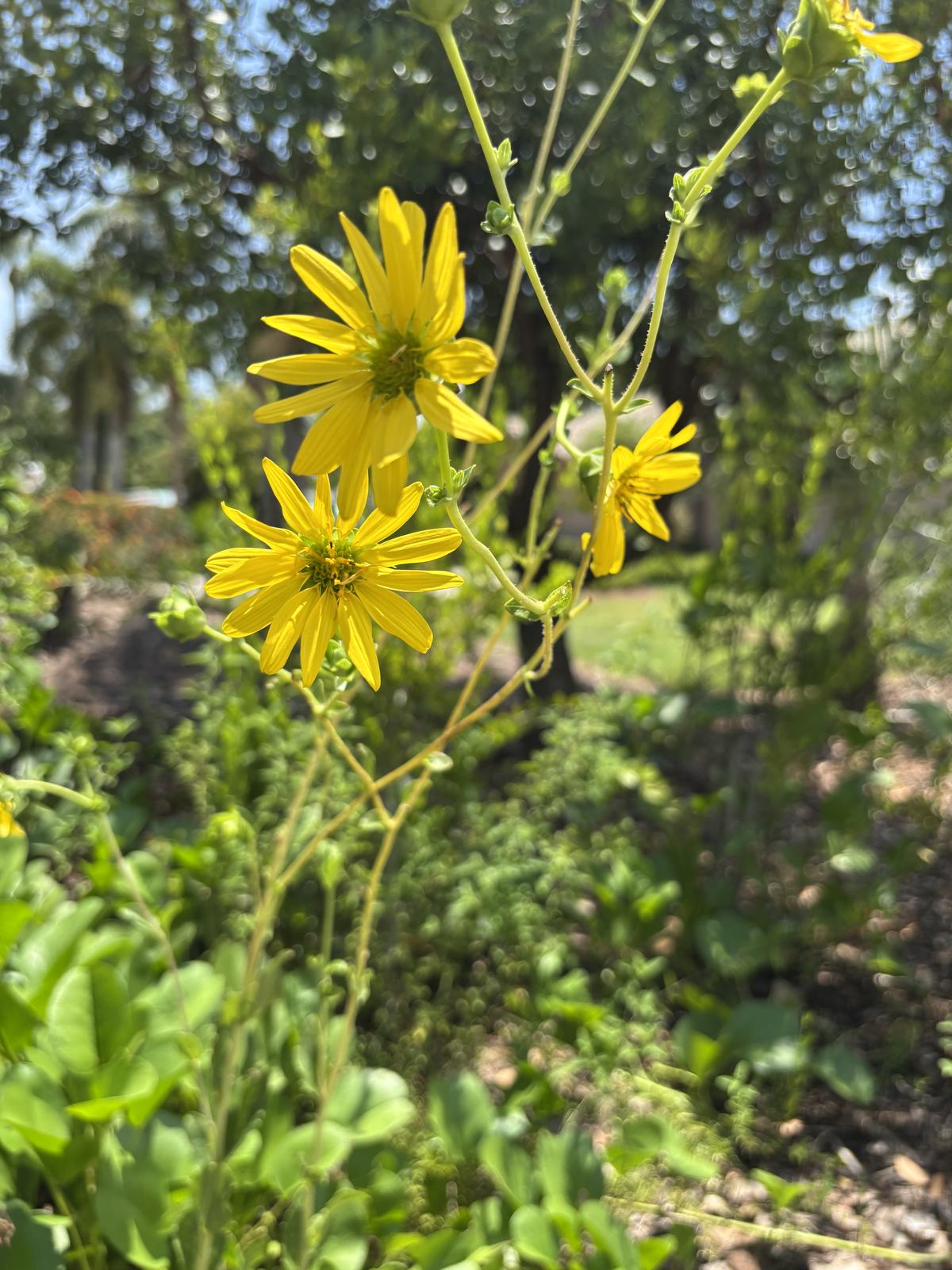
Photo: Longleaf Design
Why it works here
Bright yellow daisy type flowers up to two and a half inches across, and the bloom season is the reason to plant it: spring well into November, with individual heads opening in sequence over a week or two. That is one of the longest bloom windows of any Florida native perennial, and something is working it all day. It is easy, it is adaptable, it transplants well, and it is one of the most commonly grown native wildflowers in the state, so you can actually buy it. One honesty note I want to get out front, because the native plant crowd will ask: this is a Florida native, but it is probably not a Martin County native. Its natural range runs the Panhandle and the west coast of the peninsula south to about Lee County. I could not confirm a Martin County record. It performs beautifully here and I use it, and I would rather say that plainly than have somebody catch it.
Care
Full sun, well drained soil, and no fertilizer. Lean conditions keep it standing on its own, while rich soil makes it flop. Water regularly until it establishes, then it is easy. Cut the spent flowering stems to the ground once after bloom finishes, not mid season, or you will interrupt a bloom period that runs most of the year. Site it among clumping grasses or shrubs that can hold it up passively rather than staking it.
Common problems
Self seeding. It is a prolific reseeder and this is where most complaints come from. Decide up front whether you want that. If you do, treat it as a colony that moves around the bed rather than as individual plants. If you do not, deadhead before the seed drops.
Flopping at four feet. Full sun, no fertilizer, and neighbors to lean on.
Underestimating the size. People put a four foot plant at the front of the border because the one gallon pot looked small.
Winter dieback that looks like death. It dies back and comes back. One hard cut after bloom, and leave it alone.
The foliage is coarse and sandpapery and the stems ooze a resin. That is normal. It is literally where the name comes from.
Common questions
How long does it bloom?
Spring into November in a good year. That is most of the year, and it is why I keep using it even though it is not local.
I planted three and now I have thirty.
That is the plant working as designed. The original plants are short lived and the stand is not, so it perpetuates by seed. Edit the volunteers in spring, or deadhead before they drop if you want it to stay put.
Do birds use it?
Birds eat the seeds and a wide range of native bees and butterflies work the flowers. The seed eaters are the ones that benefit most, so if you leave the spent heads standing for a while after bloom instead of cutting them the same week, you get more of that.
Interested in a starry rosinweed in your landscape?
We plan, install, and care for it. Start with a paid consultation.