
Butterfly Weed
The native milkweed worth planting, and the sourcing detail nobody tells you
Asclepias tuberosa
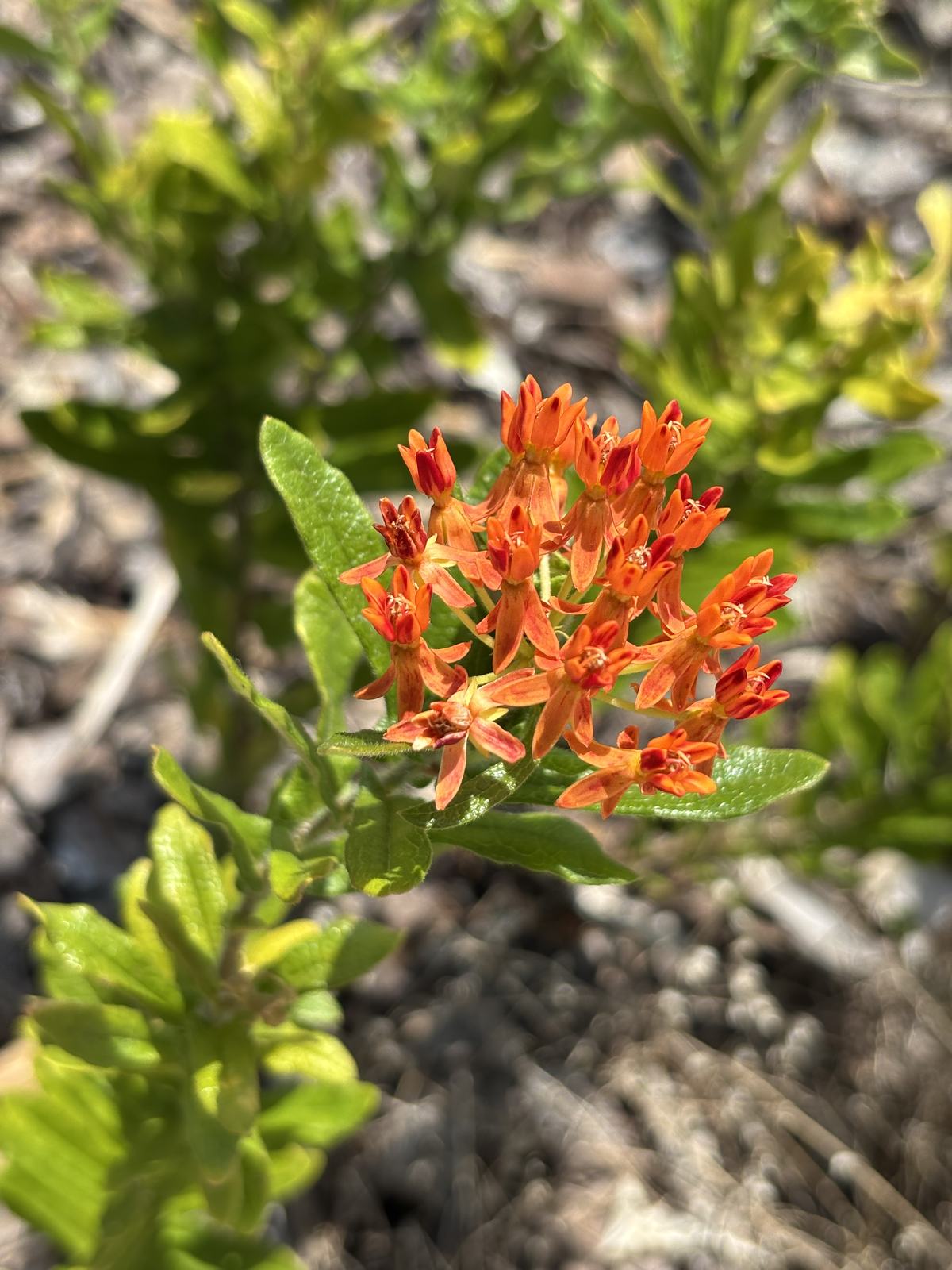
Photo: Longleaf Design
Why it works here
Bright orange flowers that stop people, and it is the larval host for monarchs, queens, and soldiers, which are three of the butterflies most people are actually trying to attract. It is a real Martin County native. It also happens to be the milkweed I recommend instead of the tropical one every big box store sells, and that is worth a minute. Tropical milkweed, Asclepias curassavica, was listed as a Category II invasive in Florida in June 2025, and it comes with a bigger problem than that: it stays green and in leaf all year here instead of dying back, which lets a protozoan parasite called OE build up on the foliage season after season, and it can convince migrating monarchs to stop and breed instead of moving on. Native milkweeds die back and reset. Now the honest part on this plant, and it is the thing that determines whether yours lives: most butterfly weed sold in Florida is a northern genotype, and northern stock rarely lasts a season here. Florida's plant is variety rolfsii. Ask for Florida stock. That one question matters more than everything else on this page.
Care
Full sun, deep unamended sand, planted proud of grade. No compost in the hole, no thick mulch against the crown, and irrigation only to establish. It has a taproot, so buy the smallest liner or one gallon you can rather than a three gallon with a coiled root, plant it in the cool season, and then never move it. Treat placement as permanent. It goes dormant in winter and it is late to come back in spring, so do not dig it up in February thinking it died.
Common problems
Buying the wrong genotype. This is the number one killer and it gets misread as the plant being difficult.
Killing it with kindness. Compost in the hole, mulch on the crown, and turf irrigation. It wants poor, dry, unamended sand.
Crown and root rot from overwatering. No cure, only prevention.
Oleander aphids, those yellow orange clusters on the stem tips. Mostly cosmetic. UF's own guidance is to water and feed less so the plant makes fewer tender shoots, prune the infested tips, knock them off with a hose, and let the ladybeetles and lacewings work, which UF says can be quite effective. Do not reach for soap or oil, because it kills monarch eggs and young caterpillars on contact. That is the whole point of the plant, gone.
Caterpillars stripping it. That is not a pest, that is the product. Plant three to five so one getting eaten does not look like a failure.
Common questions
Is tropical milkweed really that bad?
It is on Florida's invasive list as of last year, and the parasite buildup and migration disruption are documented. I am not going to tell you it kills every monarch that touches it, because that is not true either. What I will tell you is that our natives do the same job without the tradeoff, and if you already have tropical milkweed, cutting it back hard in the fall goes a long way.
Mine died. What did I do wrong?
Most likely one of two things: it was northern nursery stock, or it was planted in an amended, mulched, irrigated bed. This plant wants to be neglected in sand.
Why is it called butterfly weed if the sap is not milky?
Good eye. This is the one milkweed with clear sap instead of the white latex. Same family, same job for the caterpillars, different plumbing.
Interested in a butterfly weed in your landscape?
We plan, install, and care for it. Start with a paid consultation.