
Beach Creeper
Red stems, golden berries, and the fastest way to kill it is kindness
Ernodea littoralis
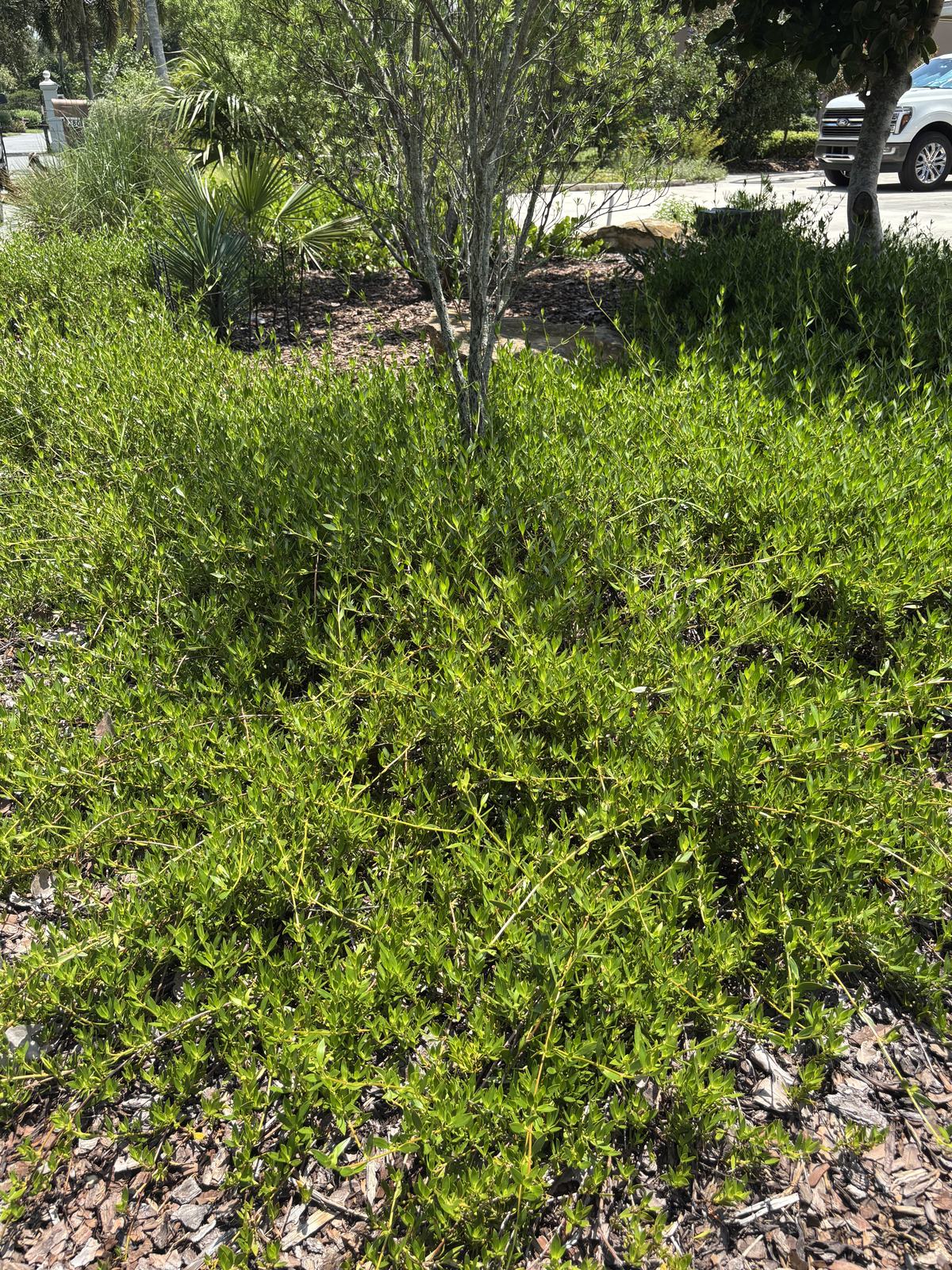
Photo: Longleaf Design
Why it works here
This is the easy one. Unlike most of the coastal natives on this list, beach creeper is naturally native right up our coast, from Volusia south through the Keys, so there is no cold risk and no range stretching. It is a true dune species and a sand binder. The ornamental value is the bright red orange stems as much as the flowers, which are small pink white tubes, and then it carries golden yellow berries pretty much year round, which is where the other common name, golden creeper, comes from. It mounds and cascades, so it is excellent spilling over a wall or a seawall cap. It draws butterflies and hummingbirds to the nectar and birds to the berries, though I have not found a source naming a specific butterfly, so I am not going to name one for you.
Care
Full sun, sharp draining sand, and then get out of the way. UF says this plant often dies back if over irrigated, and that is the single most useful sentence anyone has written about it. Water to establish, then take it off the zone or put it on the lowest water zone you have. Do not amend the bed. Do not fertilize it. Keep mulch thin and off the crown, and honestly a sand or shell mulch suits it better than wood.
Common problems
Overwatering. This is the documented failure mode. It looks stressed early on, people respond with more water, and it dies back. If a beach creeper looks bad, the answer is almost always less.
Shade. Under a canopy it thins out, goes leggy, and loses the dense mounding look and the red stems.
Fertility. Rich amended soil works against it the same way water does.
No serious pests. UF says plants in well drained coastal soil in full sun typically remain problem free, and that has been my experience.
Common questions
Can I use it instead of grass?
No. It mounds to a foot or two and sprawls irregularly, it does not take foot traffic, and it will never hold a crisp edge. It is a textural mound, not a lawn substitute. If you want tidy geometry you will not be happy with it.
It looks stressed. Should I water it?
Probably the opposite. Check the drainage first and cut the irrigation before you add any.
Where does it belong in a design?
Over a wall, along a seawall, on a slope, on a dune, or anywhere in full sun where you want something loose and coastal that never asks for water. It is one of the most useful natives we have and it is easy to buy, which is not something I get to say about most of this list.
Interested in a beach creeper in your landscape?
We plan, install, and care for it. Start with a paid consultation.