
Papaya
Fruit in 9 months from seed. No other tree does that.
Carica papaya
A fast, tropical fruit factory that lives hard and dies young.
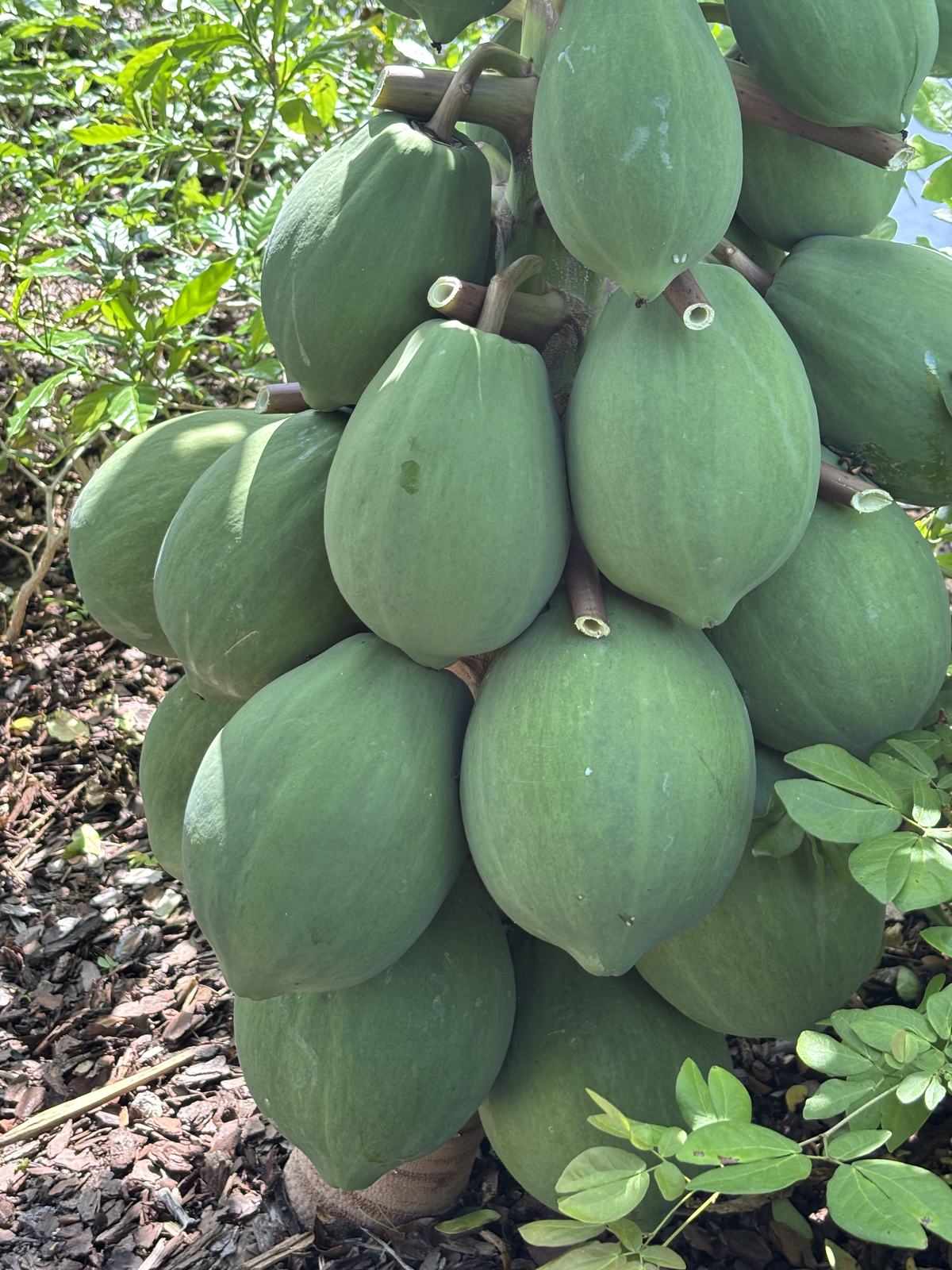
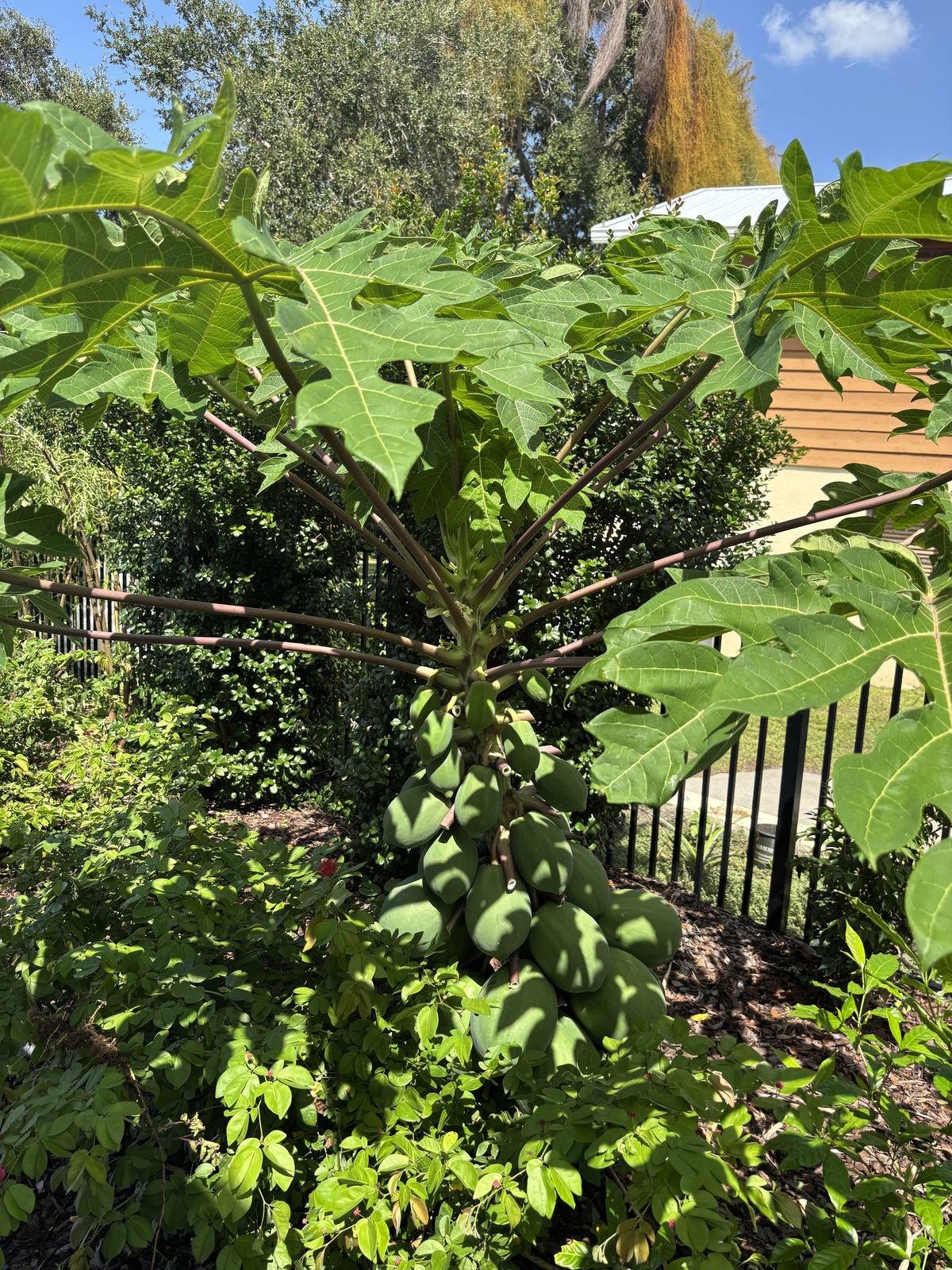
Why it works here
Papaya is the quickest path to homegrown tropical fruit, seed to breakfast in under a year, and it fills the vertical space in a young edible garden while slower trees catch up. It loves our heat and sun. The catch is that it is short-lived, rarely past a handful of years, so I treat it as a fast rotating crop rather than a permanent tree, replanting seedlings every couple of years.
Care
Plant on a mound or in a raised, fast-draining spot, because wet feet mean root rot and a dead plant almost overnight. Water evenly and feed steadily with compost and balanced organic fertilizer, papaya grows and fruits so fast it wants near-constant nutrition. Mulch to hold moisture but keep it off the trunk. Stake young plants in wind, and plan to start replacements before your current plants age out.
Common problems
Papaya ringspot virus: the big, deadly one. It shows as ringspots on fruit and mottled distorted leaves, and there is no cure. The cultural response is to remove and destroy infected plants promptly so they do not spread it, control the aphids that carry it by supporting beneficial insects, and keep planting fresh seedlings elsewhere in the yard.
Root rot: from poor drainage or overwatering. Always plant high and well-drained.
Cold: significant damage below about 31°F and poor flowering below 59°F. A hard freeze can end a plant, so grow it in your warmest spot.
Common questions
Do I need a male and female plant?
It depends. Papayas come as male, female, or bisexual. Females need a male nearby to pollinate, while bisexual types self-pollinate and fruit on their own. Since you cannot tell from a seedling until it flowers, plant three or four and thin to the good fruiters.
Why did my healthy papaya suddenly get sickly and stop producing?
Most likely papaya ringspot virus, which is common here and eventually finds most plants. Once leaves mottle and fruit shows rings, the plant is done. Pull it, and rely on a steady rotation of new seedlings rather than nursing an old plant.
How long will one plant produce?
Not long by tree standards, often just two to four good years before virus, cold, or age catches up. That is normal for papaya. The trick is to keep a few young ones coming along so you always have producers.
Interested in a papaya in your landscape?
We plan, install, and care for it. Start with a paid consultation.