
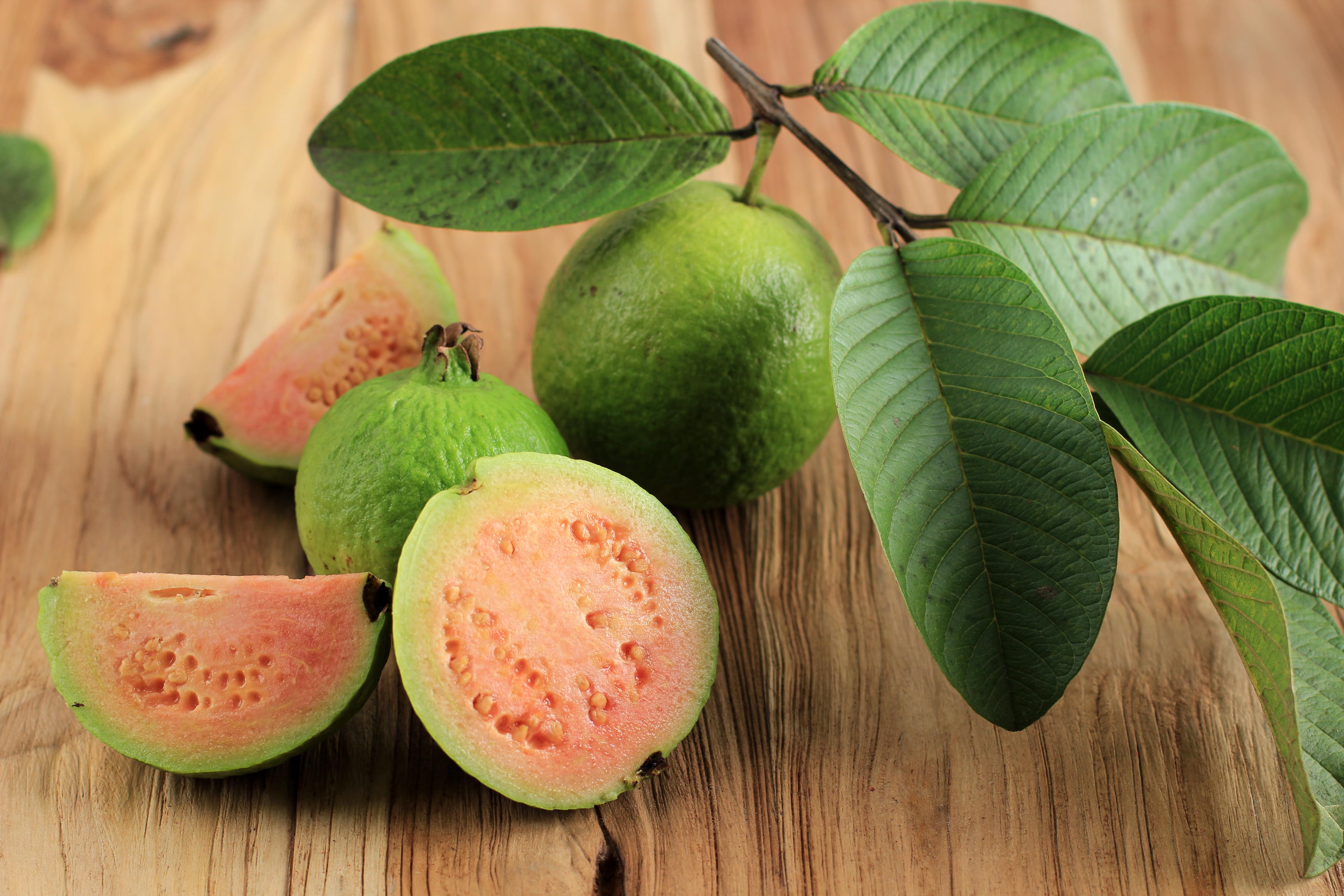
Guava (multiple varieties)
Tough, productive, and forgiving. A great first fruit tree.
Psidium guajava
A heavy-bearing, fragrant fruit that grows almost too easily, which is exactly the problem.
Invasive status alert
The UF/IFAS Assessment of Non-Native Plants rates Psidium guajava as "Caution, manage to prevent escape" in both Central and South Florida (the zone that includes the Treasure Coast). It may still be used, but it is capable of escaping cultivation into natural areas, so it must be managed. Birds spread the seeds, so wild seedlings can pop up off-site. If you plant guava, keep dropped fruit cleaned up, pull volunteer seedlings, and consider it a plant to watch. Given the anti-invasive mission here, I would only place it deliberately and manage it closely.
Why it works here
Varieties, all different tastes: Strawberry, Pineapple, Giant Viet White, Giant Viet Pink, Lemon, Barbie Pink, Ruby Supreme, Thai Giant, Mexican Cream, Crystal, and Red Malaysian.
Guava is a productive, wonderfully fragrant fruit that thrives in our heat and takes hard pruning, so you can keep a full-sized tree at head height and still get loads of fruit. That vigor is the whole story, both its appeal and its risk. Because it fruits young, grows fast, and reseeds freely through birds, IFAS flags it as a caution species. In a designed, well-managed edible garden it can absolutely earn a spot, but it needs an owner who will keep it in bounds.
Care
Plant in full sun in well-drained soil and water regularly while it establishes. Feed with compost and balanced organic fertilizer through the warm season, and prune hard, guava fruits on new growth, so annual pruning both controls size and drives the next crop. Keep a mulch ring, pulled back from the trunk. Most important cultural job: pick up fallen fruit and pull any seedlings that sprout, so the tree stays a garden plant and not a wild invader.
Common problems
Escaping cultivation: covered in the alert above. This is the honest, defining caveat, guava spreads by seed into natural areas, and managing that is part of owning one.
Caribbean fruit fly: our biggest guava pest, it stings the fruit and the larvae ruin it. The cultural response is to harvest fruit slightly early and bag developing fruit, and to clean up all drops promptly so you break the cycle.
Root-knot nematodes and various leaf/fruit fungi: possible in sandy soil and humidity. Build soil with compost, keep the tree vigorous, and prune for airflow.
Common questions
If it is a caution plant, should I even grow it?
That is a fair question and I will be straight with you: it is allowed, not banned, and a managed backyard tree kept pruned with fruit cleaned up is very different from one left to reseed a fenceline. If you love guava and will manage it, fine. If you want zero risk, I would point you to a native fruit instead.
Why is my guava full of worms inside?
That is Caribbean fruit fly, the classic guava problem here. Bagging the fruit as it develops and picking a touch early, plus clearing every dropped fruit off the ground, is the organic way to get ahead of it.
How big will it get?
On its own, around 20 feet, but guava is one of the most pruning-tolerant fruit trees there is. Most people keep it at 8 feet or less, which also makes cleanup and fruit-fly control much easier.
Interested in a guava (multiple varieties) in your landscape?
We plan, install, and care for it. Start with a paid consultation.