
Mulberry
A month of daily handfuls off a tough, fast tree.
Morus rubra
A fast, generous berry tree, just do not plant it over the driveway.
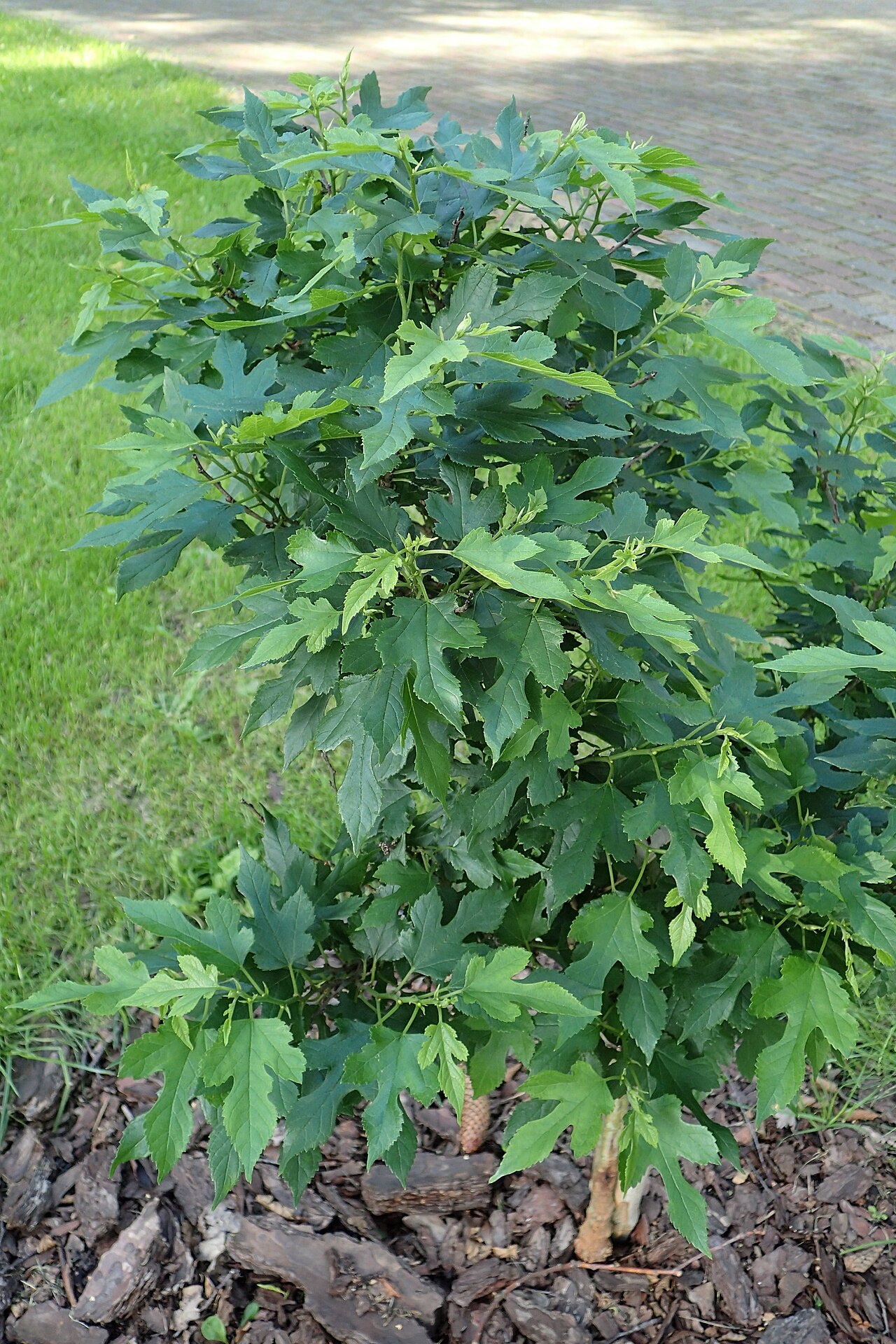
Photo: Krzysztof Ziarnek, Kenraiz, via Wikimedia Commons, CC BY-SA 4.0
Why it works here
Mulberry is one of the fastest, easiest fruit trees you can grow here, nearly carefree, drought tough, and loaded with sweet berries that kids and birds both love. Which species you plant matters, and I want to be clear about it. Our native red mulberry (Morus rubra) is a genuine Florida native tree with good dark fruit. Which one is right depends on the yard. The ones I plant are Red Himalayan, Dwarf Everbearing, and our North American native red mulberry, and the native is a genuinely big tree, up to about 60 feet, so it needs real room. For a small yard, the dwarf types give you the same fruit at a fraction of the size.
Care
Plant in full sun in almost any well-drained soil, water it through the first year, and then largely leave it alone, mulberries rarely need irrigation or feeding once established. A little compost and mulch keeps it happy. Prune in winter while it is dormant to control size and shape, it takes hard pruning well and fruits on new growth. Site it thoughtfully, away from where fallen fruit will stain.
Common problems
Staining and mess: this is the honest caveat. Ripe berries drop and stain driveways, patios, walkways, and anything below, and birds spread the purple around. Plant it over lawn or mulch, not hardscape, or choose a lighter-fruited variety to cut the mess.
Birds: they will get a real share of the crop. Netting a branch or two, or just planting enough to share, is the simplest answer.
Otherwise trouble-free: honestly, mulberry has very few pest or disease problems in Florida. It is one of the lowest-maintenance fruit trees on this list.
Common questions
Is mulberry native to Florida?
One kind is. Red mulberry (Morus rubra) is a true North American native and a big tree, up to about 60 feet. The popular fruiting varieties, like Red Himalayan and Dwarf Everbearing, are introduced types that stay far more manageable. If native matters most, ask for red mulberry and give it room; if space is tight, the dwarf types are the play.
How do I keep the fruit from staining everything?
Location, mostly. Do not plant it over pavement, decks, or pool areas, keep it over lawn or a mulch bed where drops do not matter. Light and white-fruited varieties also stain far less.
How soon will it fruit?
Fast, often within two to three years, sometimes a few berries the very next season. Mulberry is one of the quickest paths to homegrown fruit besides banana and papaya.
Interested in a mulberry in your landscape?
We plan, install, and care for it. Start with a paid consultation.