
Achachairú (Achacha)
A Bolivian Garcinia with tangy-sweet fruit under an orange rind. Slow and steady, and worth every year of the wait.
Garcinia humilis
A slow, handsome Garcinia with a sweet-tart orange fruit worth the wait.
Why it works here
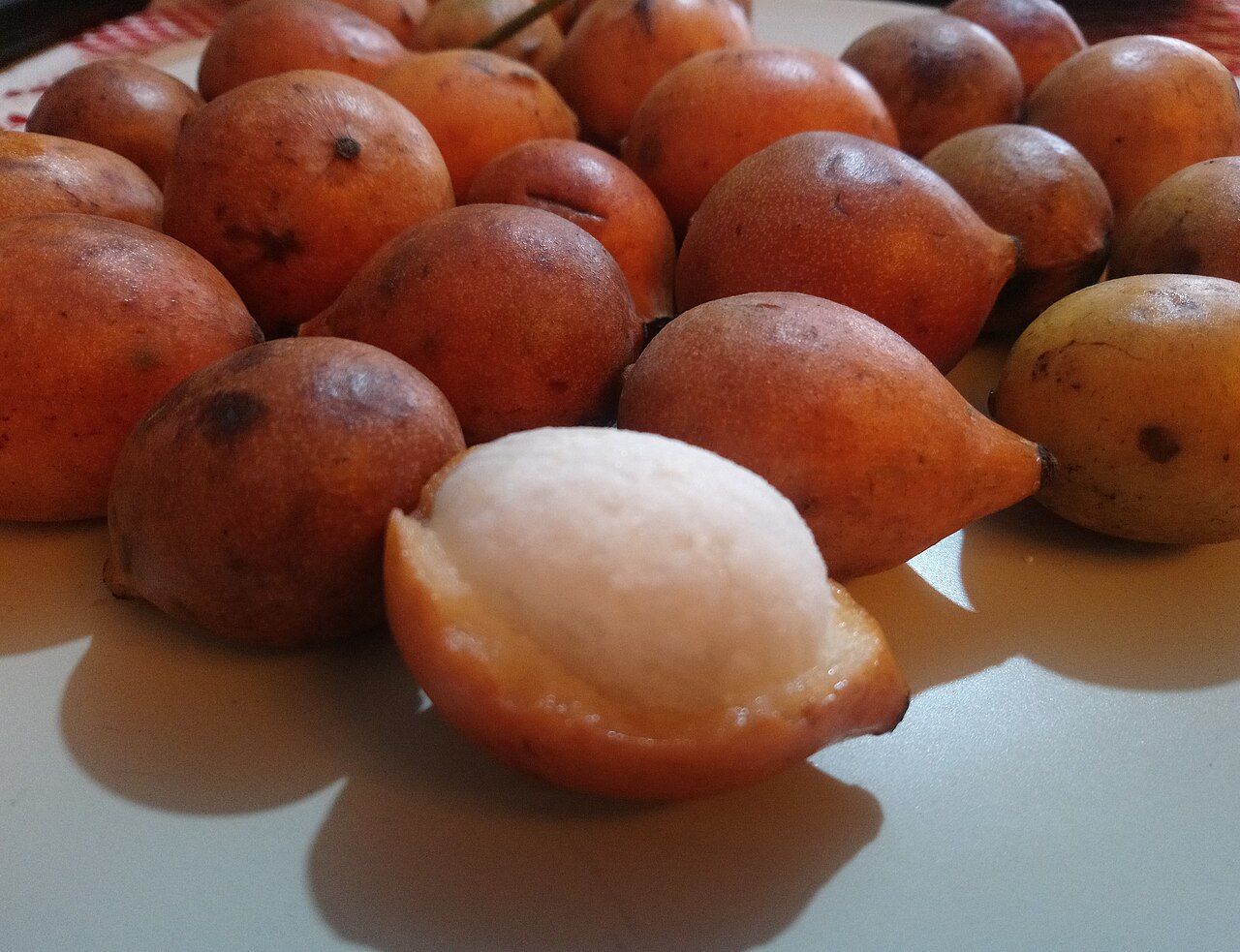
Achachairú is a relative of mangosteen from Bolivia, and it makes a dense, upright, genuinely good-looking evergreen tree, so it pulls double duty as fruit and structure in a design. The oval fruit has a thick dark-orange rind that slips off to reveal a sweet, mildly tart white pulp people love. UF/IFAS has published on growing it commercially in South Florida, which tells you it is workable here for a gardener with patience.
Care
Keep it watered on a regular rhythm, since letting it dry out slows growth, delays fruiting, and drops flowers and fruitlets. It prefers fertile soil with organic matter and a slightly acidic pH, so our alkaline sand means you will lean on compost, mulch, and organic iron and micronutrient feeding to prevent yellowing leaves. Feed with balanced organic fertilizer through the warm months. It is slow, so do not overthink pruning, just shape it and protect young trees from dry, cold wind during bloom.
Common problems
Slow to fruit: the honest caveat here is patience, 7 to 8 years is normal, so plant it for the long game or buy the largest tree you can.
Cold and cold wind at bloom: dry, cold winds during flowering can wipe out a season's flowers and fruitlets, so shelter it.
Minor pests: aphids sometimes hit new growth and anthracnose can show up, both are minor, handle aphids with a strong water spray or by encouraging beneficial insects. Conehead termites are established in South Florida and worth watching for on any tree.
Common questions
Is seven years really the wait?
For a seedling, yes, and almost all achachairú are seedlings because it does not root from cuttings. If that wait is too long, this may not be your tree, but folks who grow it tend to think the fruit earned it.
Can I grow it in some shade?
Yes, it naturally grows as an understory tree, so it takes partial shade better than most fruit trees. Full sun still gives the best crop.
How do I eat it?
Wait until the rind is deep orange and slightly soft, then peel it and eat the white pulp fresh. It is sweet with a nice tartness, and the rind comes off easily.
Interested in a achachairú (achacha) in your landscape?
We plan, install, and care for it. Start with a paid consultation.