
Barbados Cherry (Acerola)
A hedgerow that feeds you.
Malpighia emarginata
A pretty, pollinator-friendly shrub whose little cherries pack the most vitamin C you can grow.
Why it works here
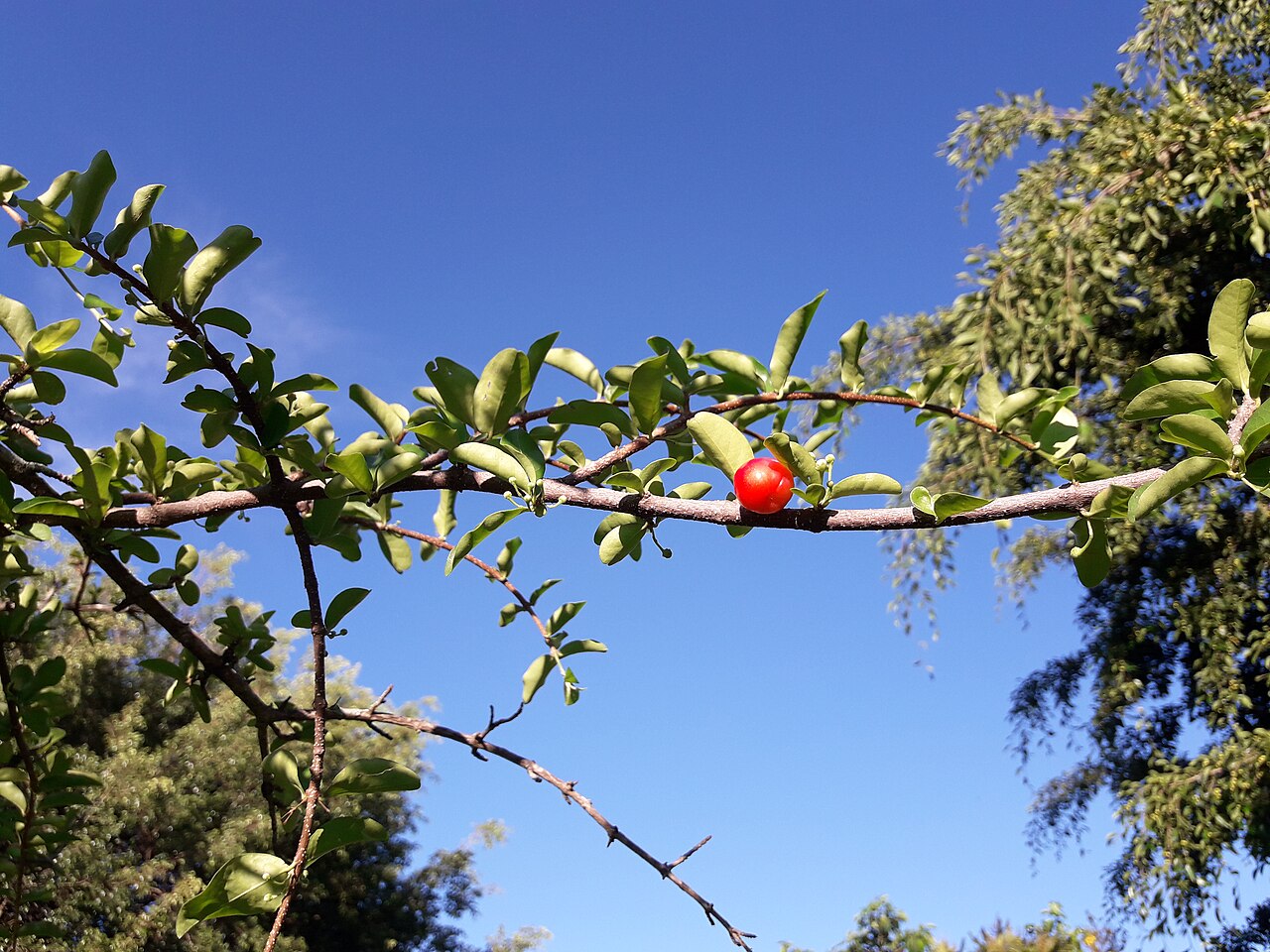
Barbados cherry is a fantastic multi-use shrub for a Florida edible garden: it flowers in flushes of pretty pink blooms that feed pollinators, then sets small bright-red cherries loaded with more vitamin C than almost any fruit on earth, often 50 to 100 times that of an orange. It stays a manageable size, fruits over a long season rather than one burst, and works as a hedge, a specimen, or a foundation of an edible border. The cherries are tart and best fresh, juiced, or frozen. Worth being clear on identity: despite the name, it is not native to Florida, it comes from tropical America and the West Indies.
Care
Plant in full sun in well-drained soil and water while establishing, then only in dry spells. Feed with compost and a balanced organic fertilizer through the warm season to fuel its repeated flushes, and mulch well. Prune lightly to shape it or keep it as a hedge, it takes shearing fine. It fruits over and over from spring into fall, so light, steady feeding beats one big push.
Common problems
Nematodes: root-knot nematodes can weaken it in sandy soil. The cultural response is heavy compost and mulch to build soil life and keep roots vigorous.
Sucking pests (aphids, whiteflies, scale): show up on new growth. Support beneficial insects, hose off light infestations, and hand-remove or prune out the worst.
Skin irritation: a genuine small caveat. The fine hairs on the leaves and stems can irritate skin for some people, so wear sleeves and gloves when you prune.
Common questions
Is this the same as a Surinam cherry?
No, and this is a common mix-up. Barbados cherry (acerola, Malpighia emarginata) is a different plant from Surinam cherry (Eugenia uniflora), which is an unrelated species. This entry is for the Barbados cherry / acerola, the vitamin-C powerhouse.
Is it a Florida native?
No. It is often grown here and pollinators love it, but it is native to tropical America and the West Indies, not Florida. If you want a true native fruiting shrub, I can point you to some good ones.
What do I do with the cherries?
They are quite tart fresh, so most people juice them, freeze them, or blend them into smoothies and sauces. That intense sourness is the vitamin C talking, and freezing keeps it well since the fruit is too soft to store long.
Interested in a barbados cherry (acerola) in your landscape?
We plan, install, and care for it. Start with a paid consultation.