
Loquat
The winter-fruiting tree. Flowers in fall, ripens in spring.
Eriobotrya japonica
A handsome, cool-season fruit tree with bold evergreen leaves, on the caution list.
Invasive status alert
The UF/IFAS Assessment of Non-Native Plants rates Eriobotrya japonica as "Caution, manage to prevent escape" in both Central and South Florida (the zone covering the Treasure Coast). It may still be used, but it can escape cultivation, birds carry the seeds into natural areas, so it needs to be managed. Clean up fallen fruit and pull volunteer seedlings. Given the anti-invasive mission here, plant it deliberately and keep an eye on it.
Why it works here
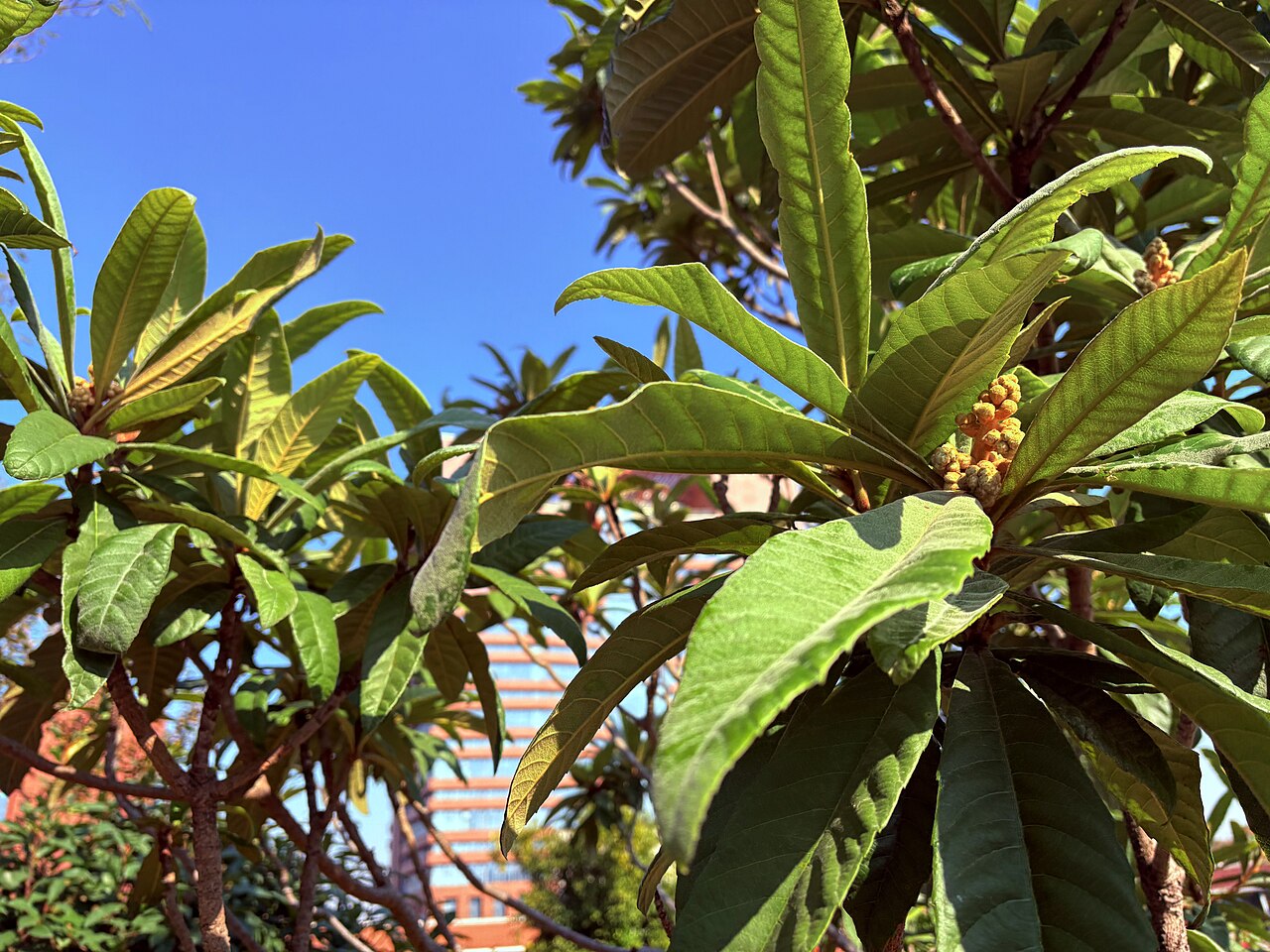
Loquat is one of the few fruit trees that flowers in fall and ripens in late winter and early spring, filling a season when little else is producing. It is a good-looking evergreen with large, bold, ribbed leaves that give a tropical feel, and it takes our climate easily, maybe a little too easily, which is why it lands on the IFAS caution list. Kept small and managed, it is a lovely, productive small tree for an edible landscape.
Care
Plant in full sun to light shade in well-drained soil, and water while establishing, after that it is fairly drought tolerant. Feed lightly with compost and balanced organic fertilizer, it is not a heavy feeder, and thin the fruit clusters if you want larger individual fruit. Prune after harvest to shape it and hold its size. As with guava, the key cultural job for a caution species is to clean up dropped fruit and pull any seedlings so it does not wander.
Common problems
Escaping cultivation: the honest defining caveat, covered in the alert. Manage fruit drop and seedlings.
Fire blight: a bacterial disease that blackens shoots and blossoms as if scorched. The cultural response is to prune out infected wood well below the damage, disinfecting your tools between cuts, and avoid overly lush growth by not overfeeding.
Birds and fruit flies: both go after ripening fruit. Harvest promptly and clean up drops.
Common questions
Why does mine flower but never set much fruit?
Loquat blooms in fall and early winter, and a hard cold snap can damage the flowers or young fruit before they mature. Some years the weather simply takes the crop. Choosing a grafted variety suited to Florida and siting it in a warm spot helps.
What does it taste like?
Sweet-tart, somewhere between an apricot and a plum, best eaten fresh right off the tree. The fruit is delicate and does not ship, which is exactly why growing your own is worth it.
Is it a problem plant?
It is on the IFAS caution list, meaning it is allowed but can escape into natural areas by seed. A managed backyard tree with fruit cleaned up is low risk. If you would rather avoid caution species entirely, I will steer you toward a native alternative.
Interested in a loquat in your landscape?
We plan, install, and care for it. Start with a paid consultation.