
Wild Cinnamon
Crush a leaf and it smells like cinnamon, but do not go making tea out of it
Canella winterana
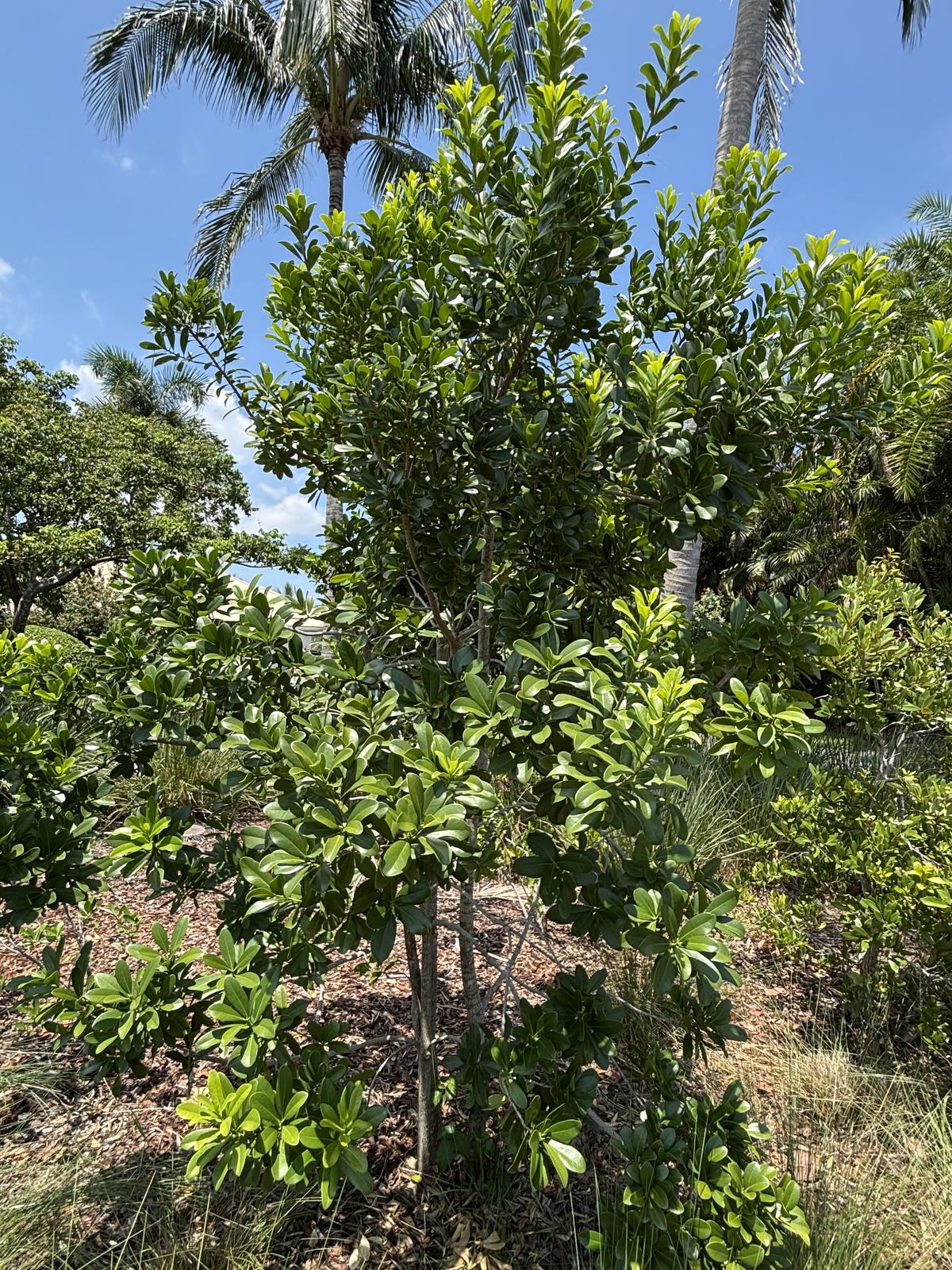
Photo: Longleaf Design
Why it works here
The whole plant is aromatic. Flowers, fruit, and crushed leaves all carry a fiery cinnamon scent, which makes it one of the best things you can put next to a walkway or a seating area where people will brush it. It flowers in dense clusters of small bright red petals with yellow anthers, mostly summer and fall with some bloom year round, and then crimson berries ripen in winter for the birds. The habit is narrow and upright and dense, which makes it genuinely useful for a tight side yard where you need height without width. It is a documented nectar plant for the Schaus' swallowtail, a federally endangered butterfly, though I want to be straight with you: Schaus' lives in the Keys and Biscayne and will not be showing up in Stuart. That fact is about the plant's value, not a promise about your yard. This is also the riskiest plant on this list for us. Its wild Florida range is Miami-Dade and Monroe only, the published cold tolerance is thin, and the salt data from different sources flat out contradicts itself. It is state listed endangered. I use it as a protected courtyard specimen, not as a hedge and not on the dune line.
Care
Give it a warm, sheltered spot with good drainage and alkaline or limestone soil if you have it. Water more than you would the other coastal natives, because this one has the lowest drought tolerance of the group. Mulch, compost once a year, and do not prune it into a ball, because the narrow upright shape is the whole point. Do not fertilize or hard prune going into fall, so it is not carrying tender growth in January.
Common problems
Cold, and this is the real one. If the reported tolerance is only into the low 30s for a short stretch, a bad Stuart winter is right at the edge. Site it against a wall, under canopy, away from low frost pockets, and accept some tip burn in a hard freeze rather than replacing it.
People plant it oceanfront because it is a coastal native. FNPS says plainly it does not take direct salt spray. That is the expensive mistake with this plant.
No documented pest or disease complex. The failure modes here are cold and drainage, not bugs.
Common questions
Is this the cinnamon I cook with?
No, and this matters. Real cinnamon is Cinnamomum, a completely unrelated plant. On this one the outer bark is toxic while other parts are edible, which makes "you can eat it" a dangerous half truth. Enjoy the smell. Do not harvest it.
I think I have one already. How do I know?
Crush a leaf. People mix this up with myrsine, and the tell is that myrsine leaves are floppy with a bright yellow midvein while these are stiffer and unmistakably fragrant when you crush them.
Is it worth the risk this far north?
For the right spot, yes. For a hedge or an exposed front yard, no, and I will tell you that before you spend the money. It is a courtyard plant here, and in a courtyard it is a gem.
Interested in a wild cinnamon in your landscape?
We plan, install, and care for it. Start with a paid consultation.