
White Indigoberry
Fragrant white flowers, snow-white berries, and dense evergreen structure. Coastal-tough.
Randia aculeata
A tidy, tough native with white berries that bleed indigo.
Why it works here
Note: often carries small spines at the leaf bases
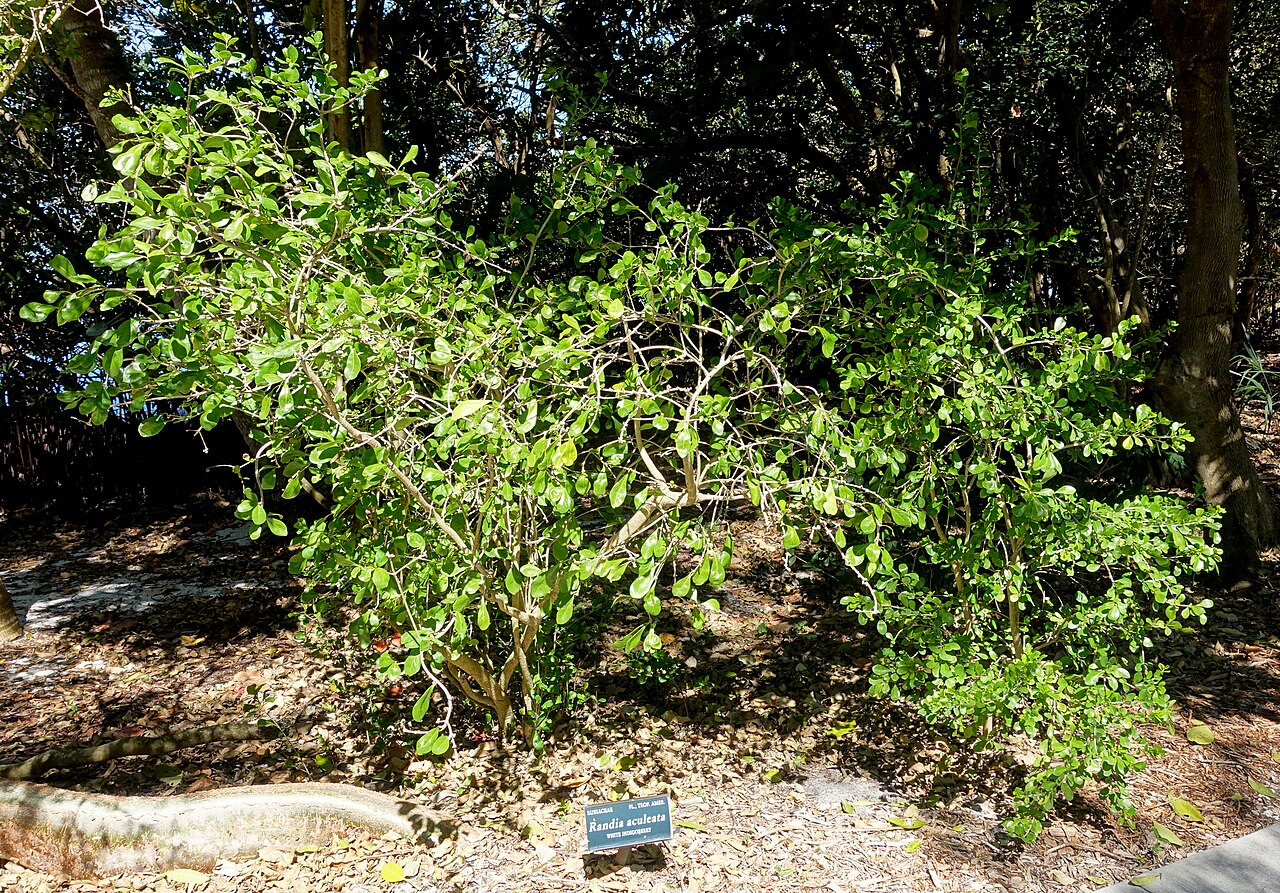
White indigoberry is a compact, dense, shiny-leaved native that's about as low-maintenance as they come. It flowers small and white nearly year-round, then sets distinctive white berries with a deep indigo pulp that early folks used as a dye. Birds eat the fruit, it nectars the rare Schaus' swallowtail, and it hosts the tantalus sphinx moth. It takes shearing well, so it's a great native alternative to a clipped hedge, and its salt and drought tolerance suit our coast.
Care
Water it in, then it handles anything from moist to very dry. It grows in our sandy soils without fuss, and a compost topdressing with mulch keeps it full. It takes shearing, so you can run it as a formal hedge, or leave it loose as a specimen. Prune whenever, it's forgiving. Watch for the small spines when you're working around it.
Common problems
Genuinely trouble-free and one of the easier natives to keep. The caveat is the small spines at the leaf bases, so mind them near paths. It's slow-ish, so buy a decent size if you want a hedge sooner. Pests are minimal.
Common questions
Can I use it as a clipped hedge?
Yes. It tolerates shearing and stays dense, so it's a great native stand-in for a formal hedge, minus the constant thirst of some exotics.
What are the white berries good for?
Birds eat them, and the indigo pulp inside was historically used as a dye and ink. They're an ornamental and wildlife feature, not something we eat.
Does it have thorns?
Small ones at the leaf bases, yes. They're minor, but worth knowing before you plant it right along a walkway.
Interested in a white indigoberry in your landscape?
We plan, install, and care for it. Start with a paid consultation.