Partridge Pea
Sunny yellow all summer and a host for the sulphur butterflies. Honest caveat: it reseeds with enthusiasm. I call that a feature.
A cheerful yellow flowered native annual that feeds bees, hosts butterflies, and builds poor soil.
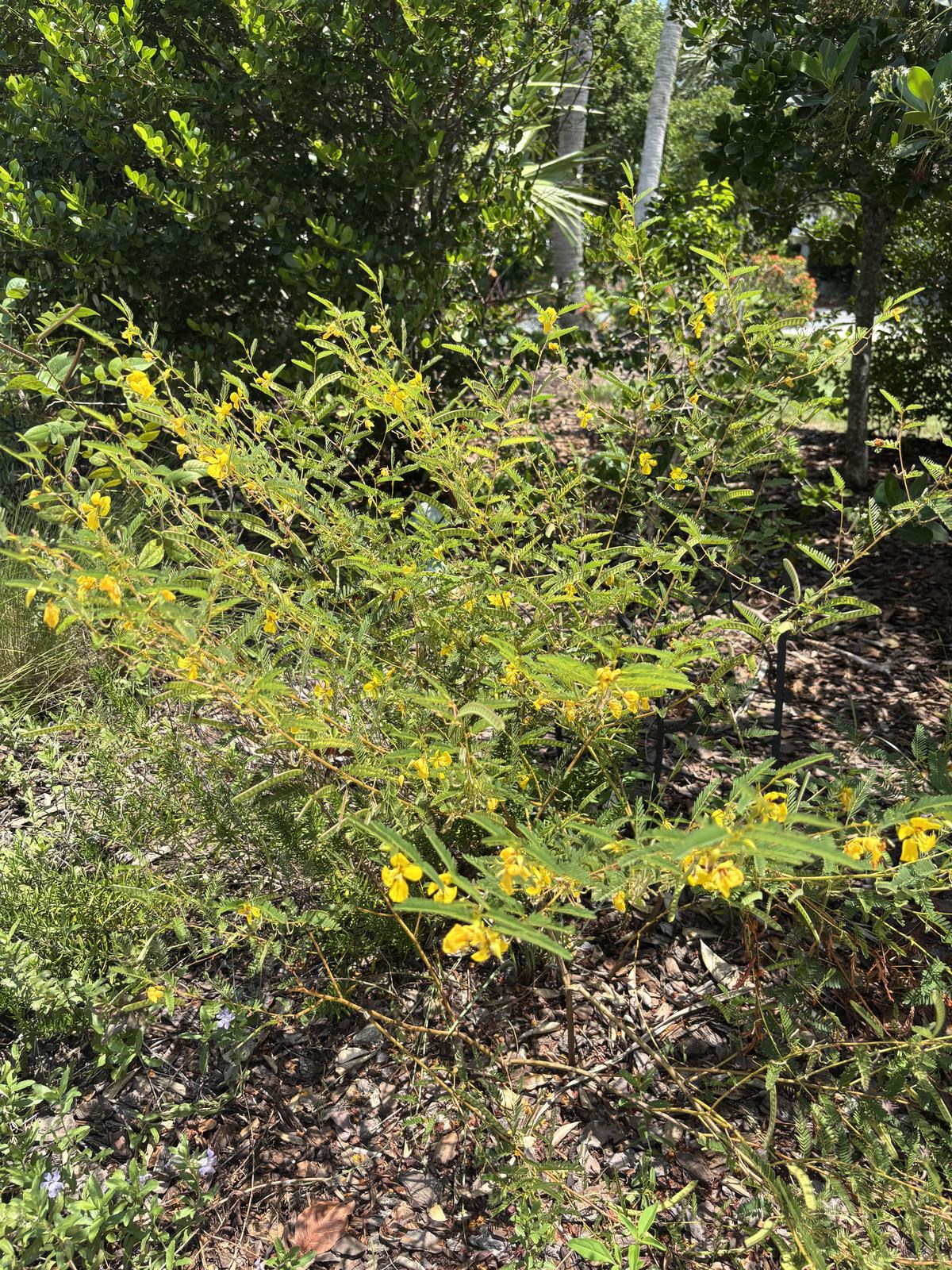
Photo: Longleaf Design
Why it works here
Partridge pea is a Florida native annual that actually likes our poor sandy soil, because as a legume it pulls its own nitrogen from the air and feeds itself. It sprouts in spring, covers itself in bright yellow flowers from late spring into summer, and finishes by fall, reseeding itself for next year. It's a powerhouse for wildlife: a larval host for several sulphur and hairstreak butterflies, meaning their caterpillars feed on it, and a magnet for native bees. The ferny leaves even fold when touched, which kids love.
Care
This one is almost hands off. Scatter or plant it in a sunny spot with lean sandy soil and water only to get it going, it prefers dry. Do not fertilize, rich soil makes it flop and it doesn't need the help anyway. Because it's an annual, the plan is to let it set seed and come back on its own, so leave the spent plants until the seed pods mature. If you want it in a specific spot, collect a few pods and scatter them where you want next year's stand.
Common problems
It's basically trouble free in the right sunny, dry, sandy spot. The main thing to understand is that it's an annual, so each plant dies at the end of the season by design, the patch persists by reseeding, not by individual plants lasting. It can reseed enthusiastically, so pull volunteers where you don't want them. In shade or rich wet soil it gets leggy and disappointing, the fix is sun and lean ground. Caterpillars will chew it, which again is the point, not a pest problem.
Common questions
It died at the end of summer, did I do something wrong?
No, it's an annual, that's its natural cycle. Leave the plants until the seed pods ripen and drop, and you'll get a fresh stand next spring.
Do I need to fertilize it in our sandy soil?
No, in fact don't. It's a legume that makes its own nitrogen and actually improves poor soil, so feeding it just makes it floppy.
Is it poisonous, since it's a pea?
Treat it as an ornamental and wildlife plant, not food. The seeds can be a problem for livestock in quantity, but in a home garden it's grown for the flowers, bees, and butterflies, so just don't eat it.
Interested in a partridge pea in your landscape?
We plan, install, and care for it. Start with a paid consultation.