
Mistflower
Puffs of powder blue that butterflies pile onto. Make sure you're getting the native mistflower, because there's an aggressive imported lookalike.
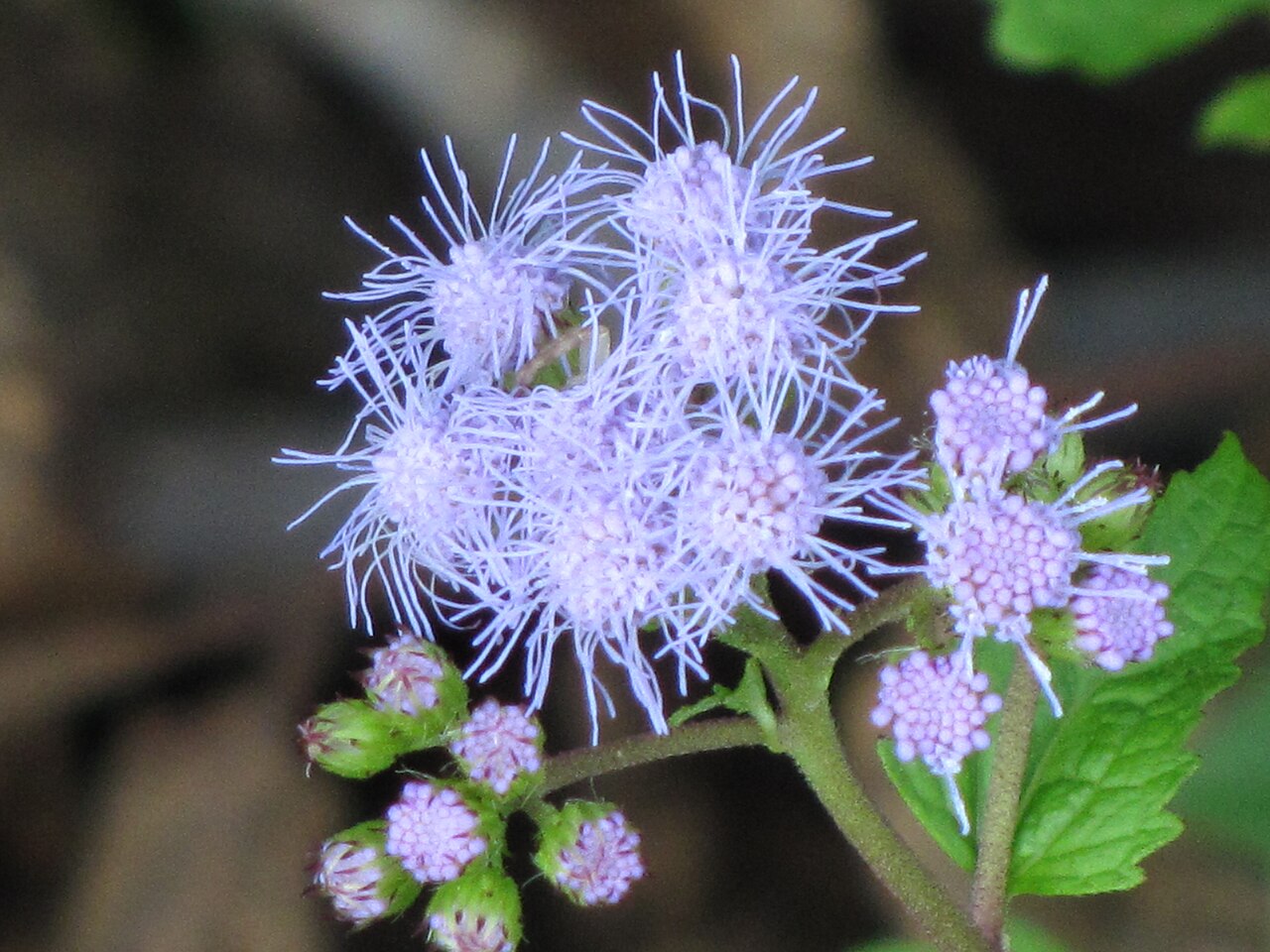
Soft blue puffball flowers that look like a low blue fog, and butterflies swarm it.
Invasive status alert
Don't confuse it with the invasive lookalike: mistflower's fuzzy blue flowers resemble a nasty invader called Praxelis (Praxelis clematidea), a non native weed spreading in Florida. Tell them apart this way: on the invasive Praxelis the flower heads are taller than they are wide, the seeds are black, it prefers dry soil, and the crushed leaves smell like cat urine. Native mistflower has flatter, wider flower clusters, grows in moist ground, and doesn't have that smell. There's also a non native garden annual, Ageratum houstonianum, with similar blue puffs, that one is a bedding plant, not the same as our native perennial. When you buy, get Conoclinium coelestinum from a native nursery.
Why it works here
Mistflower is a Florida native that grows throughout the state in moist meadows, ditches, and swamp edges, so it's my pick for the damp, low, or part shade spots where dry loving natives struggle. Its soft blue to lavender flowers look like fuzzy little powderpuffs and, planted in a mass, read as a low blue fog. It's a top tier pollinator plant, especially loved by butterflies, moths, and long tongued bees. Use it in a rain garden, a low wet corner, or the moist edge of a pond where its love of damp soil is an asset.
Care
Give it moist soil and it's easy, this is the native that actually wants regular water rather than drought. Full sun makes it bloom hardest, but it takes part shade. Feed lightly, compost is plenty. It spreads by rhizomes, underground runners, so it forms a colony and can travel, cut back or pull the runners to keep it in bounds. Cut the whole planting back after bloom or in late winter to keep it tidy, and divide clumps in spring to make more.
Common problems
The honest caveat is spread: it runs by rhizomes and can take over a bed if you don't edit it, so give it room or a spot bounded by pavement or a mowed edge, and pull runners where you don't want them. It needs moisture, so a dry neglected spot isn't for it, the leaves wilt and it sulks. Watch that you planted the true native and not the invasive Praxelis lookalike, use the ID notes above. Otherwise it's a vigorous, pest free, generous bloomer.
Common questions
How do I keep it from taking over?
Plant it where spread is welcome, like a rain garden, or bound it with an edge and pull the underground runners once or twice a year. It's vigorous by nature, so plan for a colony, not a single tidy clump.
My yard is dry, can I still grow it?
Not really its best fit. Mistflower wants moist to wet soil, so unless you can water it or place it in a low damp spot, pick a drought lover instead. Don't confuse it with the drought loving invasive Praxelis.
Is it the same as the ageratum at the garden center?
No. The garden center ageratum is usually a non native annual bedding plant. This is a hardy native perennial. For the native, ask for Conoclinium coelestinum at a native nursery.
Interested in a mistflower in your landscape?
We plan, install, and care for it. Start with a paid consultation.