
Thoroughworts
Late-season clouds of white that feed everything still flying. Underrated on purpose.
Airy white fall flowers that pollinators mob, from a group of tough native perennials.
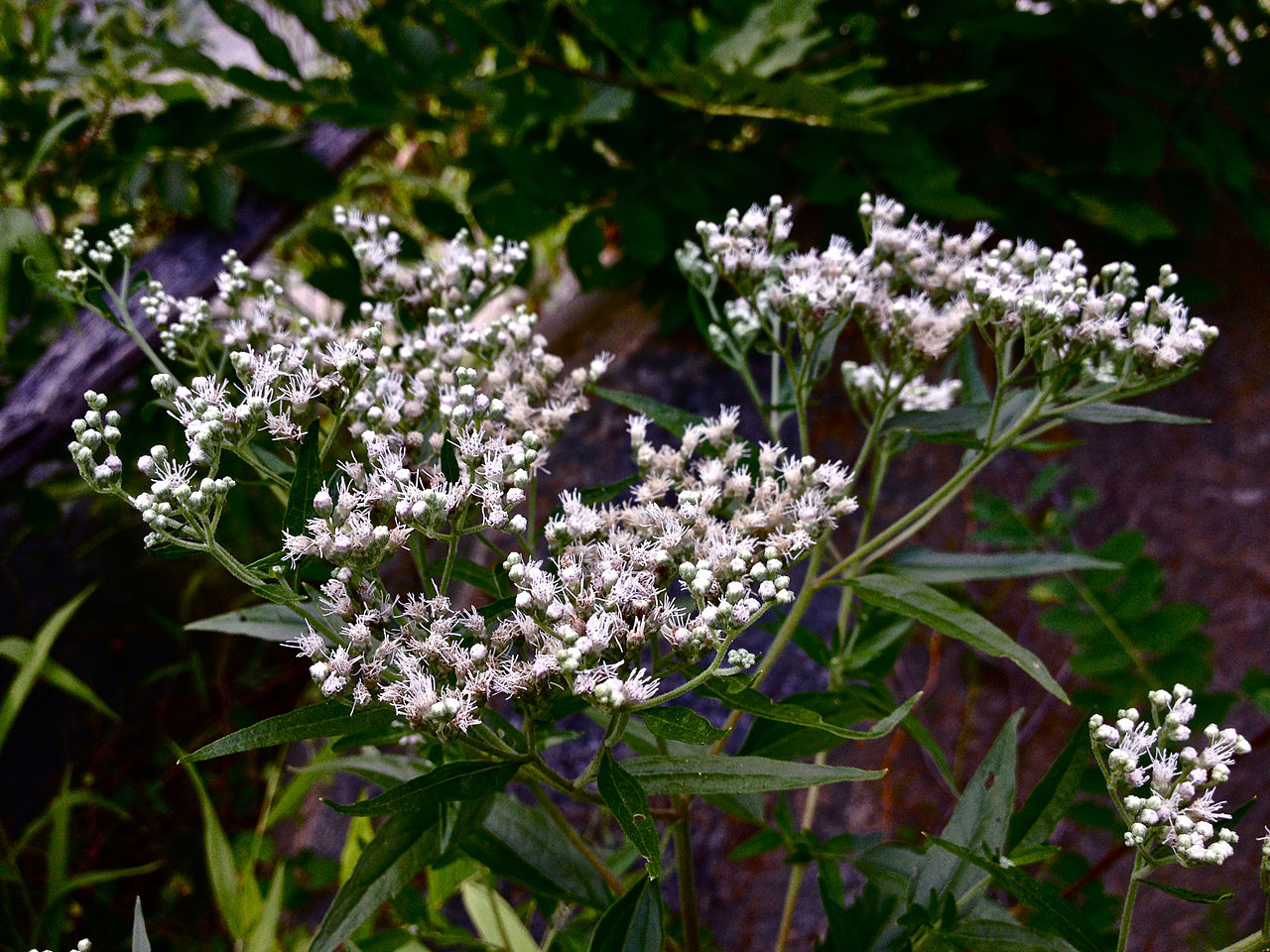
Photo: Fritzflohrreynolds, via Wikimedia Commons, CC BY-SA 3.0
Invasive status alert
This entry covers the thoroughwort group. Lateflowering thoroughwort (Eupatorium serotinum) is a widespread Florida native with white fall flowers. Semaphore thoroughwort (Eupatorium mikanioides) is a central and coastal Florida native. Dog fennel (Eupatorium capillifolium) is the feathery roadside one, native but weedy, included here honestly.
Why it works here
Thoroughworts are unsung fall pollinator workhorses. The flat or fluffy heads of small white flowers open late in the season and pull in clouds of butterflies, native bees, wasps, and beneficial flies right when the garden is winding down. Lateflowering thoroughwort is native across the state and easy in a sunny to part-shade bed. Semaphore thoroughwort is a central and coastal Florida native that suits our region and moister spots. I use them as the informal, meadowy filler in a naturalistic planting where I want late nectar and a soft white haze behind bolder flowers.
Care
Give them full sun to part shade and average to moist soil, most are not fussy. Water to establish and during dry spells. They self-seed, sometimes freely, so pull the seedlings you do not want each year to keep the planting intentional. Cut the tall species back by a third in early summer if you want them shorter and less likely to lean. Cut everything to the ground after it dies back. Compost and mulch, no synthetic inputs.
Common problems
Self-seeding: this is the honest caveat. Thoroughworts, and dog fennel especially, seed around. Deadhead before seed drops or pull seedlings yearly.
Dog fennel gets big and weedy: it is native but reads as a roadside weed and can dominate. I rarely plant it on purpose, and if it volunteers I thin it hard.
Flopping: the tall species lean in rich soil or shade. Pinch them back once in early summer and give them sun.
Common questions
Aren't these just weeds?
Some, like dog fennel, look weedy and act weedy. But several thoroughworts are genuinely garden-worthy for their late white flowers and the pollinators they feed. The trick is choosing the right species and staying ahead of the seeding.
When do they bloom?
Mostly late summer into fall, which is the whole point. They feed pollinators and migrating butterflies at the tail end of the season when little else is open.
Will they spread everywhere?
They can seed around. Pull unwanted seedlings once a year and deadhead before seed drops, and you keep them as a feature instead of a takeover.
Interested in a thoroughworts in your landscape?
We plan, install, and care for it. Start with a paid consultation.