
Liatris
Purple bloom spikes that light up in fall, and migrating butterflies treat them like a rest stop. Multiple native species.
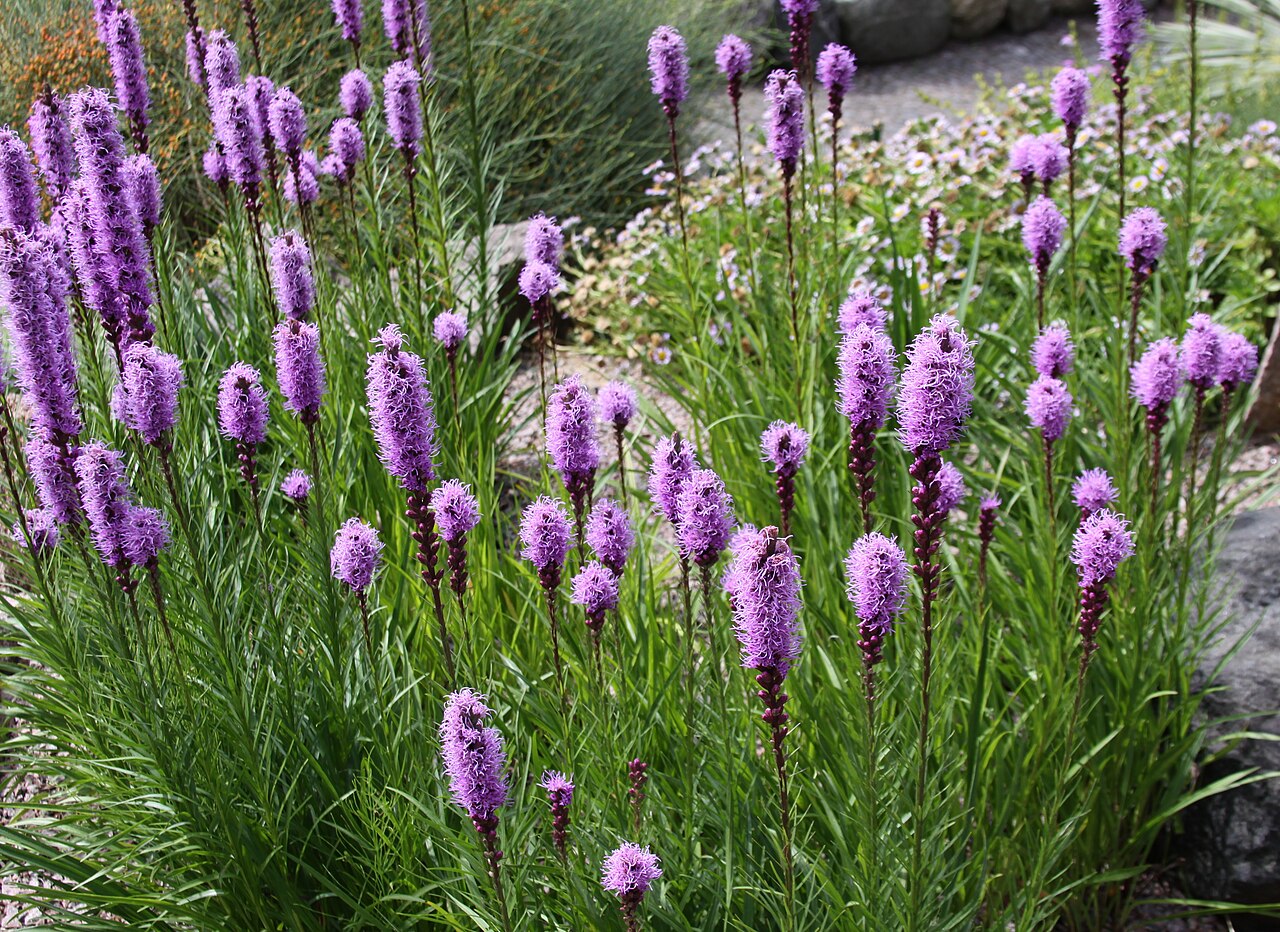
Purple flower spikes that bloom top down and pull in every butterfly around.
Invasive status alert
This entry covers our native blazing stars, called Liatris or gayfeather. Graceful blazing star (Liatris gracilis) and Chapman's blazing star (Liatris chapmanii) suit our dry sandy soils. Dense blazing star (Liatris spicata) is the one for moister spots.
Why it works here
Blazing stars send up tall wands of purple flowers that open from the top down, which is unusual and eye-catching, and butterflies and native bees cannot leave them alone. The beauty for us is that there is a Liatris for almost any spot: Chapman's and graceful blazing star thrive in dry, deep sand and full sun, exactly our worst-soil sunny corners, while dense blazing star wants a moist spot and even takes wet feet. They bloom late summer into fall, layering purple into the season when goldenrod and thoroughworts are also going. I plant them in clusters so the spikes read as a mass and hold each other up.
Care
Match the species to the moisture: gracilis and chapmanii in dry, very well-drained sand, spicata where it stays moist. All want full sun. Water to establish, then the dry-sand types need little. They grow from an underground corm and come back each year, dying to the ground in winter. Plant them in groups of five or more for the best show and mutual support. Leave the seed heads for goldfinches, then cut down in late winter. Compost lightly at planting, no synthetic feed.
Common problems
Wrong moisture kills them: the real caveat. Chapman's and graceful blazing star rot in wet ground; dense blazing star sulks in bone-dry sand. Put each where it belongs.
Leaning spikes: tall stems flop if grown soft or singly. Full sun, lean soil, and planting in groups keeps them upright.
Corm rot in soggy soil: for the dry-loving species, never plant where water stands. Raise the bed if needed.
Common questions
Which blazing star for my dry sandy yard?
Chapman's or graceful blazing star. They are built for deep dry sand and full sun and will rot if you baby them with water.
I have a low wet spot, is there one for that?
Yes, dense blazing star (Liatris spicata) takes moist to wet soil and is the most widely available, so it is easy to find.
Why do the flowers open from the top first?
That is just how Liatris blooms, top down instead of bottom up. It is one of the fun quirks that makes the spikes so recognizable.
Interested in a liatris in your landscape?
We plan, install, and care for it. Start with a paid consultation.