
Blue-Eyed Grass
A petite iris cousin for edges and borders. Little starry blue flowers over grassy tufts.
A tiny iris relative with grassy leaves and small blue-purple stars in spring.
Why it works here
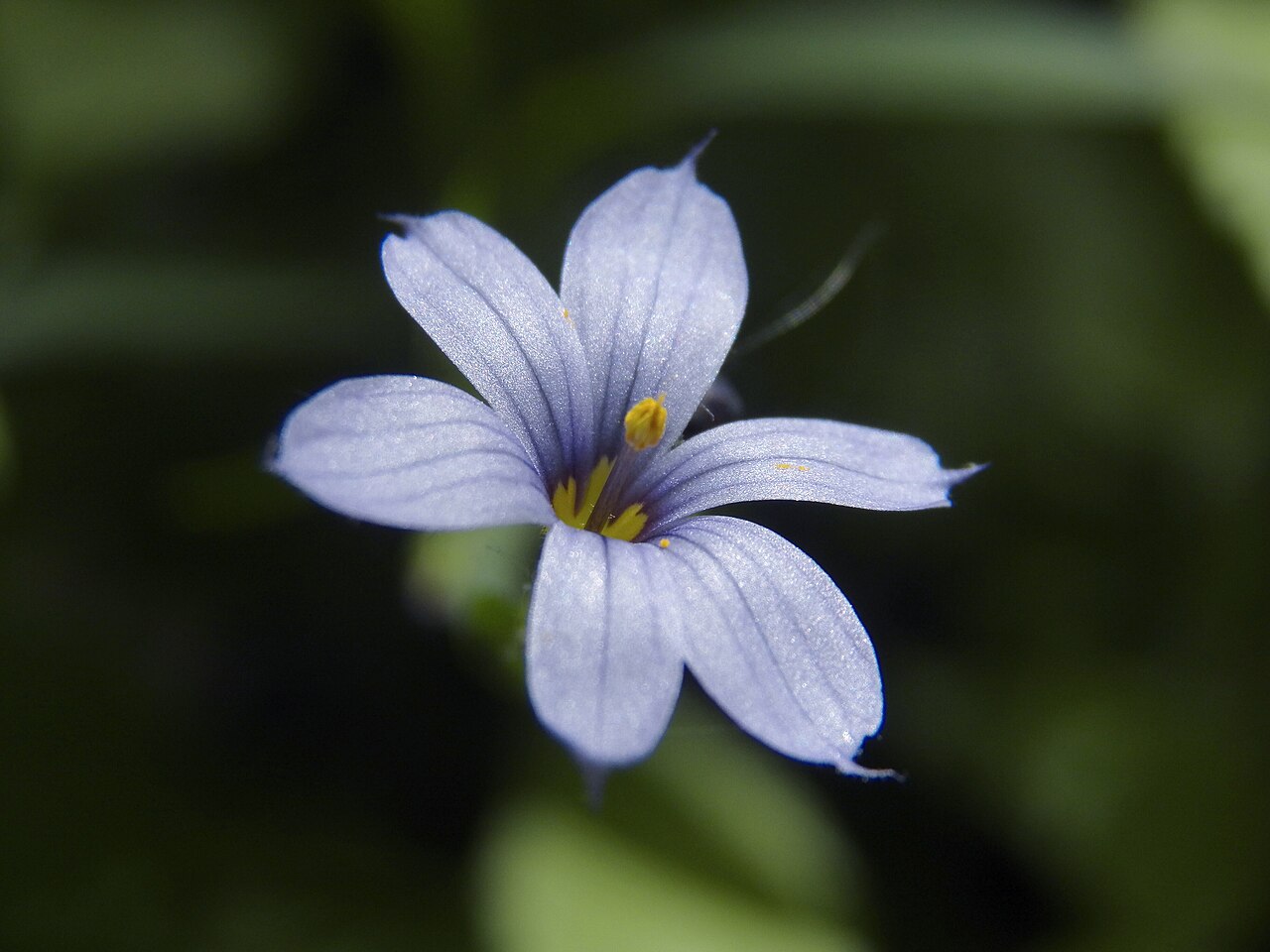
It is not a grass at all, it is a little iris, and the grassy fans stay neat while spring brings a scatter of small blue to purple flowers with yellow centers. It grows in moist roadsides, hammocks, and seepy spots around the state, so the one thing to know is it likes moisture. I use it as a low, clumping edger or a front-of-bed accent near a rain garden, a downspout, or anywhere the soil stays a little damp. Sweat bees and other small native pollinators work the flowers.
Care
Full sun and consistently moist, well-drained soil is the recipe. This is not a plant for a hot dry corner, so pick a spot that stays a bit damp and water it in dry spells. It forms tidy clumps that you can divide every couple of years to make more plants and keep them vigorous. It goes dormant and disappears in winter, so mark it or interplant so you do not dig into it. Compost and a light mulch, no synthetic fertilizer.
Common problems
Dies in dry soil: the honest caveat. It needs steady moisture, so a hot dry bed is the wrong home for it.
Vanishes in winter: it is dormant, not dead. Mark its spot so you do not accidentally dig it up or plant on top of it.
Short-lived clumps: divide every 2 to 3 years to keep the planting fresh.
Common questions
Is it actually a grass?
No, it is a small member of the iris family with grass-like leaves. That is why you get real blue flowers instead of grass seed heads.
Where should I plant it?
Somewhere sunny that stays a little moist, like the edge of a rain garden or near a downspout. It will not thrive in dry sand.
It disappeared over winter, is it dead?
Most likely just dormant. It dies back in winter and returns in spring, so give it a season before you write it off.
Interested in a blue-eyed grass in your landscape?
We plan, install, and care for it. Start with a paid consultation.