
Grayleaf (Melochia tomentosa)
Soft silvery leaves and little violet blooms nearly year-round, with pollinators working it all day long. A dry, sandy-spot specialist that asks for almost nothing once it's in.
A soft gray-leaved tropical shrub with small pink flowers nearly year-round.
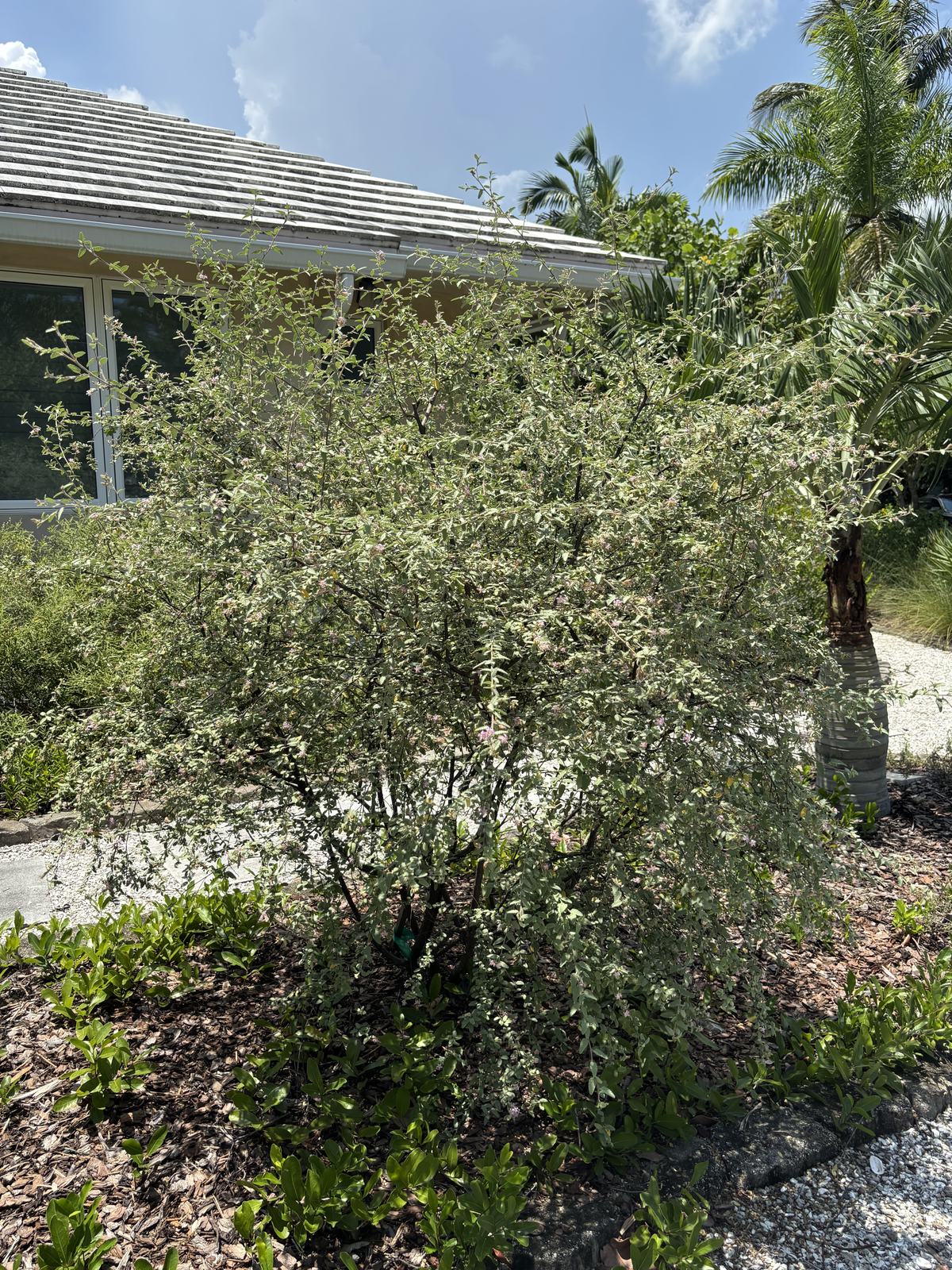
Photo: Longleaf Design
Invasive status alert
Also called grayleaf teabush and pyramid bush. Honest status note: Melochia tomentosa is considered native to Florida but is now extirpated from the wild here, meaning it no longer grows wild in the state. The old Florida records, including a questionable one from St. Lucie County, are historical. It survives in cultivation and is grown as a tough native-heritage shrub. Here's the fun part: while it's gone from the wild in Florida, it still grows wild in parts of south Texas, Mexico, and the Caribbean, so planting one here keeps a piece of Florida's lost flora alive in gardens.
Why it works here
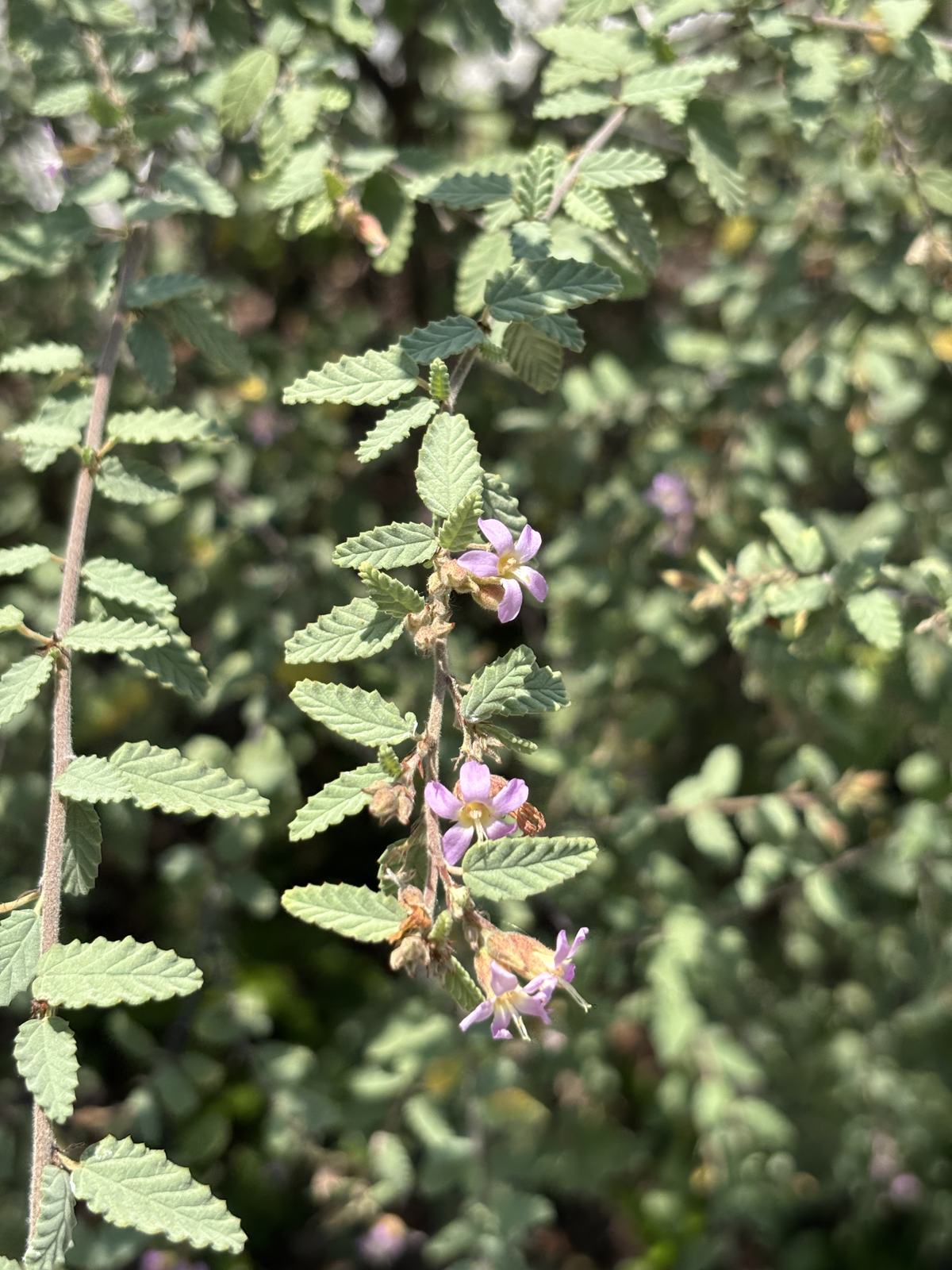
Grayleaf earns its name with soft, felty gray-green foliage that reads cool and silvery in a bed, and it flowers pink almost year-round with a heavy flush from fall into early spring. Those flowers feed small butterflies like hairstreaks, crescents, blues, and skippers, plus native bees and even hummingbirds. It handles heat and drought and our sandy soil well, so as a large background shrub in a warm, sunny, well-drained spot it gives you long color and unusual foliage. The honest framing: it is a Florida-heritage native that no longer grows wild in the state, so planting it is keeping a piece of that flora alive in gardens.
Care
Full sun to part shade and dry, well-drained soil suits it. Water to establish, then it is drought tolerant and does not want wet feet. It is a tropical shrub, so a hard freeze can knock it back or kill it, keep it in a warm protected spot on the Treasure Coast and be ready to let it resprout after a cold snap. Prune to shape after the main bloom flush. Compost and mulch at planting, no synthetic fertilizer. It grows readily from seed, which is the usual way to get it.
Common problems
Cold sensitivity: the honest caveat. It is tropical and frost can damage or kill it. Site it warm and protected, and treat winter damage as prune-and-resprout, not necessarily loss.
Hard to find: because it is extirpated from the wild and only cultivated, it can be tough to source. Look to specialty native nurseries.
Size: it gets big, 8 to 10 feet. Give it room as a background shrub rather than crowding it into a small bed.
Common questions
Is this actually a Florida native?
It is considered native to Florida but no longer grows wild here, it is extirpated, surviving only in cultivation. So yes by heritage, but you will only find it as a nursery or seed-grown plant, never in the wild.
Will it survive our winters?
On the Treasure Coast, usually, in a warm protected spot. It is tropical and a hard freeze can burn it back, but it often resprouts. Plant it where it is sheltered from cold.
How big does it get?
Large, around 8 to 10 feet tall and wide. Use it as a background or specimen shrub and give it space, not as a small-bed filler.
Interested in a grayleaf (melochia tomentosa) in your landscape?
We plan, install, and care for it. Start with a paid consultation.