
Goldenrod
Fall gold and one of the biggest pollinator banquets we can plant. Several native species, all welcome here.
The big fall pollinator plant, and no, it does not cause your allergies.
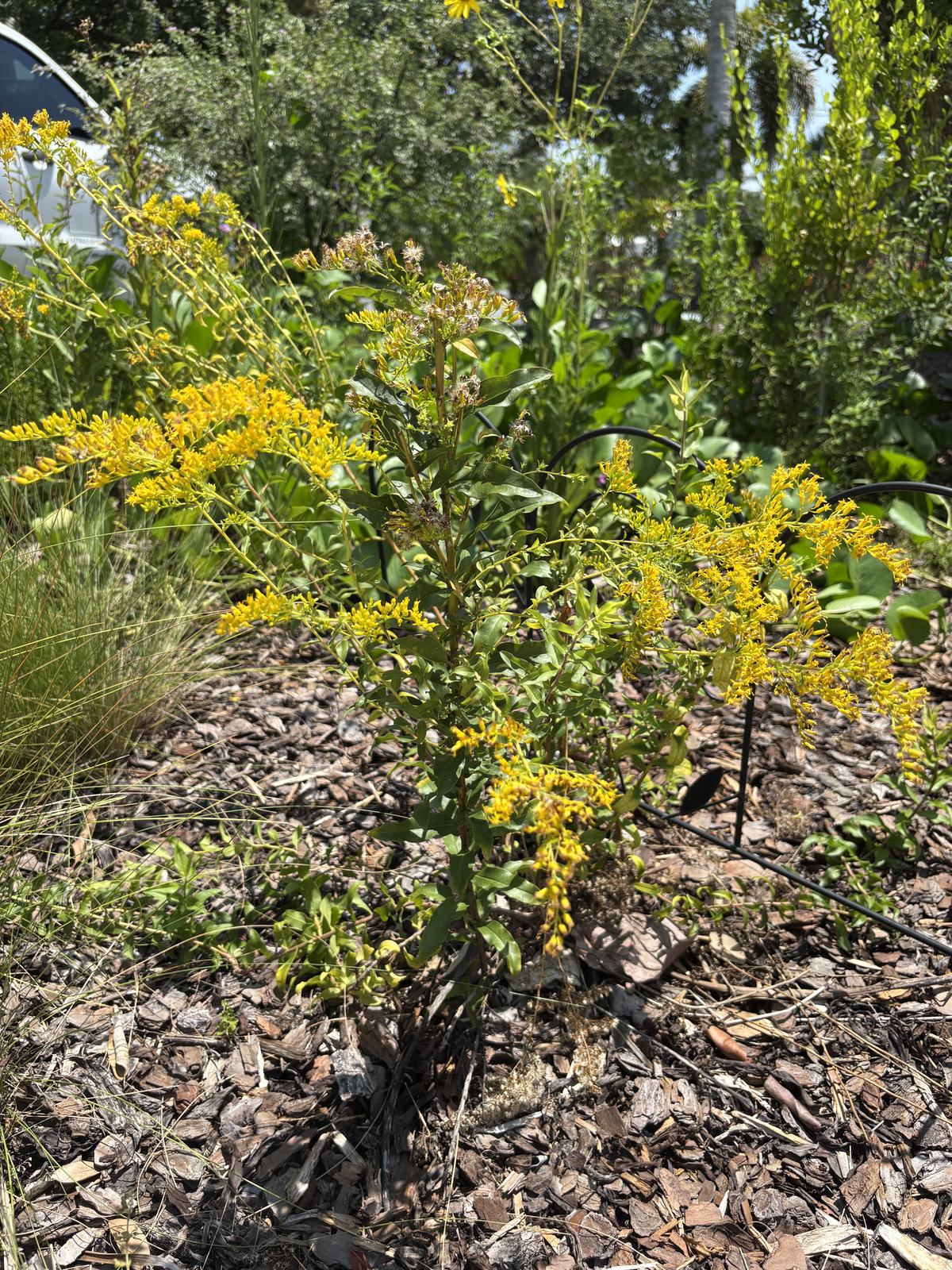
Photo: Longleaf Design
Invasive status alert
This entry covers three good Florida native goldenrods. Seaside goldenrod (Solidago sempervirens) is my first pick for the Treasure Coast because it takes salt. Wand goldenrod (Solidago stricta) and pinebarren goldenrod (Solidago fistulosa) are the other two I reach for.
Why it works here
Goldenrod is one of the most important fall nectar sources there is, feeding migrating butterflies, native bees, and beneficial insects when little else is flowering. Seaside goldenrod is the standout for us because it grows on dunes and takes salt spray and salty soil, so it belongs in beachside and hot dry beds across most of the state. Wand and pinebarren goldenrod suit moister, sunnier spots like the edge of a rain garden or a damp flatwoods-style planting. And to clear up the myth: goldenrod pollen is heavy and insect-carried, it does not float into your nose. Ragweed, which blooms at the same time, is the real allergy culprit.
Care
Match the goldenrod to the spot: seaside in dry, sandy, sunny, even salty ground, the other two where it stays a bit moist. All of them want full sun to flower hard. Water to establish, then seaside needs almost none. These spread by underground stems into colonies, so give them space, 3 feet or more apart, and plan on them making a patch. Cut the spent stalks down after bloom, or leave the seed heads for the birds and tidy up in late winter. Compost and mulch, no synthetic fertilizer.
Common problems
Spreading colonies: they run by rhizomes and can cover more ground than you planned. Give them their own area, or edge the bed, and pull runners at the margin once a year.
Flopping: rich soil or too much shade makes tall stems lean. Full sun and lean, well-drained soil keeps them upright.
The allergy myth: worth repeating, goldenrod is not your hay fever. No action needed except telling the neighbors.
Common questions
Doesn't goldenrod trigger allergies?
No. Its pollen is sticky and moved by insects, not wind, so it does not reach your sinuses. Ragweed blooms at the same time and gets the blame.
Which one should I plant near the beach?
Seaside goldenrod. It grows on dunes naturally and shrugs off salt spray and salty sand, which the other two do not do as well.
Will it take over my whole bed?
It spreads into a colony by underground stems, so give it a defined area and pull stray runners at the edge once a year. Well behaved with a little attention, a spreader if you ignore it.
Interested in a goldenrod in your landscape?
We plan, install, and care for it. Start with a paid consultation.