
Blue Porterweed
A butterfly nectar staple that blooms nearly year-round. Make sure it's the low native one, not the tall import.
The low, sprawling native porterweed, a butterfly diner that blooms all year.
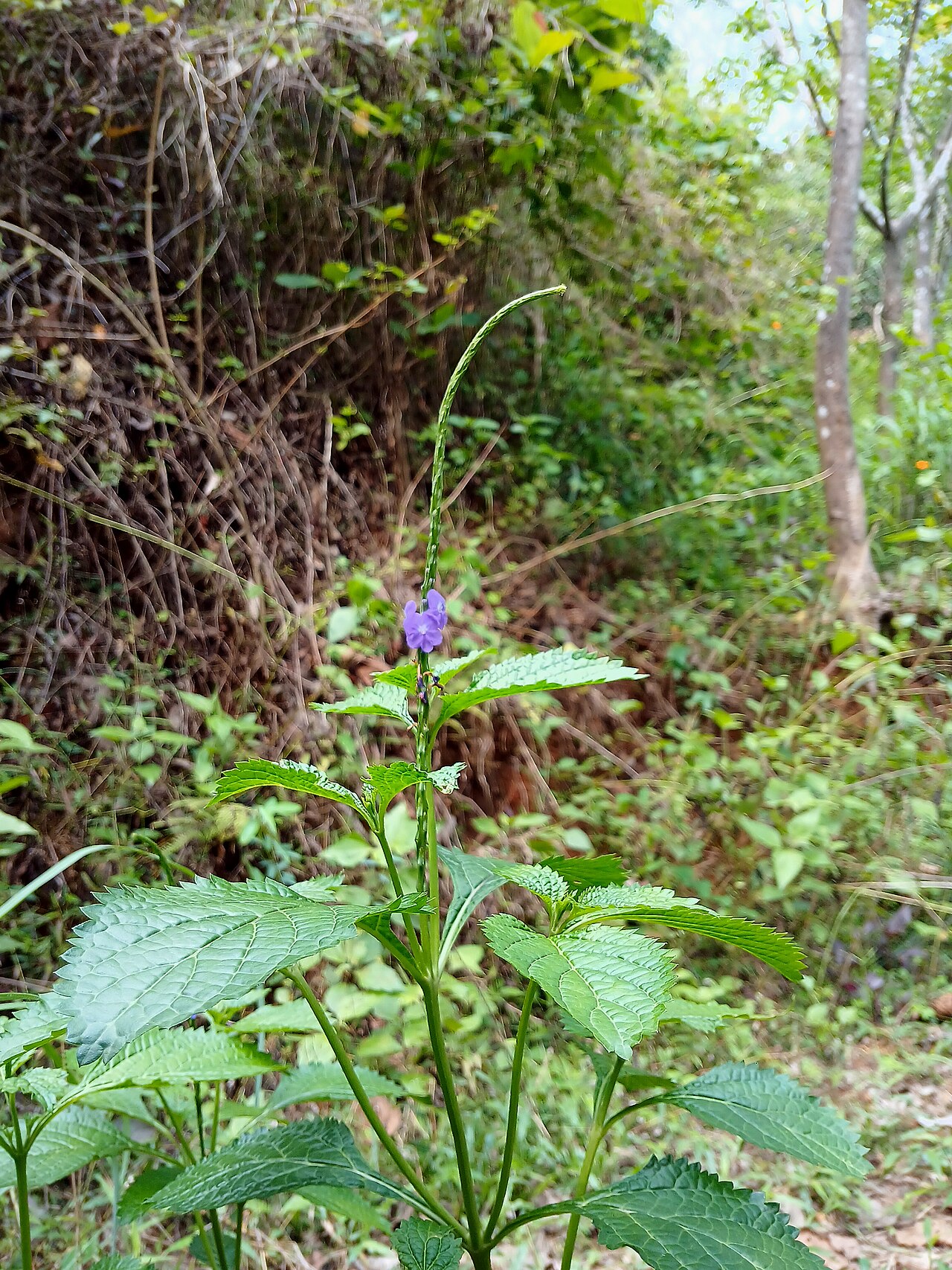
Photo: Nativeplants garden, via Wikimedia Commons, CC BY-SA 4.0
Invasive status alert
Get the right one, this matters: there are two porterweeds sold in Florida and they look similar at the nursery. This entry is the LOW, sprawling NATIVE, Stachytarpheta jamaicensis. The common impostor is the non native Stachytarpheta cayennensis (also sold as S. urticifolia), a tall UPRIGHT woody shrub. Here's how to tell them apart: Growth habit: the native stays low, about 10 inches, with branches that run horizontally and mound. The non native grows into an upright shrub with a real trunk, 4 to 6 feet tall. Leaves: the native's leaves are duller, sometimes purple tinged, and smooth between the veins. The non native's leaves are dark glossy green with a quilted, bumpy (bullate) surface between the veins, that quilting is the giveaway. Flowers: the native's are blue, usually one to a few open at a time on the spike. The non native's are a bit smaller, violet to purple with a white center, on a narrower spike. If it's tall, upright, and woody with quilted leaves, it's the non native, leave it at the store.
Why it works here
The native blue porterweed is one of the best butterfly plants you can put in a Stuart yard, its blue flowers open a few at a time along a spike nearly all year and butterflies work it constantly, along with bees. Because the true native stays low and sprawling, I use it as a flowering groundcover, a bed edge, or a filler between shrubs where it forms a loose mound. It's tough about our sun, sand, and drought. Just make sure you're planting the low native and not its tall non native lookalike.
Care
Plant in full to part sun and well drained sandy soil, water to establish, then it's drought tolerant. Feed lightly if at all, compost is plenty. Shear it back when it gets rangy or wanders and it comes back fuller with more flowers. It's somewhat cold sensitive, a hard freeze can knock it back, but it usually resprouts and it reseeds, so a planting persists. Pinch or trim to keep it in bounds as a groundcover.
Common problems
It's an easy, rewarding native with few real pests. The single biggest "problem" is buying the wrong plant, the tall non native lookalike, so use the ID notes above. It can get nipped by frost in a cold snap, cut back damaged growth and it rebounds. It self seeds modestly, easy to edit. Otherwise its main job is feeding butterflies, and it does that with almost no help from you.
Common questions
How do I make sure I'm buying the native one?
Look for a low, sprawling plant, not a tall upright shrub, and check the leaves. Smooth leaves mean native, a quilted bumpy leaf surface means the non native. When in doubt, buy from a Florida native nursery and ask for Stachytarpheta jamaicensis by name.
Is the tall one actually harmful, or just not native?
It's mainly a non native that spreads by seed and can pop up where you don't want it, and it takes the place of the better native. It's not the villain some invasives are, but there's no reason to plant it when the native does the same job and belongs here.
Will it really bloom all year?
In our climate it flowers nearly year round, pausing only after a cold snap. Give it sun and it's about the most reliable butterfly nectar plant on this list.
Interested in a blue porterweed in your landscape?
We plan, install, and care for it. Start with a paid consultation.