
Elephant's Foot
A flat rosette of big leaves, then airy stalks of small purple flowers. One of the few that loves dry shade.
A quiet native wildflower with a big flat leaf rosette and airy lavender fall blooms.
Why it works here
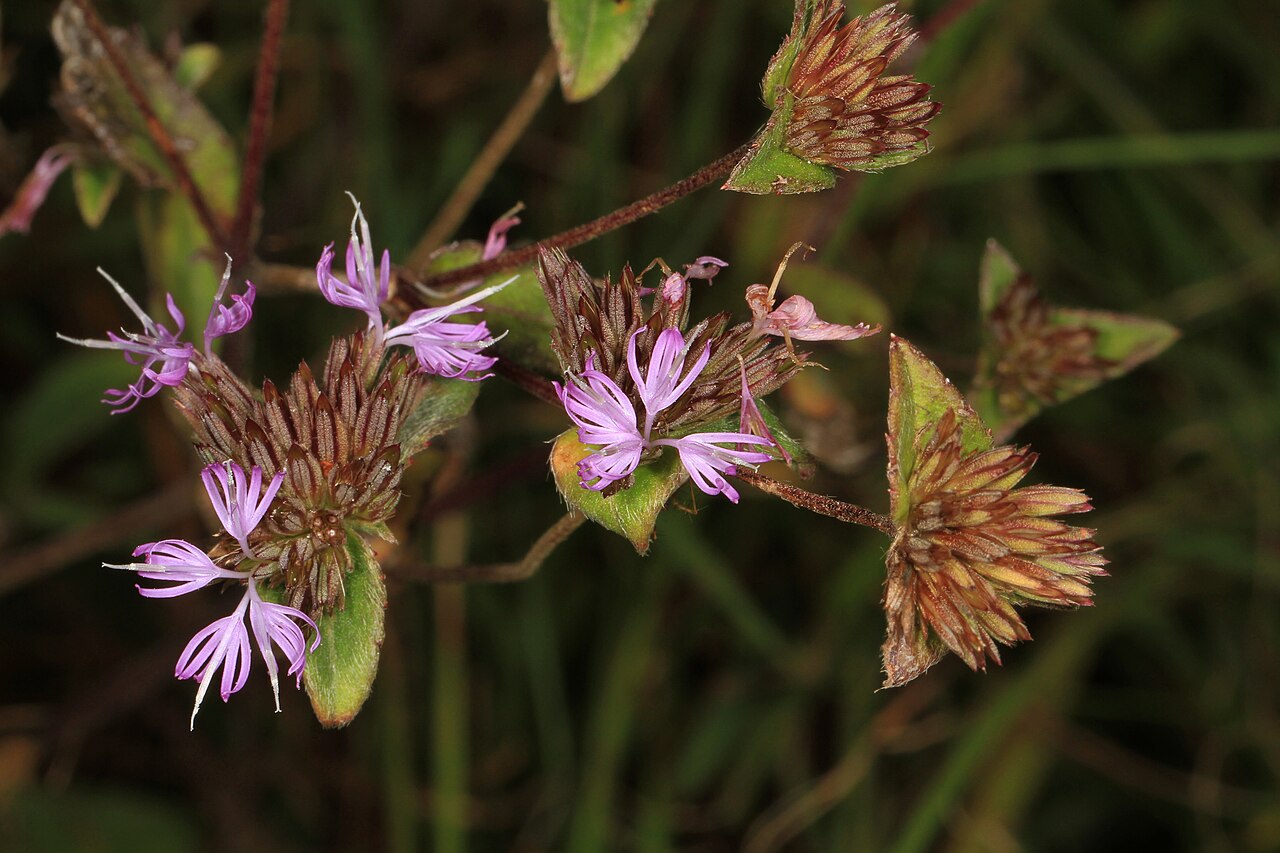
This is a Florida native found nearly throughout the state, so it slots easily into a naturalistic Stuart planting, especially a shadier native bed where flowering choices get thin. It sits most of the year as a flat rosette of broad leaves, said to look like an elephant's footprint, then in summer through fall it sends up wiry stalks of small lavender to pink or whitish flowers that feel airy and wild. Native bees especially work the blooms. It's a subtle plant, not a showstopper, that fills the understory and supports pollinators.
Care
Easy and low input. Water to establish, then it handles our range from dry to slightly moist sandy soil without fuss. No feeding needed beyond a little compost. It needs essentially no pruning, you can cut down the spent flower stalks after they set seed if you want it tidy. It spreads and renews mainly by seed, so leave the seed heads if you'd like more. Give it the shady to part shady spots where sun lovers won't perform.
Common problems
It's a tough, low maintenance native with few pest issues. The honest caveat is that it contains natural compounds (elephantin and elephantopin) that are cytotoxic, meaning it's not a plant to eat or make home remedies from, grow it as an ornamental and pollinator plant only. It's also understated, so if you want bold color this isn't it, its value is texture, the leaf rosette, and quiet late season bloom. In deep shade it flowers less, a little more light helps.
Common questions
Will it grow in a shady spot where nothing flowers?
That's one of its best uses. It takes full sun all the way to shade, so it's a good native for a dim bed, though it blooms a bit more with some light.
It's not very showy, why plant it?
For the flat sculptural leaf rosette, the airy fall flowers, and the native bees it feeds. It's a supporting player in a naturalistic native garden, not a star, and that's the point.
Is it safe around the vegetable garden or edibles?
It's fine as a neighboring ornamental, just don't eat it or use it medicinally. It carries natural compounds that make it unsafe to consume, so keep it ornamental.
Interested in a elephant's foot in your landscape?
We plan, install, and care for it. Start with a paid consultation.