
Ixora
The workhorse bloomer of South Florida, in every warm color. It wants acidic soil, so feeding it right is the trick.
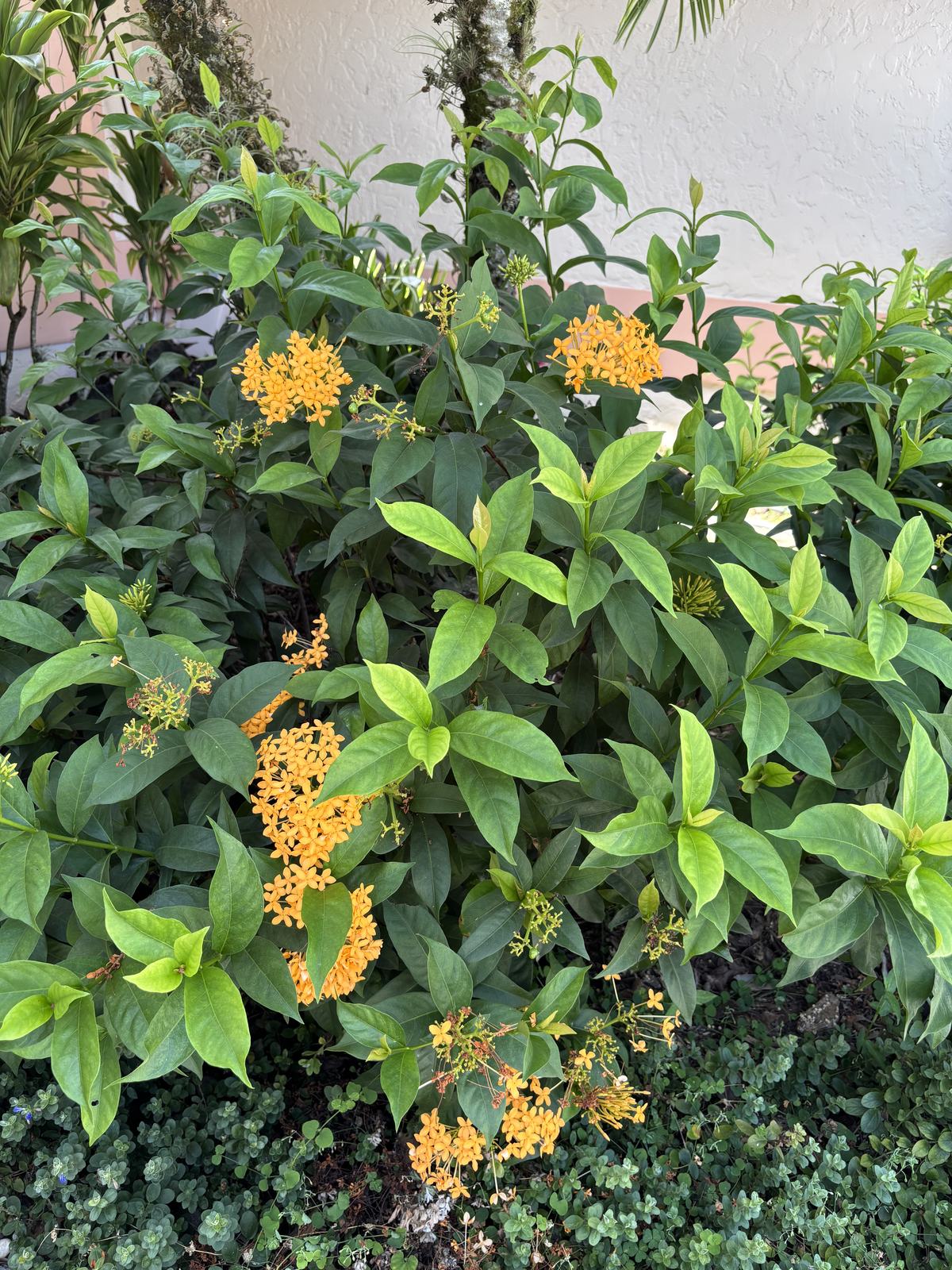
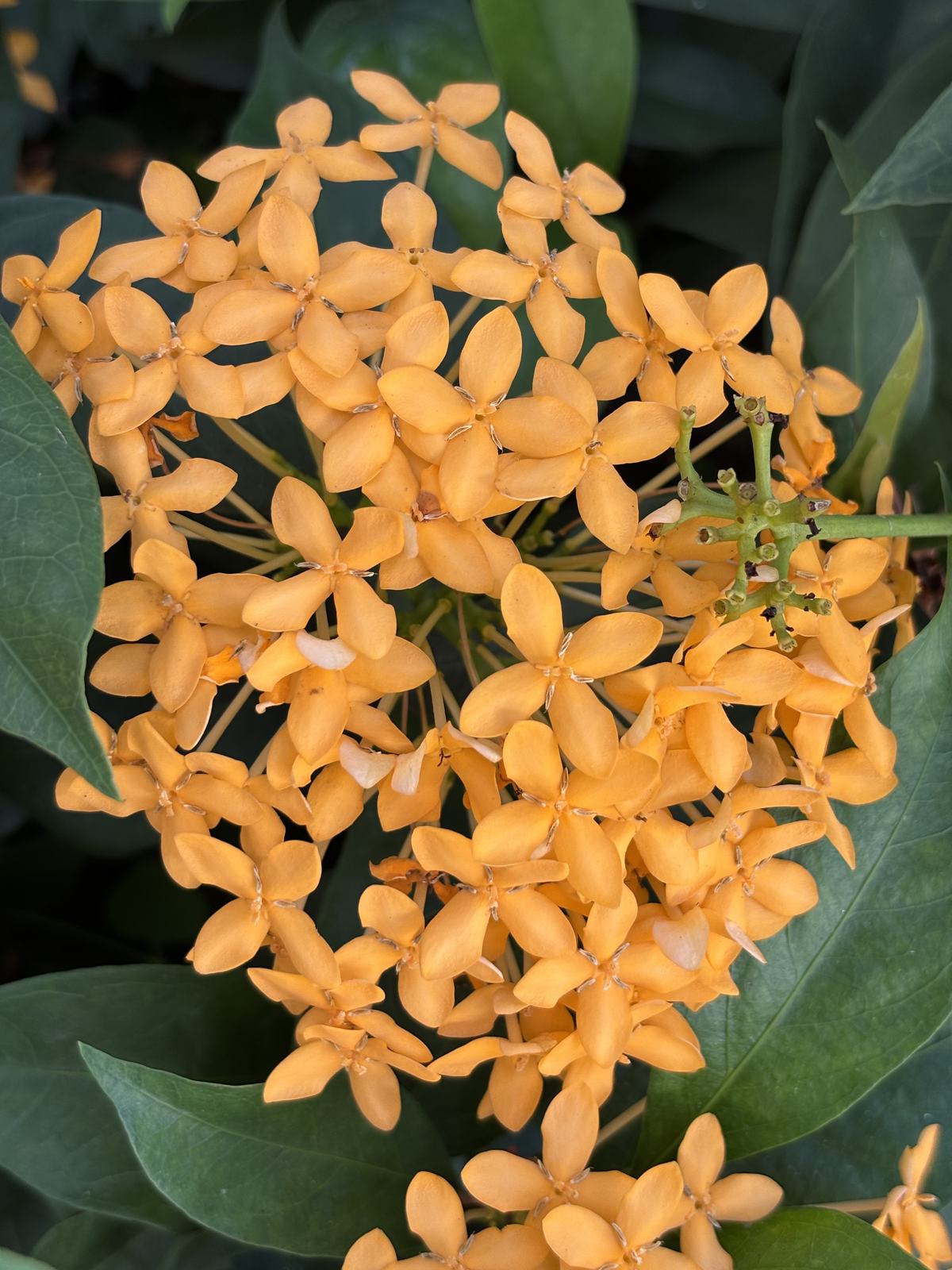
Glossy evergreen shrub topped with clusters of red, orange, pink, or yellow flowers.
Invasive status alert
One honest note: the UF/IFAS Assessment lists Ixora coccinea as "moderate risk, evaluate" under its predictive tool, not as invasive, high risk, or caution. It is not a listed invasive here. I am flagging it only because you deserve the full picture, and I would still plant it without worry on the Treasure Coast.
Why it works here
Ixora is a workhorse of South Florida yards for good reason: it blooms in warm weather almost nonstop and comes in a range of colors and sizes. Dwarf selections like 'Nora Grant' and 'Maui' make tidy low hedges, and the standard forms give you a taller flowering shrub. It suits Stuart's heat, but there is one honest catch, our soil. See the care note below on chlorosis.
Care
Ixora is an acid-loving plant, and much of our soil runs alkaline, which locks up iron and manganese. That shows up as chlorosis, which is when the leaves yellow between green veins because the plant cannot pull those nutrients from high-pH soil. The fix is cultural: mulch heavily with an acidic organic mulch, feed with compost and a balanced organic fertilizer formulated for acid-loving plants, and add organic sources of iron and manganese if yellowing shows. Water consistently, since drought stress and wet feet both hurt it. Prune lightly to shape after a bloom flush, but heavy shearing cuts off the flower buds, so go easy.
Common problems
Chlorosis (yellowing leaves) is the number one complaint and comes straight from our alkaline soil, handled with acidic mulch and organic iron and manganese as above. Root-knot nematodes, which are microscopic soil worms, can weaken plants in sandy soil; keep the plant vigorous with compost and mulch, since a strong plant tolerates them best. Aphids and scale sometimes gather on new growth; rinse them off or use an organically listed horticultural oil. Sooty mold, a black film, follows those sap-suckers and clears once you deal with the insects.
Common questions
Why are my ixora leaves turning yellow?
Almost always it is our alkaline soil locking up iron and manganese, called chlorosis. Mulch with an acidic organic mulch, feed with an acid-loving-plant organic fertilizer, and add organic iron and manganese. It greens up over a few weeks.
Why did it stop flowering after I trimmed it?
You probably sheared off the flower buds. Ixora blooms on new tip growth, so prune lightly and only right after a bloom flush, then let it push new tips before the next round of flowers.
What is the difference between the dwarf and regular kinds?
Size, mostly. Dwarfs like 'Nora Grant' stay around 2 to 4 feet and make neat low hedges, while standard Ixora coccinea can reach 4 to 6 feet. Pick the one that matches the space so you are not fighting its size.
Interested in a ixora in your landscape?
We plan, install, and care for it. Start with a paid consultation.