
Mussaenda
Peach and pink leafy bracts, like a tree full of handkerchiefs all summer.
Tropical shrub grown for big showy bracts in pink, white, or red.
Invasive status alert
Species and identity note: "Mussaenda" covers several species and many hybrids sold under trade names. The most common in the trade are the pink and white "Dona" hybrids (often traced to Mussaenda philippica), the red Mussaenda erythrophylla, and white-bracted forms. Care is similar across them, but the exact size and cold-hardiness vary by selection, so confirm which one you are buying.
Why it works here
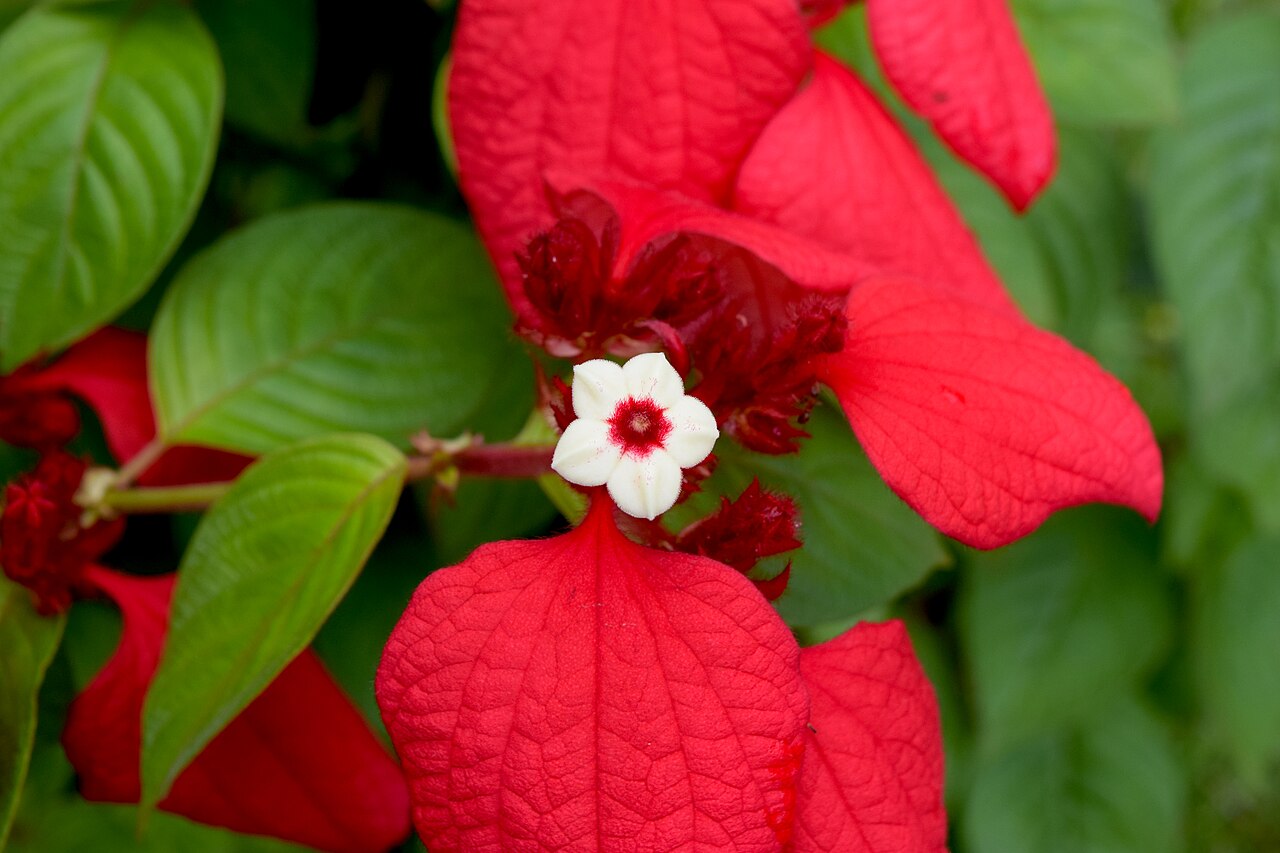
Mussaenda gives you a long tropical show from its bracts, the enlarged colored leaves that surround the small true flowers, much like a poinsettia's color comes from bracts. In our warmth it can bloom for months. It reads as pure tropical, so it fits a lush, layered Florida garden. The honest note is cold: it is a true tropical and does not love our cooler snaps, so give it a warm spot.
Care
Plant it in rich soil amended with compost and keep it consistently moist through the warm season, since it does not want to dry out hard. Feed with compost and a balanced organic fertilizer during active growth to fuel the bracts. Mulch to hold moisture. Prune after a bloom cycle and in early spring to shape it and control size, and cut back cold damage once it warms up. It flowers on new growth, so periodic pruning keeps the show coming.
Common problems
Cold sensitivity is the main caveat: it browns or drops leaves in a chill and a hard freeze can cut it back hard, so plant it warm and sheltered. It can look ragged in the cool season and rebounds when heat returns. Aphids, mealybugs, and whiteflies sometimes gather on new growth; rinse them off or use an organically listed horticultural oil. Too little water or too much shade cuts down the bract display.
Common questions
Are the pink parts the flowers?
Not exactly. The big pink, white, or red parts are bracts, which are colorful modified leaves. The true flowers are the small star-shaped centers. The bracts are what put on the long-lasting show.
Will it make it through winter here?
On the Treasure Coast it can, but it is tender. Expect it to look rough in a cold snap and possibly get cut back by a hard freeze, then recover in spring. A warm, protected spot makes a real difference.
How do I keep it blooming?
Give it sun, steady moisture, and light feeding, and prune it after each bloom cycle. It flowers on new growth, so that periodic trim keeps fresh flowering wood coming.
Interested in a mussaenda in your landscape?
We plan, install, and care for it. Start with a paid consultation.