
Desert Cassia
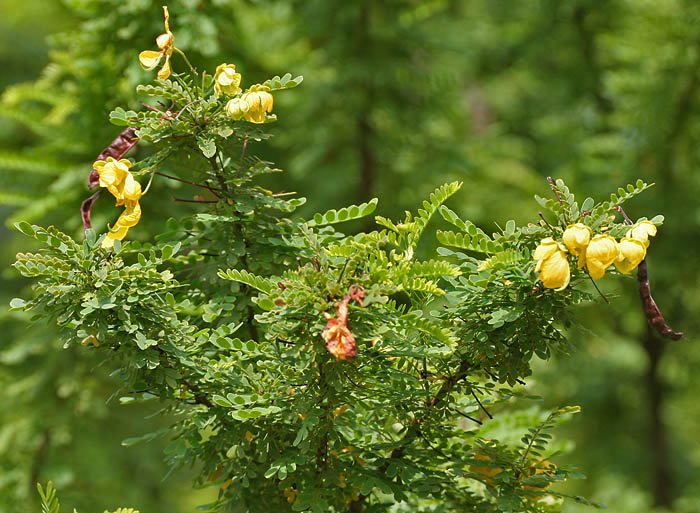
Soft, silvery foliage and yellow blooms, and it hosts our sulphur butterflies too.
Airy small tree covered in yellow flowers, a butterfly host plant.
Why it works here
Desert cassia is a graceful small tree with fine, feathery foliage and a long run of bright yellow flowers, often heaviest in fall and again in spring. It is drought tolerant, loves full sun, and shrugs off our sandy soil, so it fits a low-water, Florida-Friendly design as a specimen or a light screen. The best part for a pollinator garden is that it is a host plant for sulphur butterflies, including the cloudless sulphur and sleepy orange, whose caterpillars feed on the leaves. So expect some leaf chewing, and know that it means butterflies.
Care
Water to establish, then it needs little, which suits our dry season. Feed sparingly, since as a legume it makes some of its own nitrogen and does not want heavy feeding; a bit of compost is plenty. Mulch to hold moisture and keep weeds down. Prune to shape it into a tree form or to control size after a bloom flush. Because caterpillars will feed on it, do not spray them, since eating the leaves is the whole point of hosting butterflies.
Common problems
The honest thing to expect is chewed leaves from sulphur butterfly caterpillars, which is a feature in a butterfly garden, not a pest to fight, so leave them be and let the plant flush new growth. It can get open or leggy, fixed by pruning to shape. In too much shade it flowers poorly and gets sparse, so keep it in full sun. It is otherwise a tough, low-input plant with few real problems.
Common questions
Something is eating the leaves, what do I do?
Most likely nothing. Those are sulphur butterfly caterpillars, and this plant is one of their host plants. Let them feed, skip the spraying, and enjoy the butterflies. The plant pushes out new leaves and keeps going.
How big does it get?
Figure a large shrub to small tree, roughly 8 to 12 feet tall and nearly as wide. You can prune it up into a single or multi-trunk tree form, or keep it lower as a big shrub, depending on your space.
How much water does it need?
Not much once established. Water it in for the first several months to root it down, then it gets by on rainfall in most seasons, which makes it a good choice for a low-water, full-sun spot.
Interested in a desert cassia in your landscape?
We plan, install, and care for it. Start with a paid consultation.