
Pinwheel Jasmine
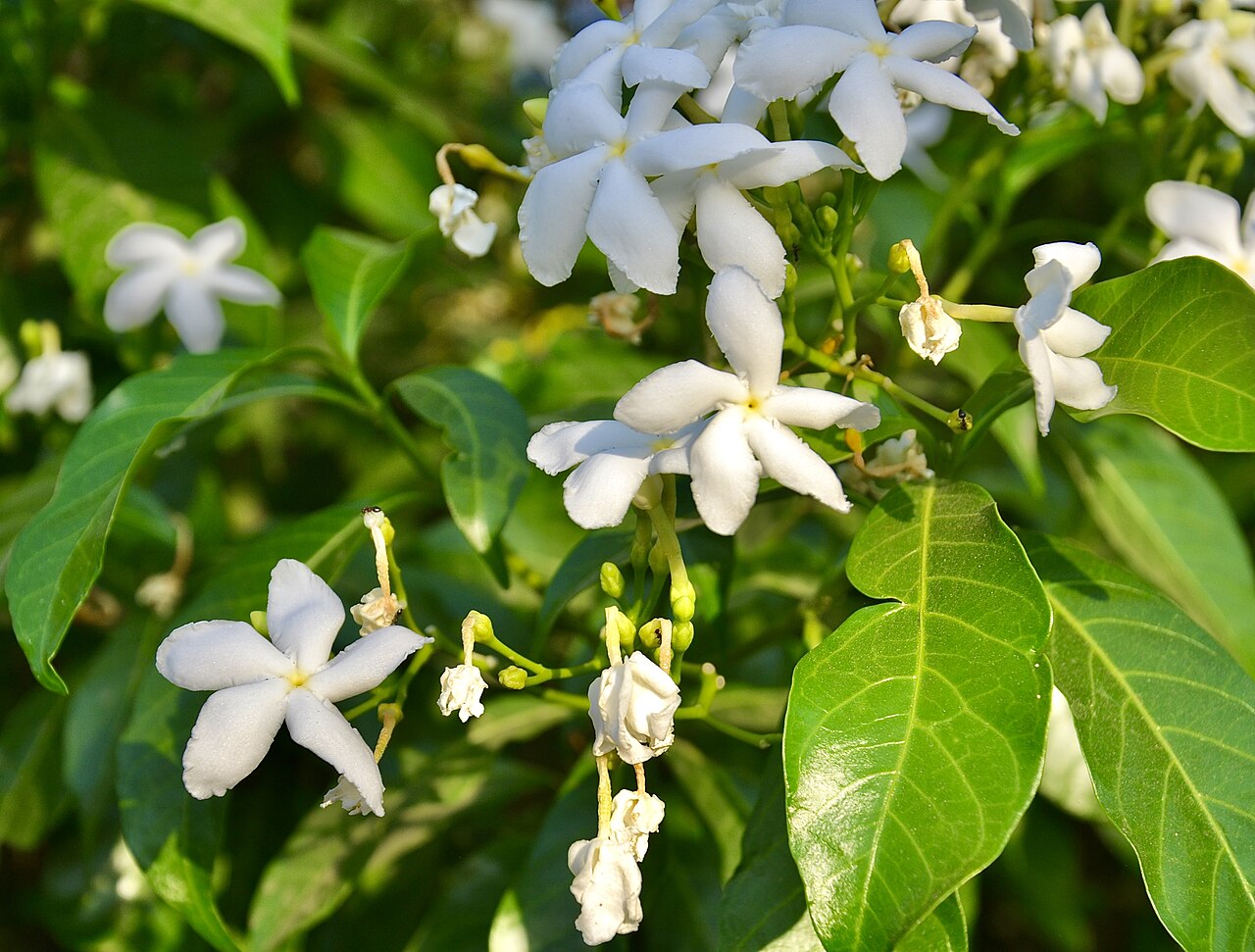
White pinwheel blooms on glossy green. Tidy enough for formal spots, tropical enough to belong here.
Glossy-leaved shrub with white pinwheel flowers, not a true jasmine.
Invasive status alert
One honest caution: it is in the dogbane family and has milky white sap that is mildly toxic if eaten and can irritate skin, so wear gloves when you prune and keep an eye on kids and pets who might chew leaves.
Why it works here
Pinwheel jasmine, sometimes called crepe jasmine, gives you crisp white pinwheel-shaped flowers against deep glossy green leaves, often blooming much of the year in our warmth. It is not a true jasmine, but the flowers are lightly fragrant, especially in the evening. It thrives in part shade, which makes it useful under trees or on the east side of a house where sun-lovers struggle, and it works as an informal hedge or a specimen. A double-flowered form is common in the trade.
Care
Plant it in soil enriched with compost and keep it consistently moist, since it does not like to dry out hard. Feed with compost and a balanced organic fertilizer through the warm season. Mulch to hold moisture and keep roots cool. Prune to shape after a bloom flush, and it takes trimming well and stays dense. One honest caution: it is in the dogbane family and has milky white sap that is mildly toxic if eaten and can irritate skin, so wear gloves when you prune and keep an eye on kids and pets who might chew leaves.
Common problems
Cold can burn it back in a hard freeze, though an established plant usually resprouts from the base, so give it a warm, protected spot. The milky sap, noted above, is the honest caveat: mildly toxic if ingested and can bother sensitive skin, so handle with care. Mealybugs, scale, and whiteflies sometimes appear on stressed plants and leave sooty mold; treat with an organically listed horticultural oil and keep the plant vigorous. In deep shade or dry soil it flowers less, so aim for filtered light and steady moisture.
Common questions
Is it really a jasmine?
No, despite the name. It is Tabernaemontana divaricata, in the dogbane family, not a true jasmine. The flowers do carry a light fragrance, strongest in the evening, which is probably how it picked up the jasmine nickname.
Is the plant poisonous?
The milky sap is mildly toxic if eaten and can irritate sensitive skin, which is common in this plant family. It is not a plant to panic over, but wear gloves when pruning and keep small children and pets from chewing on it.
Will it grow in shade?
Yes, and that is one of its strengths. It does well in part shade to filtered sun, so it is a good flowering shrub for spots that are too shady for sun-lovers. Very deep shade will cut down the flowering, so aim for bright, filtered light.
Interested in a pinwheel jasmine in your landscape?
We plan, install, and care for it. Start with a paid consultation.