
Dwarf Allamanda
Big golden trumpets almost year-round on a shrub that shrugs off heat.
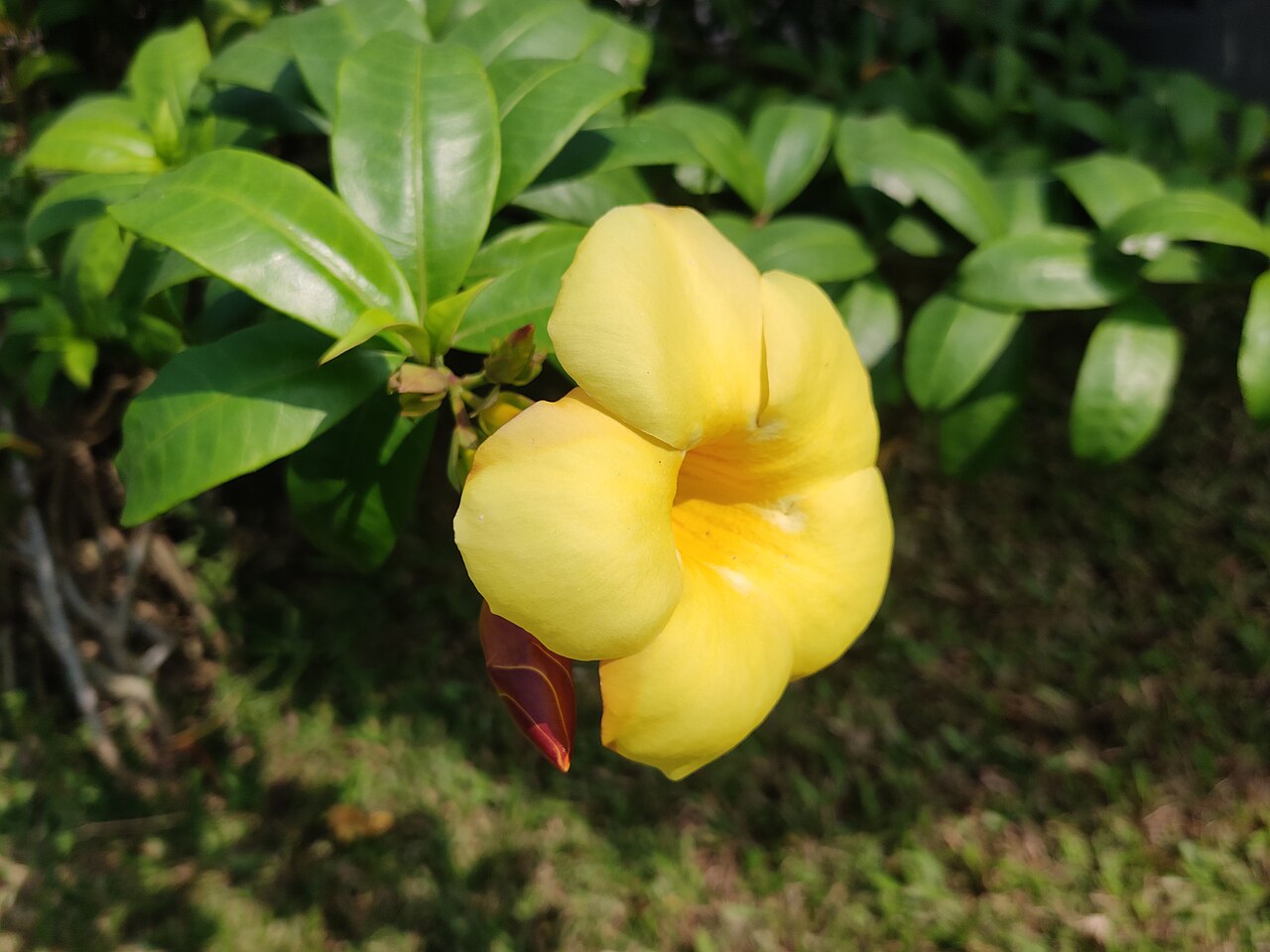
Bright yellow trumpets on a compact, better-behaved allamanda.
Invasive status alert
A note on names, because allamandas are not all equal: this entry is the compact dwarf form sold in the trade as dwarf allamanda. The bush allamanda and the climbing allamanda carry a High Invasion Risk rating from UF/IFAS, so we don't plant those.
Why it works here
It gives you the classic golden allamanda trumpet on a plant that behaves: a compact mound that blooms through the warm months, holds a border edge without a trellis, and doesn't try to climb the house. In a tropical bed it's reliable low color that reads warm and lush against bolder foliage plants.
Care
Full sun and well-drained soil, water to establish, then it's fairly tough. Feed lightly with compost and a balanced organic fertilizer in the warm season and shape it lightly whenever it gets shaggy; it takes trimming well. Wear gloves when you prune: like all allamandas, the milky sap can irritate skin and the plant is poisonous if eaten, so it's not one for a spot where kids or pets chew on things.
Common problems
Toxic sap and plant parts: the honest caveat with every allamanda. Gloves for pruning, and keep it out of reach of nibbling pets.
Leggy or bloom-shy in shade: it wants real sun. Move it or thin what's shading it.
Otherwise sturdy: pests are minor when the plant is healthy and fed organically.
Common questions
Is this the invasive allamanda?
No, and that's the point. The bush and climbing allamandas carry a high invasion risk rating from UF, so we skip them. The compact dwarf form is the one we use for that same golden flower.
Will it climb like my neighbor's allamanda?
No. The dwarf form stays a low mound, roughly knee height, which is exactly why designers love it for borders and bed edges.
Is it safe around kids and pets?
Treat it with respect: the sap can irritate skin and the plant is poisonous if eaten. Plant it where nobody grazes, and wear gloves when trimming.
Interested in a dwarf allamanda in your landscape?
We plan, install, and care for it. Start with a paid consultation.