
Bird of Paradise (orange)
The classic. Orange and blue crane-head blooms over bold paddle leaves say tropical louder than anything.
The orange crane-flower that looks like a bird taking off.
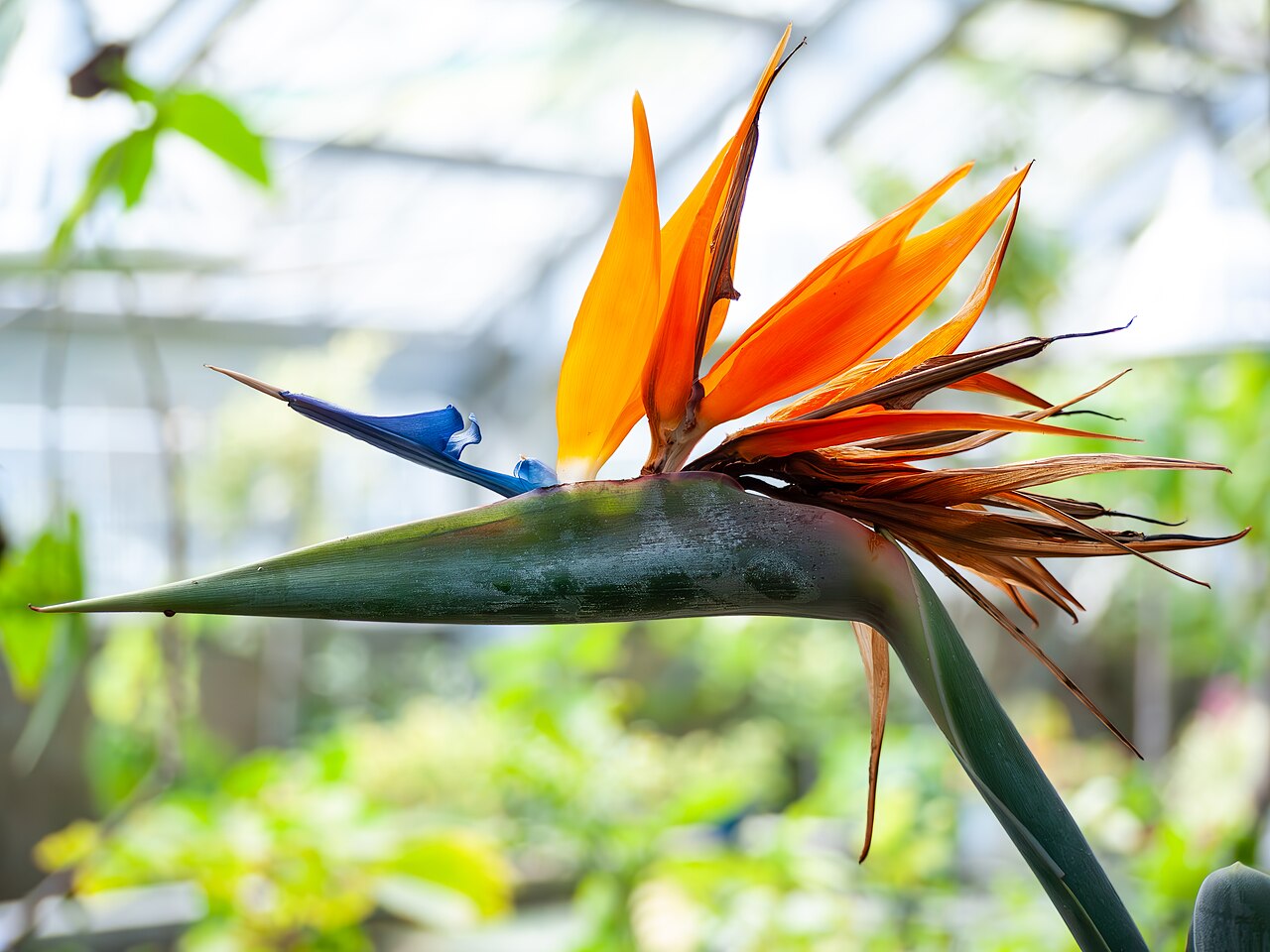
Photo: Reinhold Möller Ermell, via Wikimedia Commons, CC BY-SA 4.0
Why it works here
This is one of those plants that says "the tropics" the second you see it, and Stuart's climate lets it bloom outdoors instead of sulking in a greenhouse. It makes a slow, dense clump of paddle-shaped leaves and throws those orange and blue crane-flowers mostly from fall through spring, right when you want color. I like it as a specimen near an entry or against a wall where the flowers get shown off. It sits happily in our sandy soil once you work in some compost.
Care
Water regularly the first year, then let the top few inches of soil dry between waterings. Feed with compost and a balanced organic fertilizer in spring and again in summer, since a hungry plant just makes leaves and skips flowers. Mulch a couple inches deep, keeping it off the base of the stems. Pruning is mostly cleanup: cut spent flower stalks and any brown leaves down at the base. Divide crowded clumps in spring if you want more plants, though it blooms best when a little root-bound, so I do not rush to split it.
Common problems
Slow to bloom: a young plant, or one grown from seed, can take three to five years to flower, so buy a mature division if you want blooms sooner. Too much shade or too much nitrogen gives you a lush leafy plant and no flowers, so ease up on feeding and give it sun. Scale insects sometimes show up on the leaves; wipe them off or treat with an organically listed horticultural oil. Otherwise it is a tough, low-drama plant.
Common questions
Why won't my bird of paradise bloom?
The three usual reasons are youth, too much shade, and too much nitrogen. Give it full sun, go easy on high-nitrogen feeding, and be patient, because a young or recently divided plant needs a few years to settle in before it flowers.
Can it take our winter?
In Stuart, yes. It is reliably hardy here. A rare hard freeze can burn the leaves, but the plant recovers from the base, so just trim the damage in spring.
How big will it get?
Figure roughly 4 feet tall and 4 feet wide over time. It spreads slowly by widening its clump, so it stays a well-behaved specimen rather than taking over a bed.
Interested in a bird of paradise (orange) in your landscape?
We plan, install, and care for it. Start with a paid consultation.