
Florida Privet
Small leaves, naturally dense, one of the best hedges for tough coastal spots.
Forestiera segregata
The native hedge whose early berries carry songbirds through the lean season
Why it works here
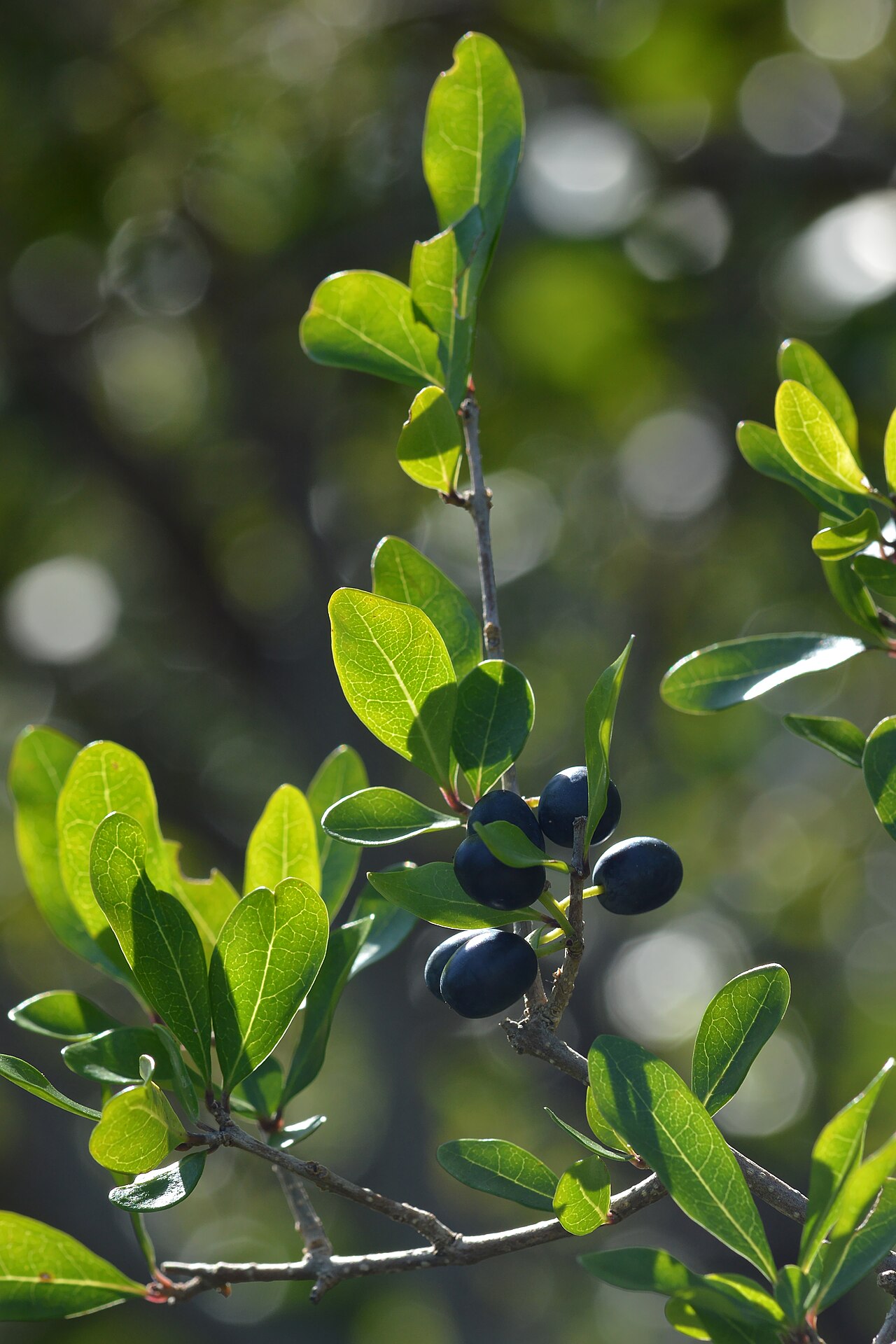
Despite the name, this is no relation in behavior to the invasive privets up north: Florida privet is our own, and it's one of the best native hedges for coastal properties. Small leaves, fine texture, takes shearing like a champ. Its real superpower is timing: tiny yellow-green flowers open in late winter and early spring when bees have little else, and the small black fruits ripen in late spring, before most other berries, which makes them a genuinely important meal for songbirds like mockingbirds and cardinals at a hungry time of year. It handles sand, alkaline soil, salt wind, and occasional wet feet.
Care
Water to establish, then it's flexible about nearly everything. Shear it for a formal hedge or let it grow into a loose small-leaved screen; either way it responds fast. Compost and mulch cover the feeding. It's semi-deciduous, meaning it may thin out briefly in winter, especially after cold, and that's normal.
Common problems
Very few pests or diseases. Two honest notes: only female plants fruit, since plants are male or female, so a mixed hedge gives you the berry show, and it reseeds a little, so expect the occasional volunteer seedling nearby, which pulls easily by hand and is nothing like the aggressive spread of the non-native privets.
Common questions
Is this the invasive privet I've read about?
No. Chinese and glossy privet, the invasive ones, are Ligustrum, a different plant entirely. Forestiera segregata is a Florida native that's been holding down our coastal soils since long before any of us got here.
Why do bees swarm it in February?
Because almost nothing else is blooming then. The flowers are tiny but loaded, and late-winter bees pile on. I count that early nectar as one of the plant's biggest contributions.
Can it take shearing into a formal hedge?
Yes, it's one of the best natives for it. The small leaves shear clean, and it back-buds readily, meaning new shoots sprout from older wood after cutting, so it stays dense instead of going hollow.
Interested in a florida privet in your landscape?
We plan, install, and care for it. Start with a paid consultation.