
Elderberry
Fast growing, huge flower clusters, loads of berries. And it suckers.
Sambucus canadensis
Fast, wild, and generous with flowers and berries you can actually use.
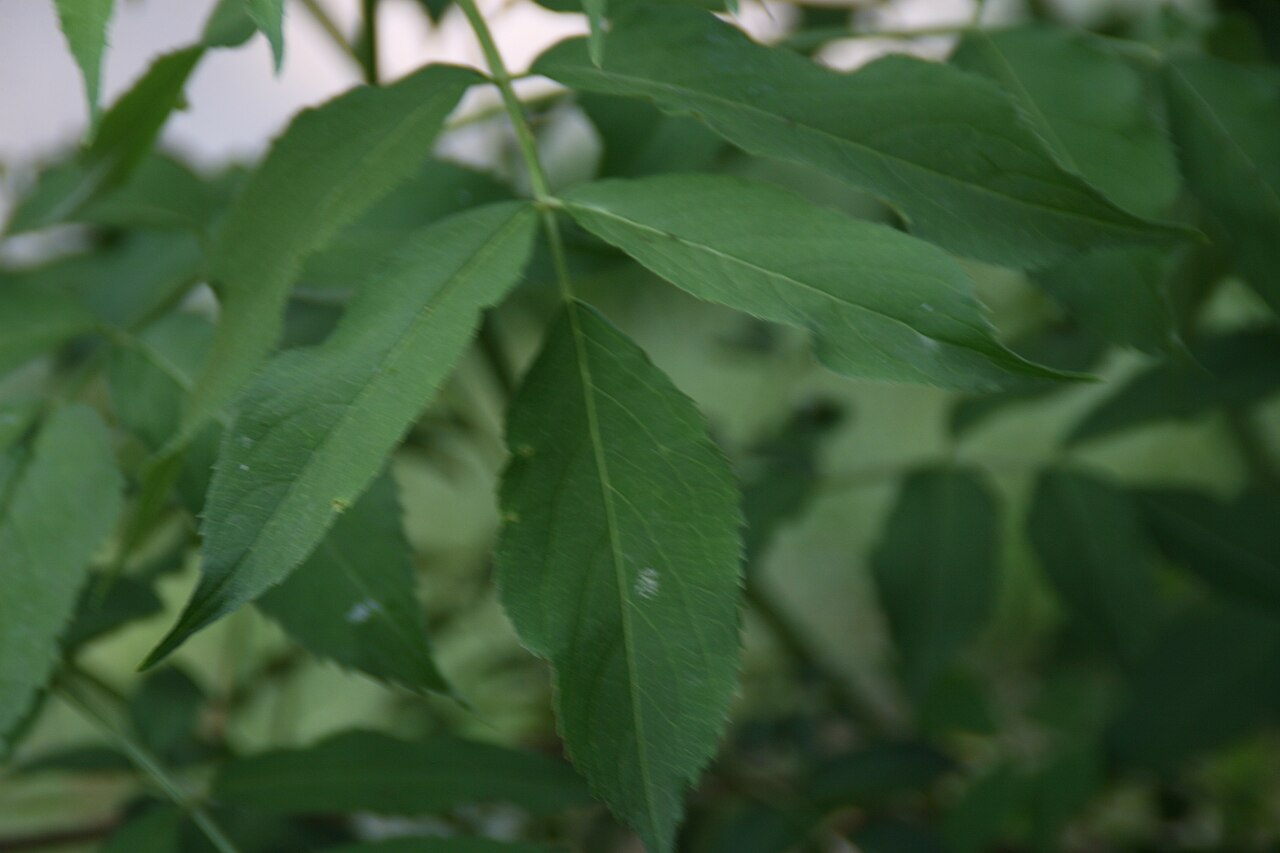
Photo: Photo by David J. Stang, via Wikimedia Commons, CC BY-SA 4.0
Why it works here
Elderberry is a fast, exuberant native for a moist or low spot where a lot of shrubs sulk. Those big flat white flower clusters feed pollinators for weeks, then turn into dark purple berries the birds fight over. It's a real Florida-Friendly workhorse for a rain garden edge, a wet swale, or anywhere that stays a little damp. If you like making things, the flowers and cooked berries are both usable in the kitchen.
Care
Give it steady moisture, especially the first year, since it never really wants to be bone dry. A yearly topdressing of compost and mulch keeps it vigorous in our sandy ground. It grows fast and a little wild, so plan to prune each year to clean up broken stems and keep the shape you want. It suckers freely and will form a colony, which is great for a thicket and a nuisance in a tidy bed, so cut the runners you don't want.
Common problems
The berries and flowers are fine to eat when handled right, but eat only fully ripe, dark berries, and cook them. Green berries, leaves, stems, and raw seeds carry compounds that turn into cyanide and can make you sick, so never eat the unripe fruit or other parts raw.
Beyond that it can get cankers, leaf spots, and powdery mildew, all of which ease up with good airflow, so don't crowd it. Borers can hit stressed plants, and the best defense is keeping it watered and healthy.
Common questions
Can my kids eat the berries off the bush?
Not straight off the bush. Only fully ripe dark berries are safe, and they really should be cooked first. The unripe berries and the leaves and stems are toxic, so this is a cook-it plant, not a graze-it plant.
Why does mine flop and break?
The stems are naturally soft and brittle, and a heavy flower or fruit load or a windy storm will snap them. A yearly prune to keep it lower and bushier helps a lot.
It's spreading everywhere. Is that normal?
Yes, it suckers and forms thickets. That's a feature in a wild wet corner and a chore in a formal bed. Just cut the suckers you don't want, or give it a spot where it can roam.
Interested in a elderberry in your landscape?
We plan, install, and care for it. Start with a paid consultation.