
Fiddlewood
Glossy leaves, sweet flowers, and 15 to 20 feet of native privacy.
Citharexylum spinosum
Glossy leaves, perfumed white flower strands, and one honest caterpillar story
Why it works here
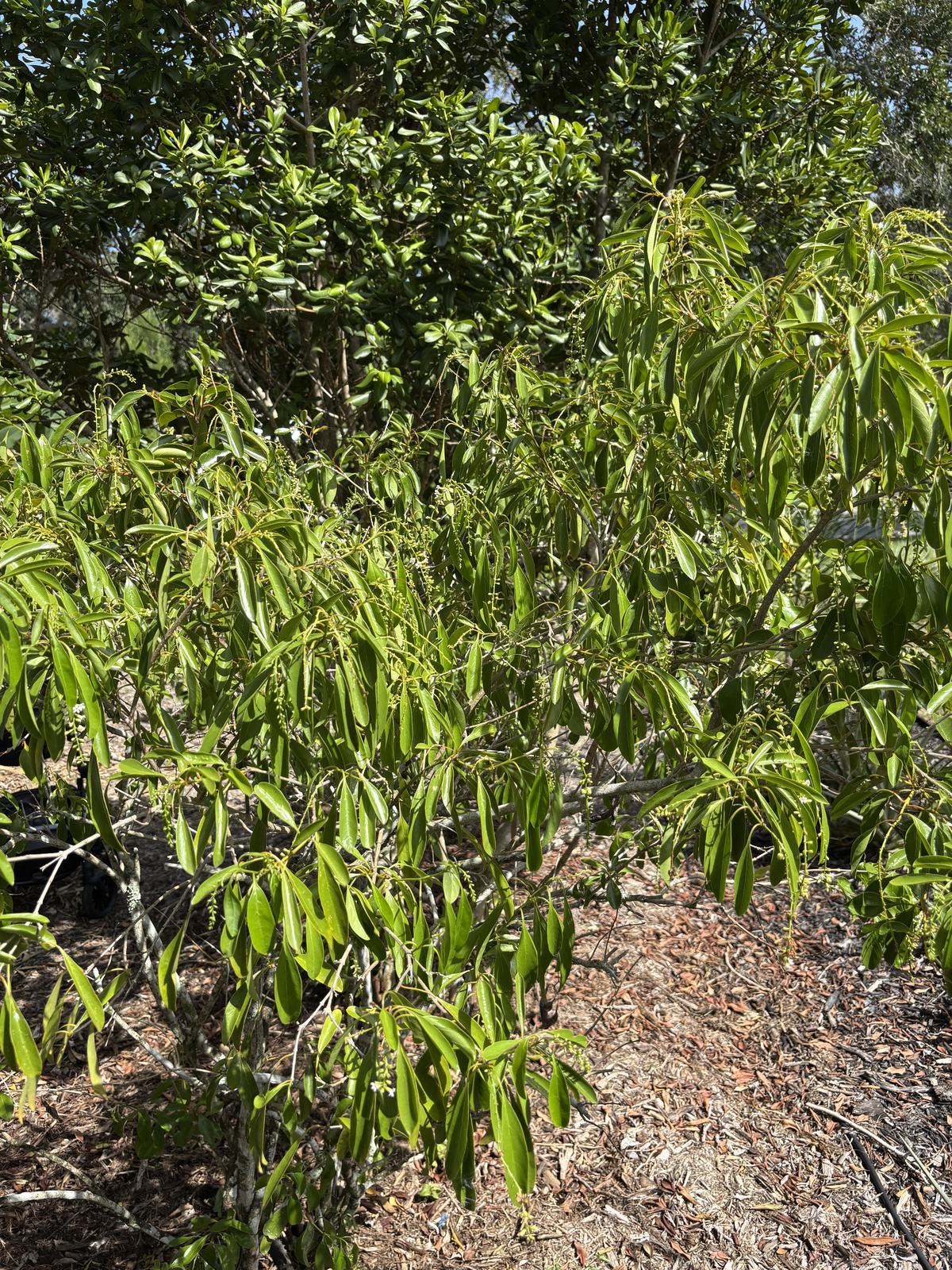
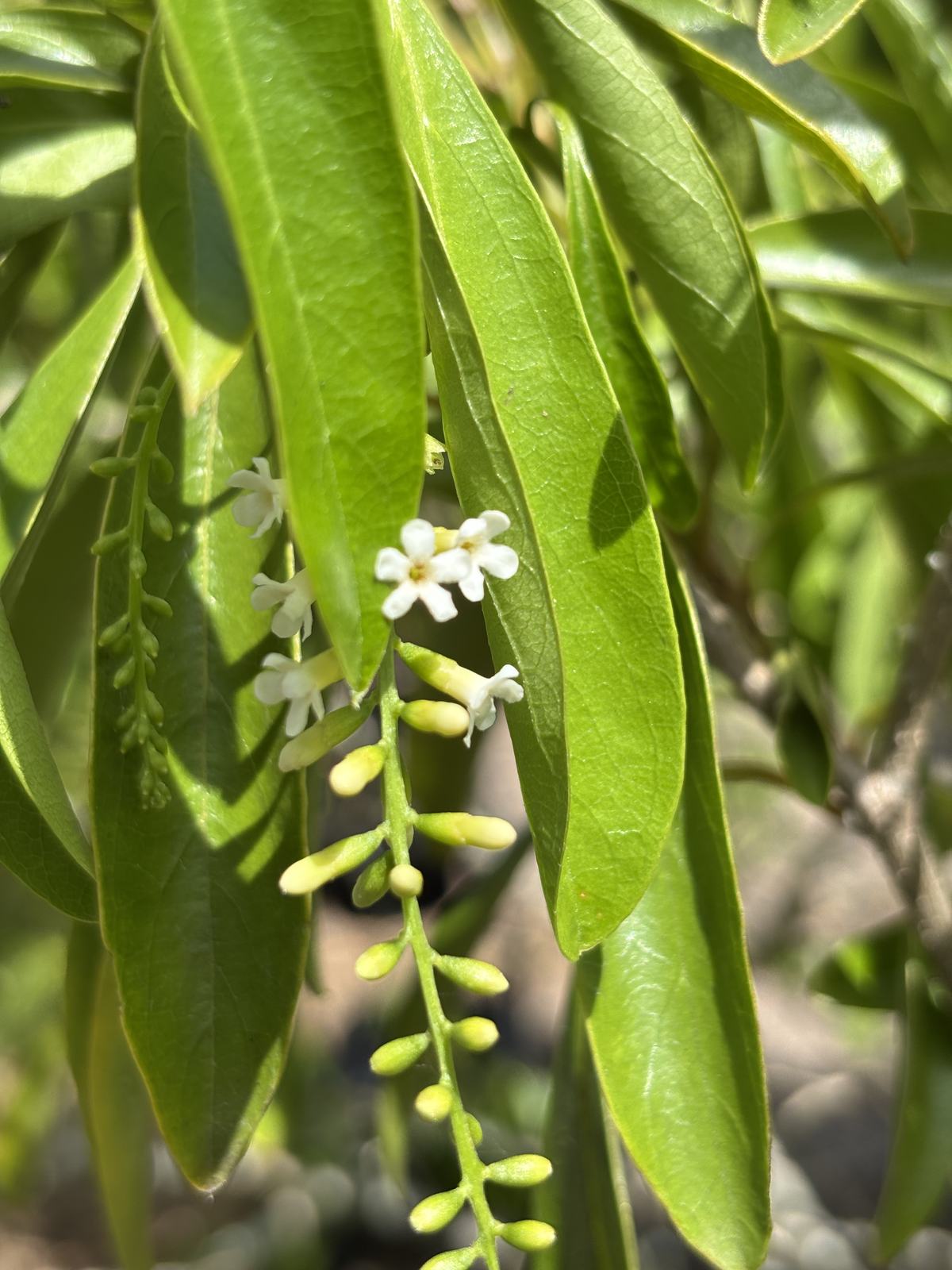
Fiddlewood is a coastal hammock native with some of the glossiest foliage in the Florida palette, deep green and lacquered-looking, and in the warm months it hangs out strands of small white flowers with a fragrance that stops people on the sidewalk. Bees and butterflies work the blooms, and on female plants, orange fruits ripen dark for the birds. It handles sand, drought, and alkaline soil, and it makes a fine screen, buffer, or small patio tree. Now the honest part, because I'd rather you hear it from me: there's a native moth called the fiddlewood leafroller whose caterpillars, yellow with orange heads, roll the leaves up and can chew a plant nearly bare in a bad flush. It looks alarming. It is not fatal. The plant releafs, the caterpillars feed the birds, and that's the food web doing exactly what a native garden is for. If you can't live with an occasional ratty stretch, this isn't your plant. If you can, it's a gem.
Care
Water regularly the first year, then it's drought-proof for our conditions. Mulch, annual compost, and structural pruning if you're training it as a small tree; as a screen it needs only occasional shaping. It's slow to moderate, so buy the size you need.
Common problems
The leafroller is the headline, so here's the playbook: for light infestations, do nothing, or hand-pick and prune out rolled leaves where the caterpillars and eggs hide, and let the wrens and warblers help. For a severe defoliation on a young plant, Bt, short for Bacillus thuringiensis, a naturally occurring soil bacterium approved for organic growing that only affects caterpillars, will knock it down. The plant recovers either way. Beyond that, fiddlewood has few pest or disease issues, and drainage plus sun keeps it dense and happy.
Common questions
My fiddlewood got half its leaves eaten. Is it dying?
Almost certainly not. That's the fiddlewood leafroller, a native moth caterpillar, and university sources are clear that the damage is temporary and rarely does lasting harm. New leaves flush back within weeks in the growing season.
Why doesn't my fiddlewood have berries?
Plants are functionally male or female, and only females fruit. If yours only flowers, you likely have a male, which still gives you the fragrance and the pollinator traffic.
Is it fragrant enough to plant by a patio?
Yes, the flowers have a real sweet perfume that carries on warm evenings, and that's exactly where I like to use it. Just remember the caterpillar caveat and site it where an occasional chewed look won't ruin your view.
Interested in a fiddlewood in your landscape?
We plan, install, and care for it. Start with a paid consultation.