
Jaboticaba (multiple varieties)
Grape-like fruit growing right out of the bark. Slow as can be, and one of the coolest fruiting sights in any garden.
Plinia cauliflora and related species
The tree that fruits on its trunk, grape-like berries straight off the bark.
Why it works here
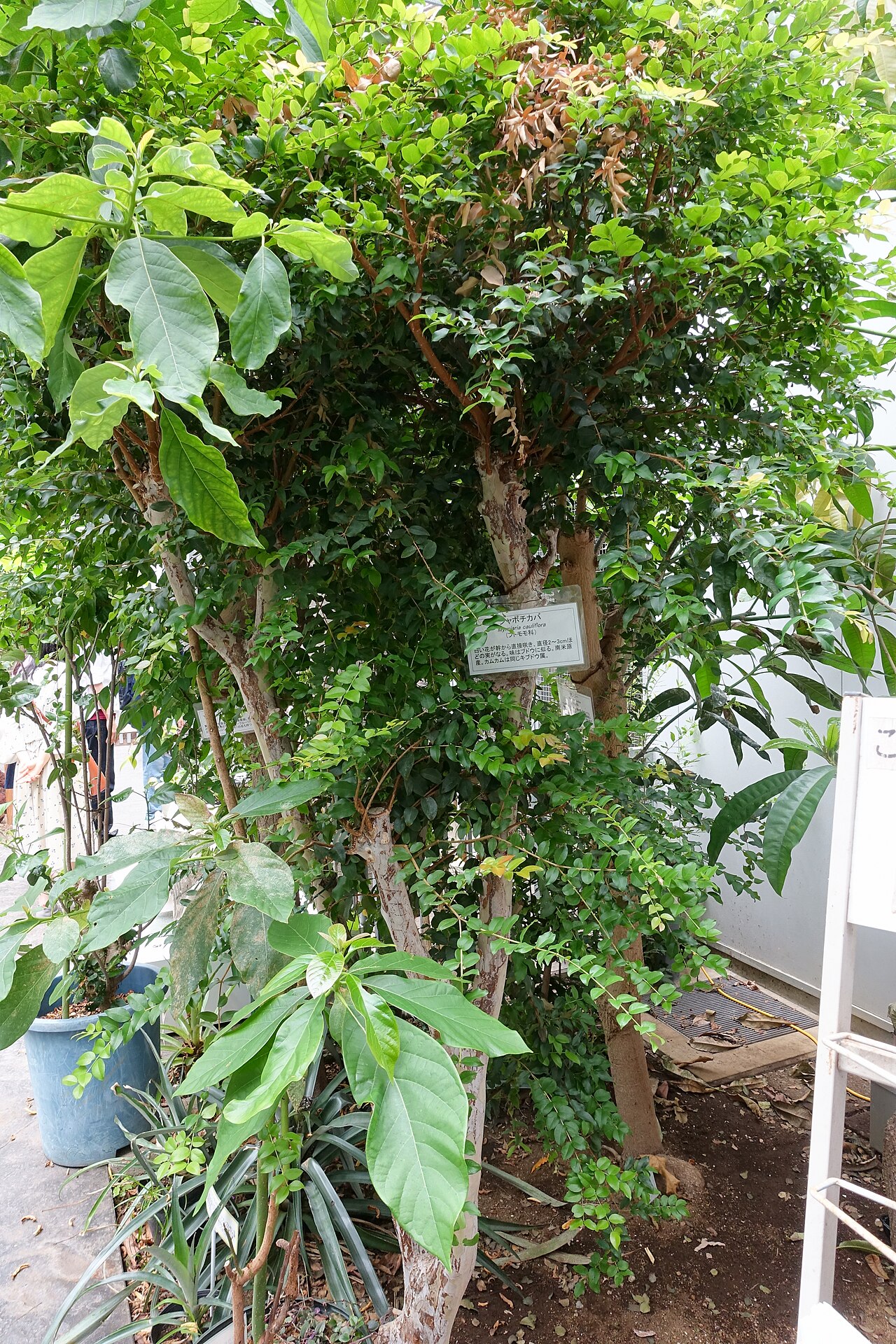
Jaboticaba is the showstopper of this list, its dark, grape-like fruit grows directly on the trunk and main branches, a trait called cauliflory, so a fruiting tree looks like the bark is studded with black pearls. It is a slow, dense, beautiful small tree with peeling cinnamon-toned bark, so it earns its place as a specimen even between crops. There are several species and named types grown here, such as the common 'Sabará' and the larger-fruited 'Grimal', and they suit our climate well in a warm, well-watered spot.
Care
It prefers acidic soil, ideally around pH 5.6 to 6.5, so on our alkaline sand you will work hard with compost, heavy mulch, and organic micronutrient feeding to prevent chlorosis, meaning the leaf-yellowing that comes when high pH locks up iron. Water every week or two through the growing season, easing off in cool months, since steady moisture drives its repeat flushes of fruit. Feed with balanced organic fertilizer in the warm season. Prune only lightly to shape, and be patient, this is a slow tree that rewards the long-term gardener.
Common problems
The long wait from seed: 6 to 10 years for a seedling to fruit is the honest caveat, so buy a grafted or air-layered tree if you want fruit in a few years.
Alkaline chlorosis: our high-pH soil is its biggest cultural challenge, stay ahead of it with acidic organic mulch, compost, and organic iron and micronutrient feeding.
Fast-fermenting fruit: the berries only hold a day or two after ripening before they ferment, so pick and eat or process them quickly.
Common questions
Is it true the fruit grows on the trunk?
Yes, that is the magic of it, flowers and fruit form right on the trunk and older branches, not out on the twigs. A fruiting jaboticaba covered in black berries along its bark is a sight that stops people in their tracks.
Why is my jaboticaba's leaves turning yellow?
Almost always our alkaline soil locking up iron, since this tree wants acidic conditions. Build the soil with compost and acidic mulch and use organic micronutrient foliar feeding to green it back up.
How long until I get fruit?
If you buy a grafted tree, around three years, an air-layer about four. A seedling can take six to ten years, which is why I steer people toward a vegetatively propagated plant.
Interested in a jaboticaba (multiple varieties) in your landscape?
We plan, install, and care for it. Start with a paid consultation.