
Mamey Sapote
The big one. Sweet, dense flesh like sweet potato pie with almond. A serious tree for a serious fruit lover.
Pouteria sapota
A big, generous shade tree that hands you dense, sweet, salmon-colored fruit.
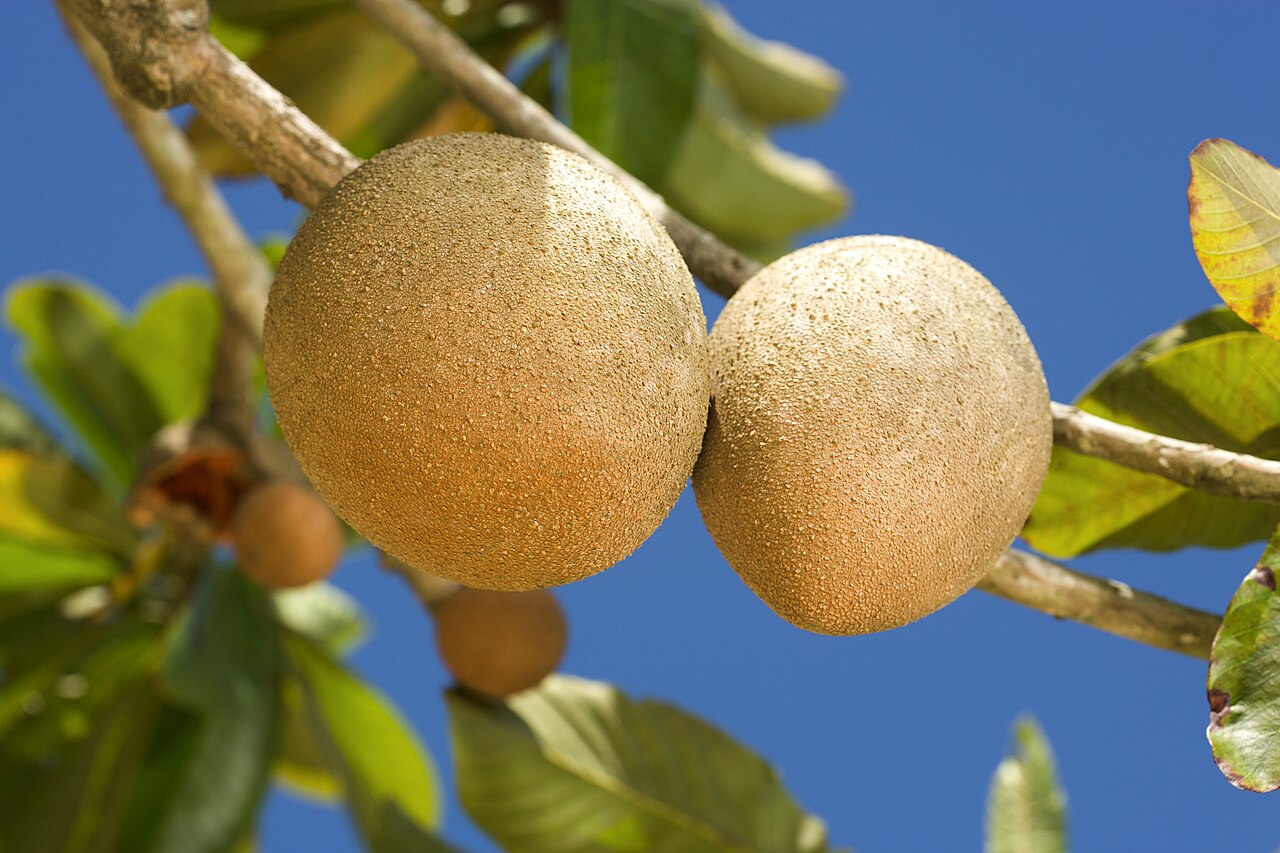
Photo: Wikimedia Commons contributor, via Wikimedia Commons (public domain)
Why it works here
Mamey is happy in our sandy and limestone soils and shrugs off heat once it is established. Young trees get hurt below 32 degrees and mature ones take minor damage around 28, so on the Treasure Coast I treat it as a warm-microclimate tree, near the house, out of the cold pockets. Give it room. It becomes a real shade tree, and the fruit is worth the space if you love that rich, custardy, sweet-potato-meets-berry flavor.
Care
Water every other day for the first four to six weeks, then settle into a once or twice weekly rhythm in dry spells. Feed with compost and a balanced organic fertilizer a few times through the warm season, and keep a wide mulch ring, pulled back off the trunk, to hold moisture and feed the soil. Prune while young to set a low, strong framework and to keep the mature height reachable. Keep string trimmers and mowers away from the trunk. Bark wounds weaken the tree.
Common problems
Trees are mostly trouble-free here. Scales and the occasional beetle show up but rarely do real harm. Knock scale populations back with a strong hose stream and by encouraging ladybugs and other beneficial insects. Fruit drop of large developing fruit happens some seasons, often tied to drought stress, so steady watering during fruit development helps. Anthracnose and minor leaf issues clear up with good airflow and clean-up of fallen debris.
Common questions
How big is this really going to get in my yard?
Left alone it heads for 30 to 40 feet and gets wide. If you prune it every year from the start, you can keep it around 12 to 15 feet and still get plenty of fruit you can actually reach.
Can it take our winters?
In a warm spot, yes. Mature trees handle brief dips to the high 20s. I would not plant it in a low, cold pocket, and I would protect a young one on the coldest nights for its first couple of years.
Seedling or grafted?
Grafted, every time. You will get fruit in three to five years instead of seven-plus, and you will actually know what that fruit will taste like.
Interested in a mamey sapote in your landscape?
We plan, install, and care for it. Start with a paid consultation.