
Jatropha (Jatropha integerrima)
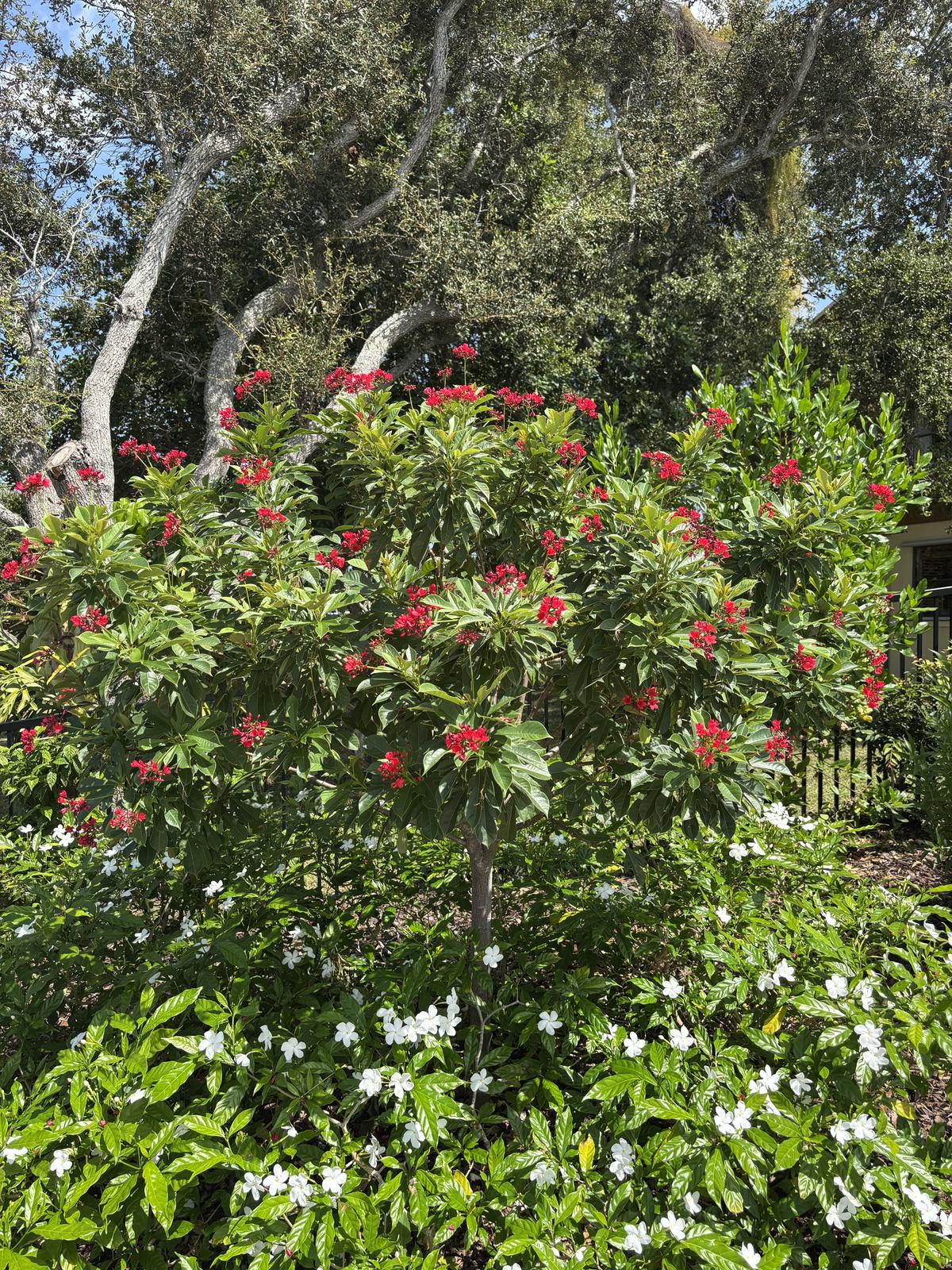
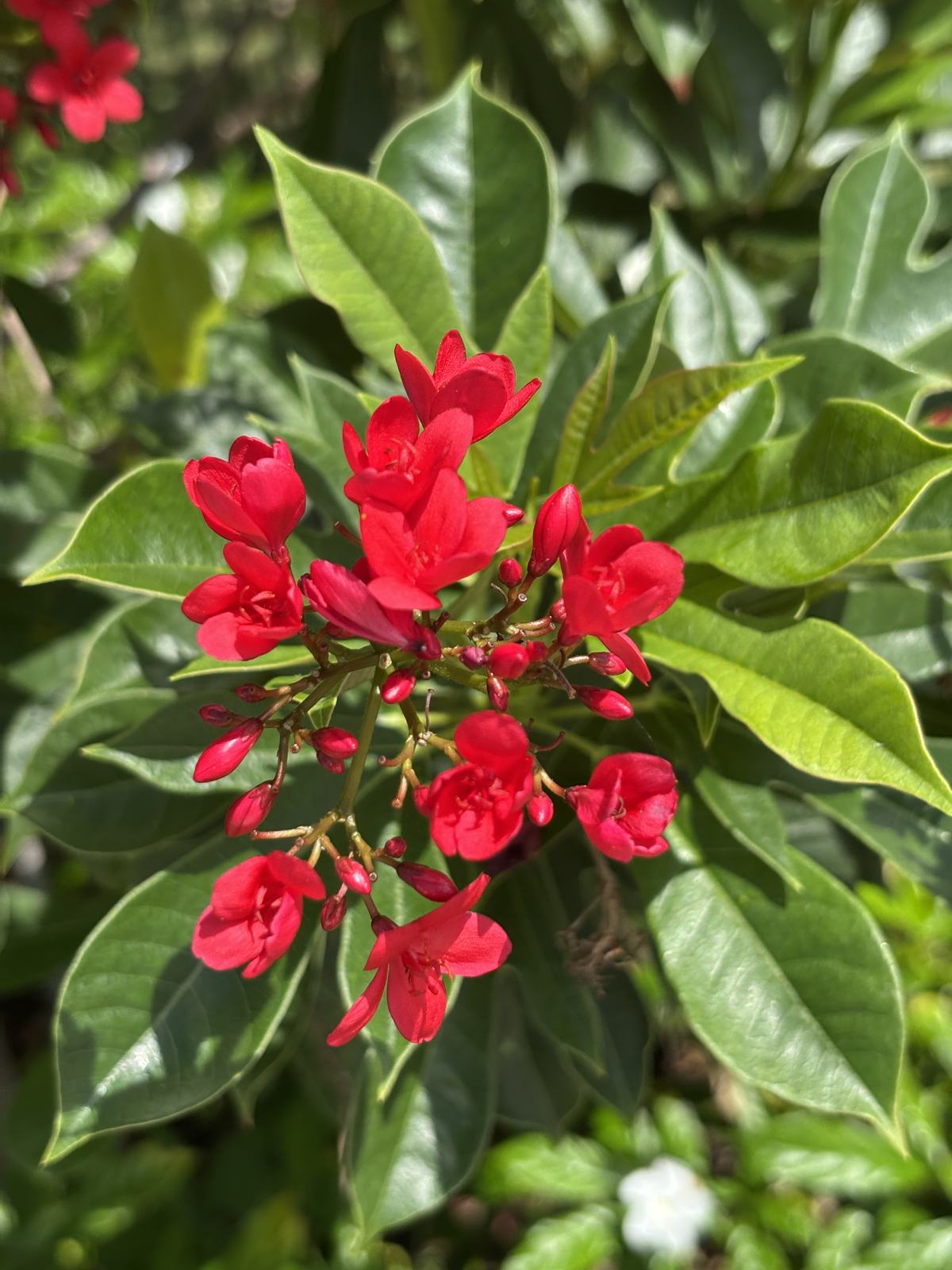
Nonstop red blooms and butterflies all over it, in a compact tree or shrub form.
Nonstop red stars on a tough, small tree, with one real safety note.
Invasive status alert
Toxic sap and seeds: this is the honest caveat. All parts, especially the seeds, are poisonous if eaten, and the milky sap can irritate skin. Wear gloves to prune and keep it away from spots where small kids graze.
Why it works here
It flowers nearly year-round in our climate, clusters of small red or coral stars that hummingbirds and butterflies never leave alone. It is heat-tough, takes our sandy soil, and asks for very little water once rooted in, which makes it a reliable anchor of color. UF/IFAS has assessed it and lists it as not a problem species in our region, so it is not a spreader to worry about. You can grow it as a shrub or limb it up into a graceful little tree.
Care
Water it in for the first couple of months, then it is largely on its own except in real droughts. Compost and a balanced organic fertilizer in spring keeps it blooming, with mulch out to the drip line. Prune to shape and to lift it into a tree form, and clean out any dead or crossing wood in late winter. It is a light, fast grower, so a little shaping goes a long way.
Common problems
Toxic sap and seeds: this is the honest caveat. All parts, especially the seeds, are poisonous if eaten, and the milky sap can irritate skin. Wear gloves to prune and keep it away from spots where small kids graze.
Brittle branches in storms: plant it out of the highest wind and prune for a strong structure.
Occasional caterpillars or scale: usually minor. Hand pick, hose off, and let beneficial insects handle the rest.
Common questions
Is it safe around kids and pets?
The flowers are fine to look at, but the seeds and sap are poisonous if eaten and the sap can irritate skin. I would not plant it right where toddlers play, and I would teach kids not to chew on anything from it.
Will it bloom all year?
Pretty much, yes, in our warm climate. It slows in a cold snap and picks right back up.
Shrub or tree?
Your call. Leave the lower branches for a full shrub, or remove them to reveal the trunks and make a small ornamental tree.
Interested in a jatropha (jatropha integerrima) in your landscape?
We plan, install, and care for it. Start with a paid consultation.