
Red Bay
An aromatic hammock tree in the avocado family. Honest caveat: laurel wilt, the same disease I cover in the avocado article, has hit our wild redbays hard. We plant it with eyes open.
Persea borbonia
A fragrant native bay, butterfly host and kitchen herb in one, facing a hard disease.
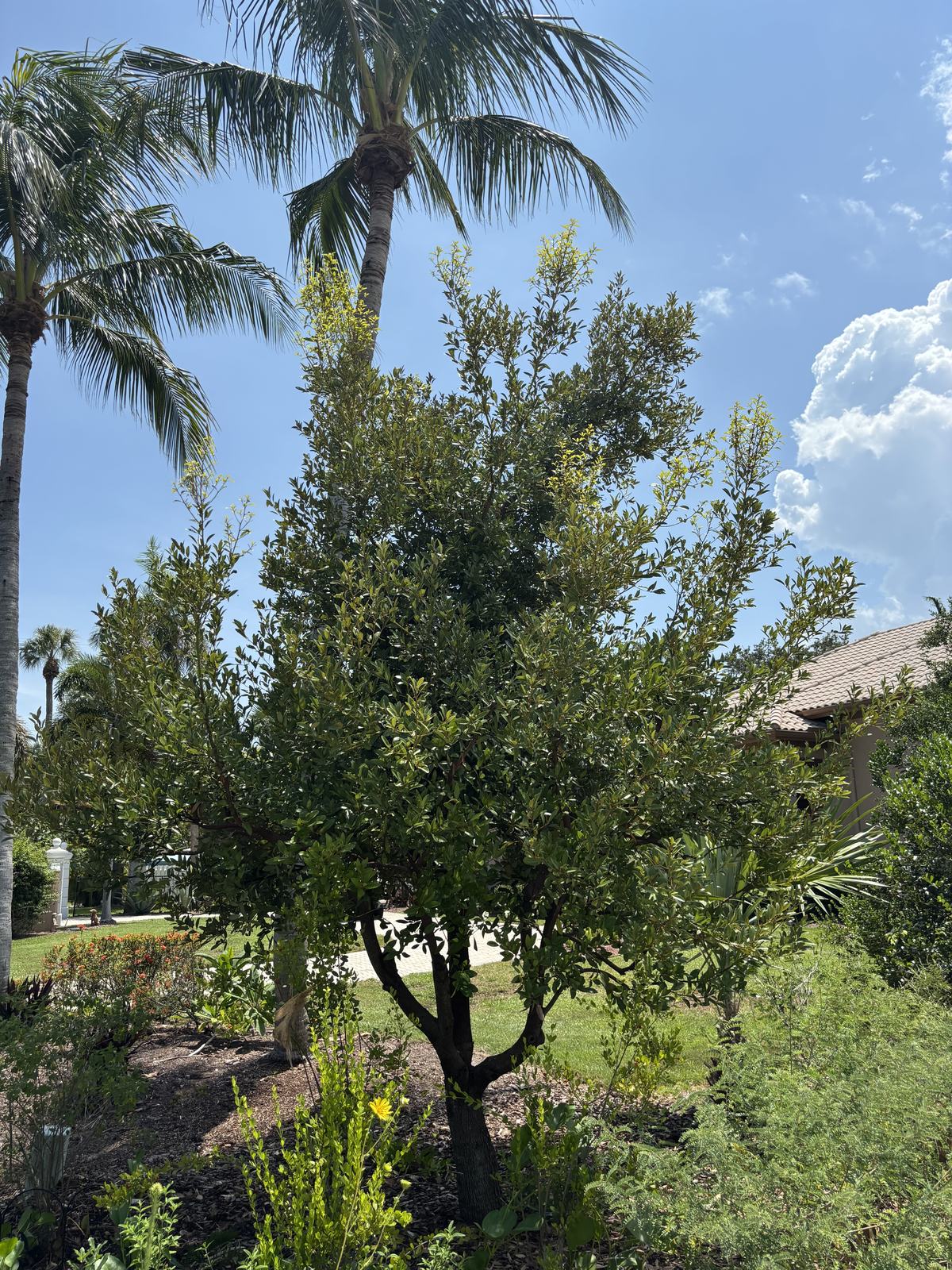
Photo: Longleaf Design
Invasive status alert
A hard truth: laurel wilt disease. Red bay is under attack from laurel wilt, and you deserve the honest picture. A tiny invasive insect called the redbay ambrosia beetle (Xyleborus glabratus) carries a fungus, Raffaelea lauricola (recently reclassified as Harringtonia lauricola), that it introduces when it bores into the wood. The fungus clogs the tree's water carrying vessels, and the tree can wilt and die within weeks. It has spread across the Southeast since it turned up in Georgia around 2002, and it hits members of the laurel family, including red bay, swamp bay, sassafras, and avocado. Warning signs are sudden wilting of the foliage, dark staining streaks in the sapwood just under the bark, and fine sawdust or toothpick like tubes at small entry holes. There is no reliable cure once a landscape tree is infected. Preventive fungicide injections exist for high value trees but are costly and not permanent. I will not tell you red bay is a safe long term bet right now, because it is not, and I would rather you know that going in. If you love it and want to try one, plant it understanding the risk, keep it healthy and unstressed, and watch it closely.
Why it works here
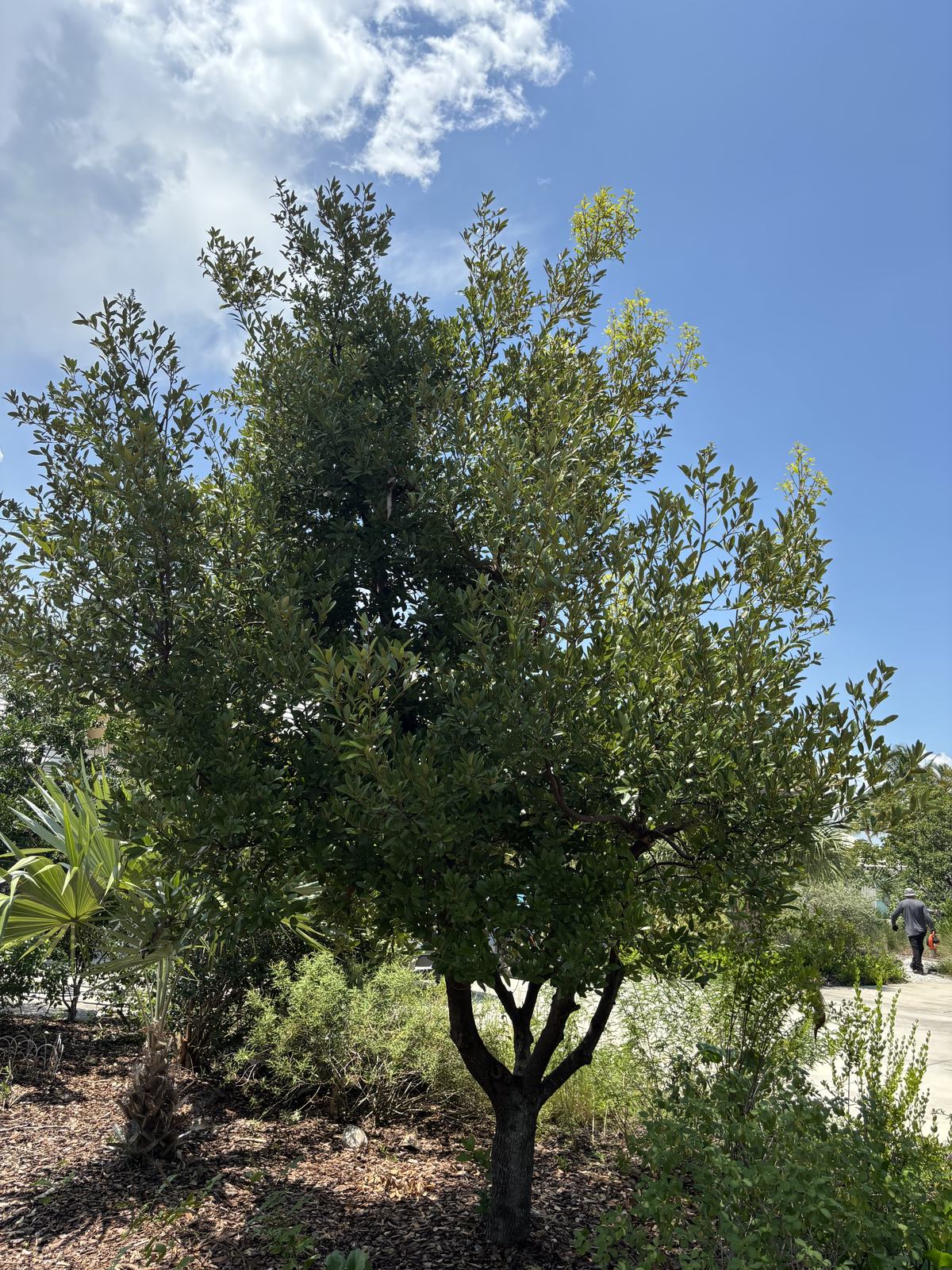
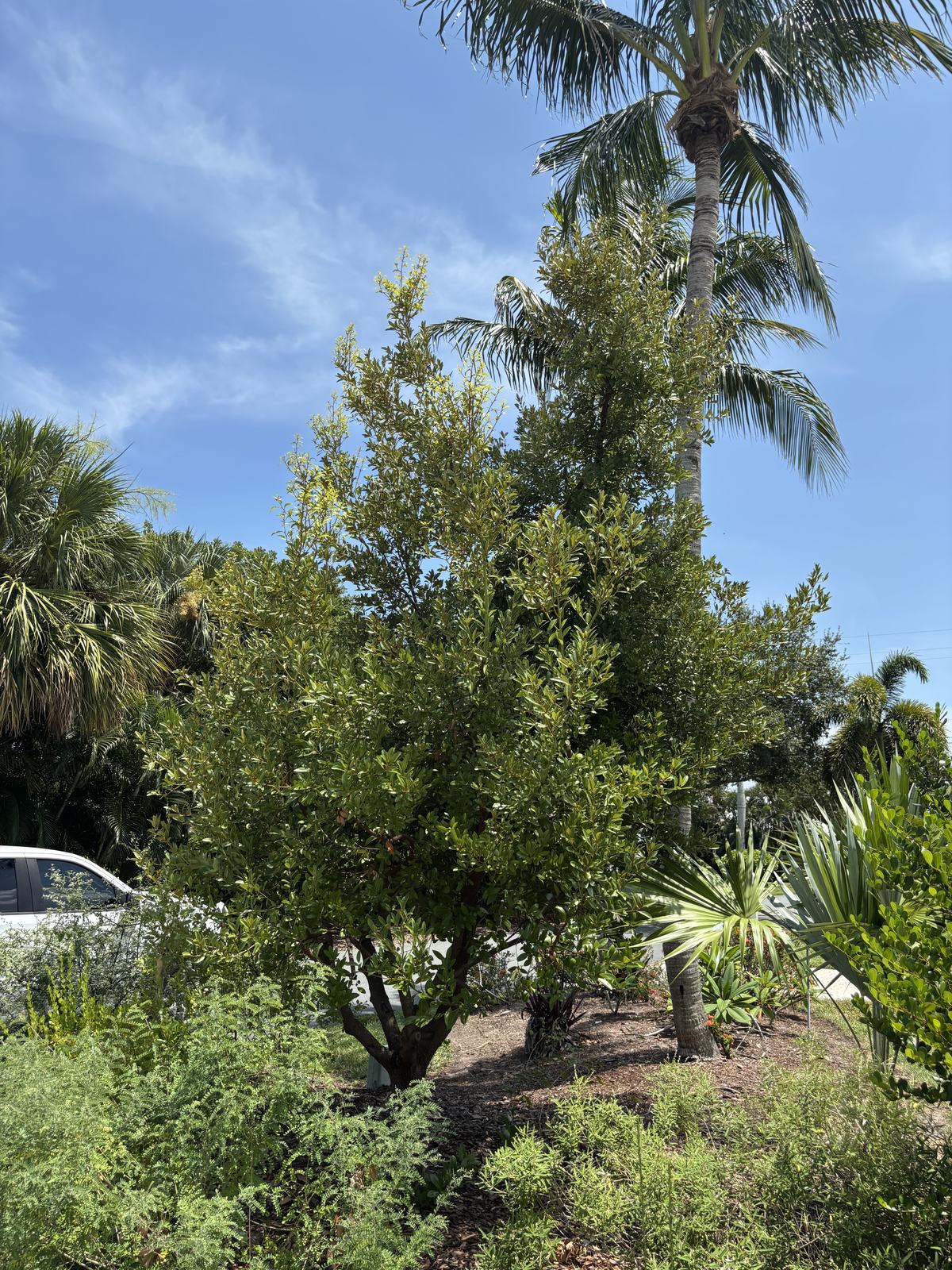
Red bay is a lovely evergreen native with glossy, aromatic leaves that smell spicy when you crush them, and yes, you can cook with them much like a store bought bay leaf. It is a caterpillar host for the palamedes and spicebush swallowtail butterflies, and its dark blue fruit feeds birds. It is drought and salt tough and fits a normal yard. I want to be completely straight with you about the disease it faces, so read the next note carefully before you decide.
Care
Water to establish, then it is drought tough in well drained soil, and it tolerates a wet spell too. Prune young for structure, since the wood is a bit brittle and prone to wind damage, keeping side limbs modest relative to the trunk. Mulch and compost cover feeding. Beyond laurel wilt it is an easy tree. If a red bay does die of the disease, do not move the wood, since transporting infested wood is how the beetle spreads, so chip or dispose of it on site.
Common problems
Laurel wilt disease, covered in full above. It is the defining issue for this species, with no reliable landscape cure, so plant it eyes open and never move the wood of a dead tree.
Brittle wood and wind breakage. Prevention is early structural pruning and keeping limbs well proportioned.
Fruit litter near cars and walks. Cultural fix: site it over mulch or lawn.
Common questions
Should I even plant a red bay with laurel wilt out there?
I will be honest, it is a real gamble right now. I would not plant it as a can't lose backbone tree. If you specifically want it for the butterflies, the fragrance, or the bay leaves and you accept it may not make old age, go in with eyes open. Otherwise I can point you to a safer native.
Can I really use the leaves for cooking?
Yes, red bay leaves are aromatic and have long been used like a bay leaf in the kitchen. Crush one and you will smell it right away.
What do I do if my tree suddenly wilts?
Look for dark streaking in the wood under the bark and tiny entry holes with sawdust, the signs of laurel wilt. If that is what it is, there is no saving it, and the key is to not move the wood off your property, since that spreads the beetle. Dispose of it on site.
Interested in a red bay in your landscape?
We plan, install, and care for it. Start with a paid consultation.