Coontie
Florida's own cycad. Architectural, tough, host to an endangered butterfly.
Zamia integrifolia
Our only native cycad, a living fossil that shrugs off drought
Why it works here
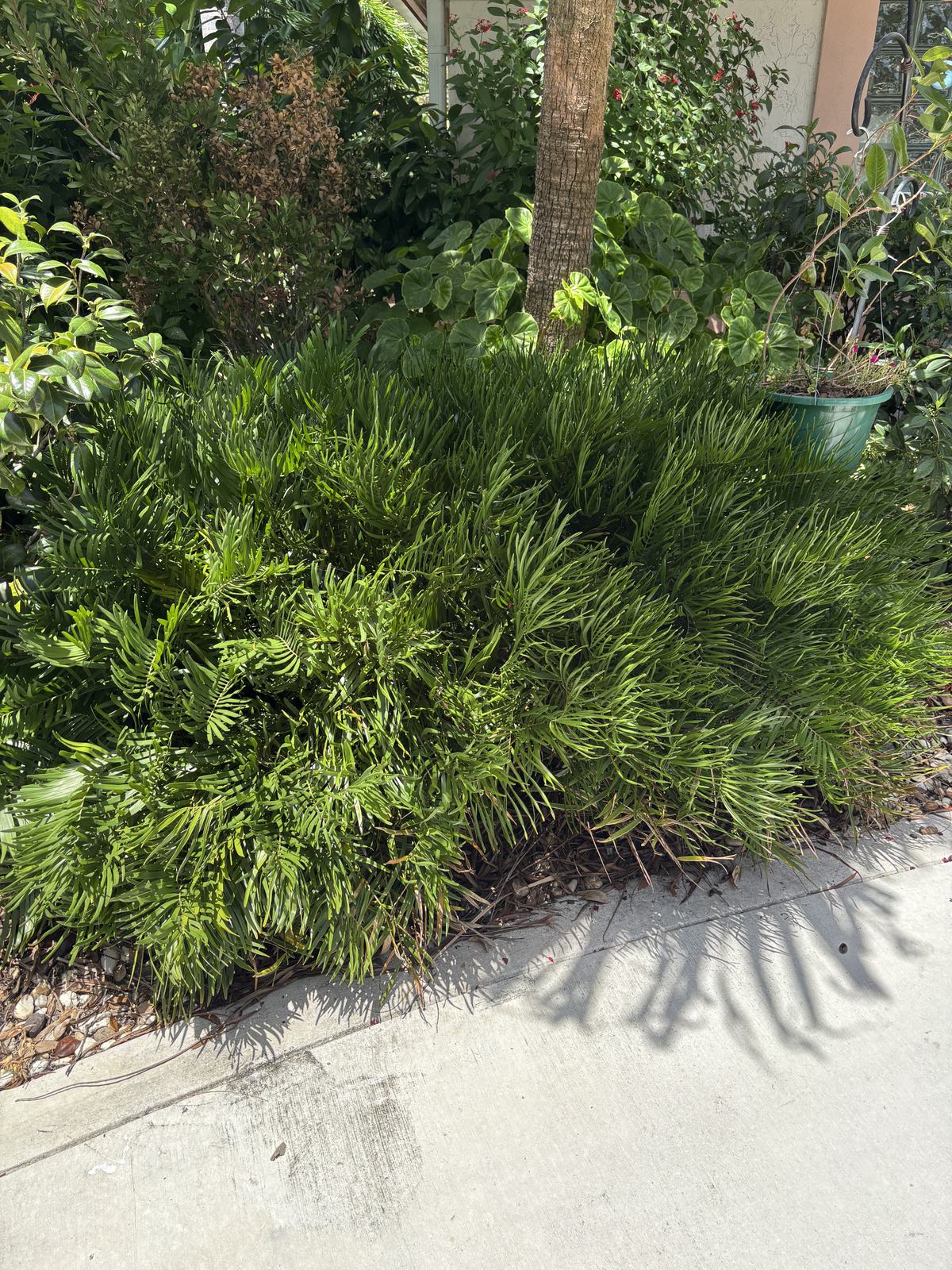
Coontie is a cycad, an ancient group of plants that was around with the dinosaurs, and it's the only cycad native to the United States. It reads like a small, stiff fern, stays low, and never needs much from you, which makes it perfect for foundations, massing, and those hot dry strips where everything else struggles. It's also the host plant for the atala, a small black butterfly with electric blue spots and a red belly that was once thought extinct in Florida. Plant coonties and you're personally funding that comeback.
Care
Water it through its first dry season, then mostly leave it alone. It grows from a thick underground stem, so good drainage matters more than rich soil. Mulch lightly, keep mulch off the crown, and feed with nothing more than a little compost if you feel like it. It's slow, and that's not a flaw, that's the plant.
Common problems
Scale and mealybugs, which are small white sap-sucking insects, sometimes crust up the leaves: treat with an organically listed horticultural oil and repeat until clear. Atala caterpillars will chew the foliage, and I'd call that a feature, not a problem: the plant pushes new leaves and you get butterflies.
One real warning: the plant, especially the orange seeds, is toxic to people and dogs if eaten, so site it accordingly. Historically, native peoples processed the root into flour, but that took careful preparation to remove the toxins, so don't try it.
Common questions
Why is my coontie getting eaten by red and yellow caterpillars?
Congratulations, you have atala butterflies, one of Florida's best conservation stories. The plant will look rough for a few weeks and then flush back out. I never treat for them.
Is coontie a palm or a fern?
Neither. It's a cycad, an ancient cone-bearing plant older than flowering plants entirely. It just happens to look a bit like both.
How fast will it fill in?
Slowly. A one gallon coontie takes years to become a wide, full clump. I plant them closer together when a client wants coverage sooner, because the plant will not be rushed.
Interested in a coontie in your landscape?
We plan, install, and care for it. Start with a paid consultation.