
Imbe
An African Garcinia with small, bright orange fruit. Tough little tree, tangy fruit, rarely seen.
Garcinia livingstonei
The tough African cousin of mangosteen that actually grows here, with pretty blue-green leaves and bright orange fruit.
Why it works here
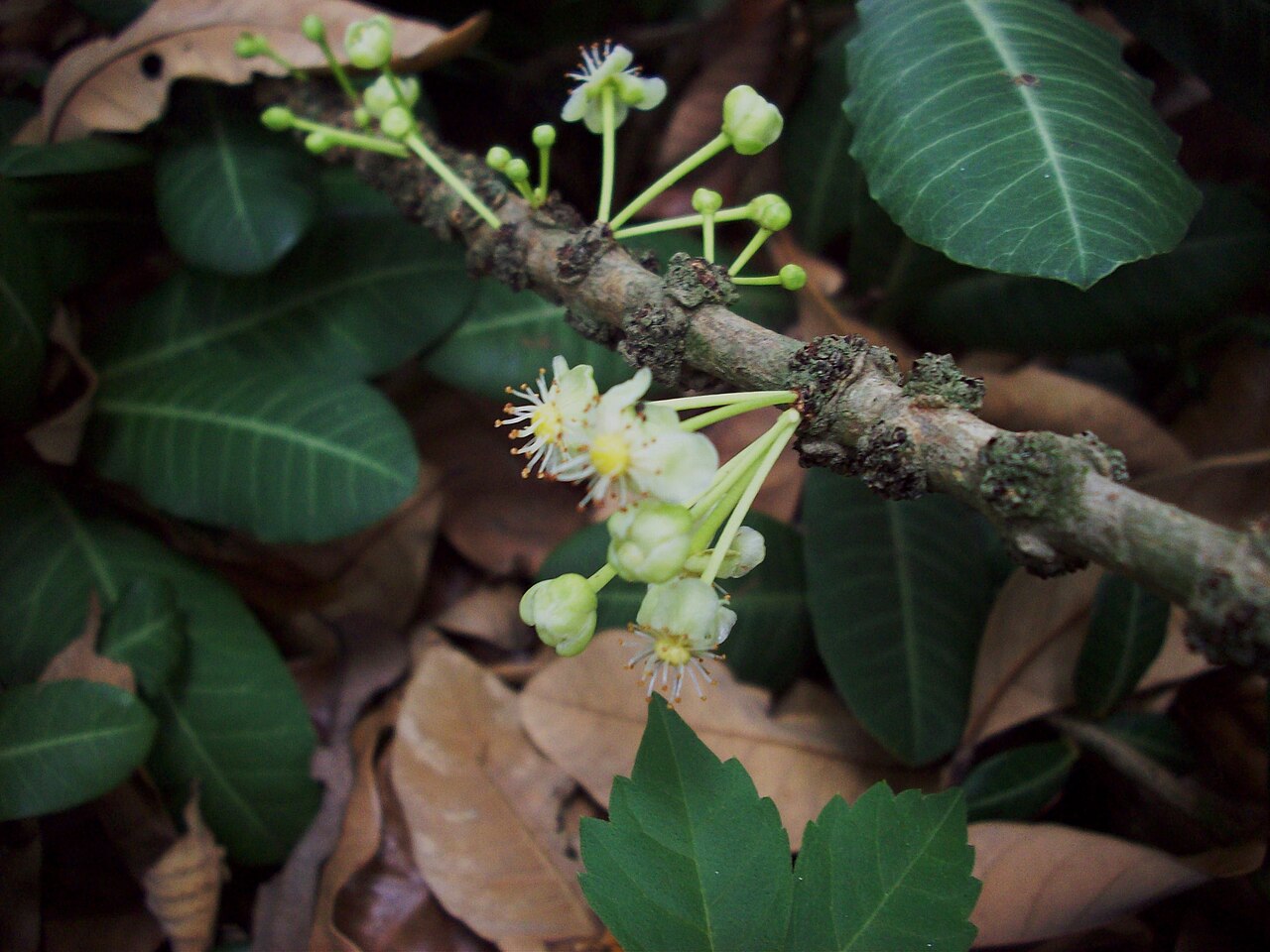
Imbe is everything mangosteen is not: tough, salt tolerant, drought tolerant, and cold hardy enough for the Treasure Coast. It is a handsome, slow, dense little tree with stiff blue-green leaves and orange thumb-sized fruit that has a thin layer of sweet-tart, sticky pulp around a big seed. It handles our sandy soil and coastal conditions without complaint, which makes it a great conversation piece in a Florida-Friendly edible garden. Just know the fruit is more of a fun snack than a meal, and you have to sort out the male and female tree situation.
Care
Give it full sun and it will reward you, though it takes shade fine. Water regularly the first year or two to get it going, then it is pretty self sufficient, though a drink in dry spells improves the fruit. Feed lightly with balanced organic fertilizer in spring and summer, mulch well, and keep the mulch off the trunk. It is slow, so do not expect fast shade. Pruning is minimal, just shape it if you want and remove dead wood.
Common problems
No fruit on a lone tree: an isolated female may set a few tiny fruit, but you really want a male nearby or a male branch grafted on. The fix is planning for pollination before you plant.
The sticky yellow sap: imbe is a Garcinia, so it bleeds a sticky latex when cut. It can stain hands and clothes. Just wear gloves and old clothes when you prune or harvest.
Slow growth: this is a patient person's tree. Nothing is wrong, it just takes its time. Steady water and light feeding keep it moving.
Common questions
Do I really need two trees?
For reliable fruit, yes, a male and a female, or a grafted tree with both. A single female might give you a handful of small fruit, but do not count on it.
How does the fruit taste?
Bright, tart, a little sweet, kind of like a tangy orange around a big seed. There is not much pulp, so it is a nibble, not a bowl of fruit, but people enjoy it.
Will it survive our winters?
Yes. It is hardy to around 26 degrees, which covers us in all but a truly brutal cold snap, and even then a mature tree usually bounces back.
Interested in a imbe in your landscape?
We plan, install, and care for it. Start with a paid consultation.