
Strawberry Tree (Muntingia)
Fast, generous, and covered in little cotton-candy berries the birds and the kids fight over.
Muntingia calabura
A fast-growing shade tree loaded with tiny sweet cherry-like fruit, but a heavy self-seeder you should site with care.
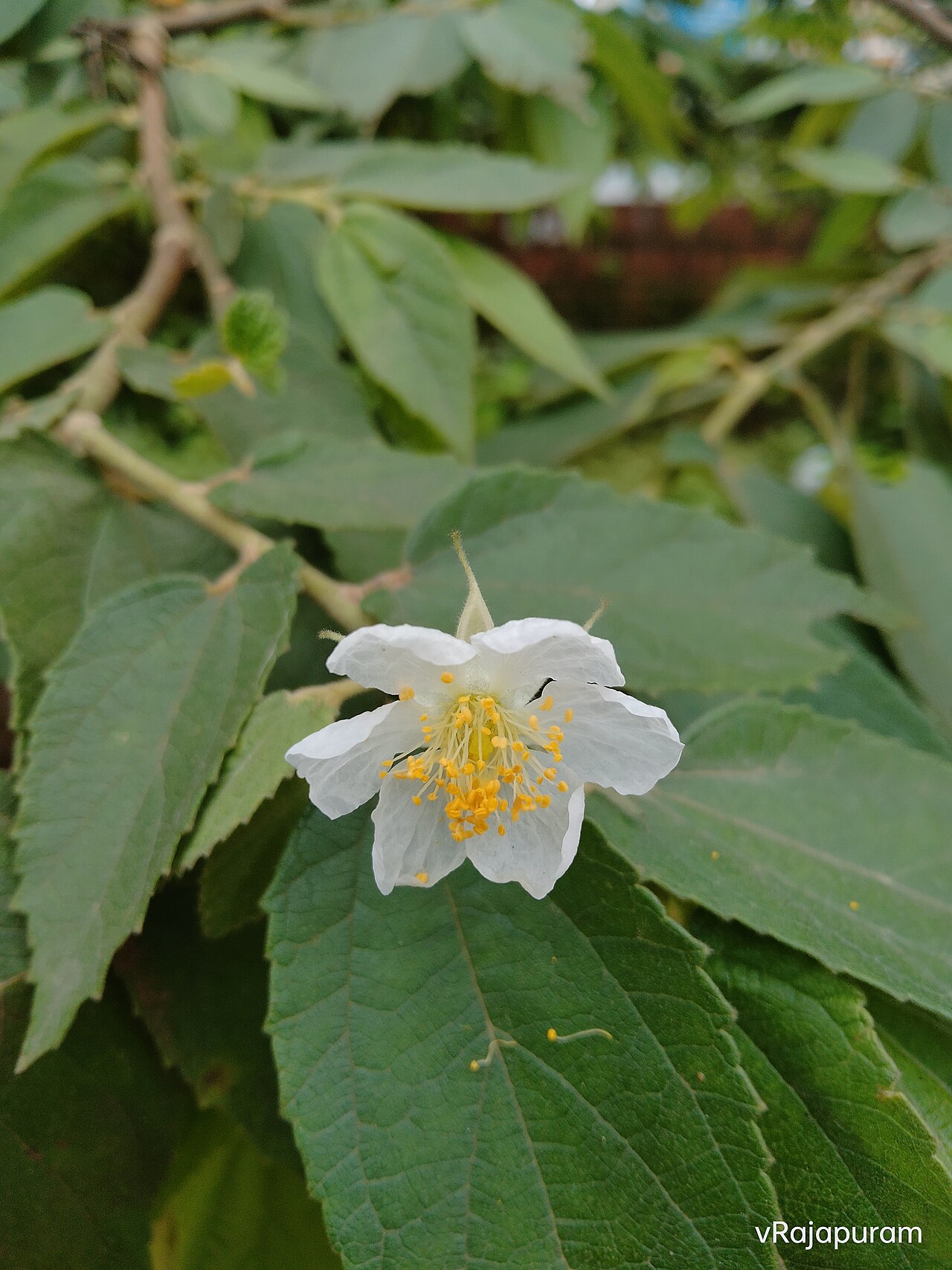
Photo: Vijayanrajapuram, via Wikimedia Commons, CC BY-SA 4.0
Invasive status alert
Note on invasive status: Muntingia calabura is not currently listed by the UF/IFAS Assessment (it shows as Not Assessed for South Florida), it is not on the FLEPPC invasive list, and it is not a FDACS noxious weed. So there is no formal invasive alert to post. That said, I want to be honest: this tree self-seeds freely and its fruit is spread far and wide by birds and bats, and UF/IFAS county material does note it as a tree that "volunteers" in the landscape. Given how much we care about not planting spreaders, I would treat it with caution and would not plant it near natural or conservation areas.
Why it works here
There is a lot to like here if you use it thoughtfully. It is one of the fastest shade trees you can plant, throwing a broad canopy in just a couple of years, and it fruits almost constantly, covering itself in tiny reddish berries with a sweet, figgy, cotton-candy flavor that kids and birds both love. As a quick pioneer tree in a food forest, it shades and shelters slower plants while feeding wildlife. My honest caveat is the flip side of all that vigor: it seeds everywhere. Plant it where you can manage the seedlings, and keep it away from wild land.
Care
It basically grows itself. Give it full sun and well drained ground, water it to establish, and then it is very drought tough. Skip heavy feeding, since it hardly needs it, though a little compost and mulch keeps it healthy. The main job is management: pull volunteer seedlings while they are small, and prune to keep the somewhat brittle branches strong and the tree at a size you want. Because it grows so fast, a yearly shaping keeps it tidy.
Common problems
Self-seeding everywhere: the biggest issue by far. Birds drop seed all over your yard and the neighborhood. The cultural fix is hand-pulling seedlings early and never planting it near natural areas.
Brittle wood: fast growth means weaker branches that can break in wind. Prune for good structure and remove crossing or overextended limbs.
Short lived and messy: it grows fast and does not live long, and dropped fruit stains pavers. Site it away from patios and driveways, and plan for it as a quick nurse tree, not a heirloom shade tree.
Common questions
Is this tree going to take over my yard?
It can try. It self-seeds heavily and birds spread it, so you will be pulling seedlings. If you are willing to manage that and keep it away from wild land, it is a fun, fast, fruitful tree. If not, pick something better behaved.
How fast is fast?
Very. It can give real shade in two to three years and start fruiting almost as quickly. That is its whole appeal as a pioneer tree.
What does the fruit taste like?
Small, sweet, and figgy, almost like cotton candy. There is not much to each berry, but there are thousands of them, and wildlife adores them.
Interested in a strawberry tree (muntingia) in your landscape?
We plan, install, and care for it. Start with a paid consultation.