Buttonwood
The coastal workhorse. Salt, wind, poor soil, it shrugs it all off. The silver form is a designer's favorite.
Conocarpus erectus
A salt loving mangrove associate that turns picturesque and gnarled by the coast.
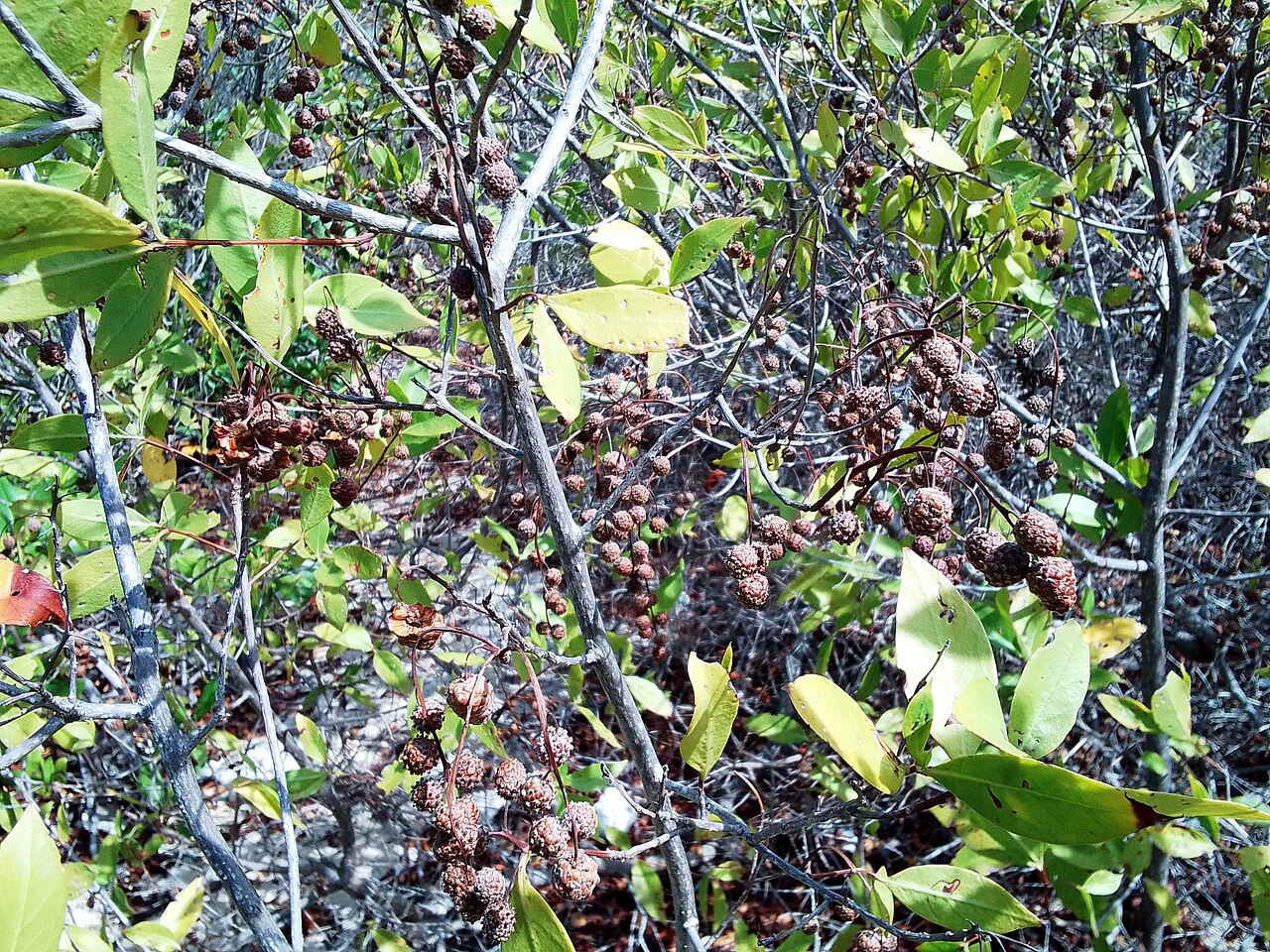
Photo: Carlos A. Padrón P., via Wikimedia Commons, CC BY-SA 4.0
Why it works here
Buttonwood is a true coastal native, a companion to the mangroves, so it thrives exactly where salt and wind defeat most trees. It handles both drought and wet feet, which is rare, and near the shore it develops a beautiful gnarled, contorted character. Inland it makes a solid, sturdy shade tree or a big screening shrub. For any salty, breezy site, this is one of the first natives I reach for.
Care
Water to establish, then it is extremely self sufficient and takes our worst coastal conditions. Prune to your goal, up into a tree or kept dense as a screen, it responds well either way. Mulch and compost cover feeding. One honest note: away from the steady coastal breeze, inland trees are more prone to sucking insects and the sooty mold that follows, so keep inland trees healthy and airy.
Common problems
Sooty mold, a black film on the leaves, on inland trees. It grows on the honeydew from sucking insects like scale and aphids. The organic response is to encourage beneficial insects, hose off heavy honeydew, and prune for good airflow, the mold itself is harmless and washes away.
Scale and aphids feeding on the foliage. Beneficial insects usually handle them, and a strong spray of water knocks back clusters.
Nothing serious beyond that, it is a tough coastal native.
Common questions
What is the difference between green and silver buttonwood?
Same species, the silver is a naturally fuzzy, silvery leafed form, while the plain green is the standard native look. Both are salt and wind tough, silver just adds that shimmer.
Can it really take salt spray?
Yes, this is one of the most salt tolerant trees we have. It grows right alongside the mangroves, so a salty, windy yard is home for it.
Why does mine look twisted?
Constant sea wind sculpts it into that picturesque, leaning form, which many people love. Inland and sheltered, it grows more upright and regular.
Interested in a buttonwood in your landscape?
We plan, install, and care for it. Start with a paid consultation.