
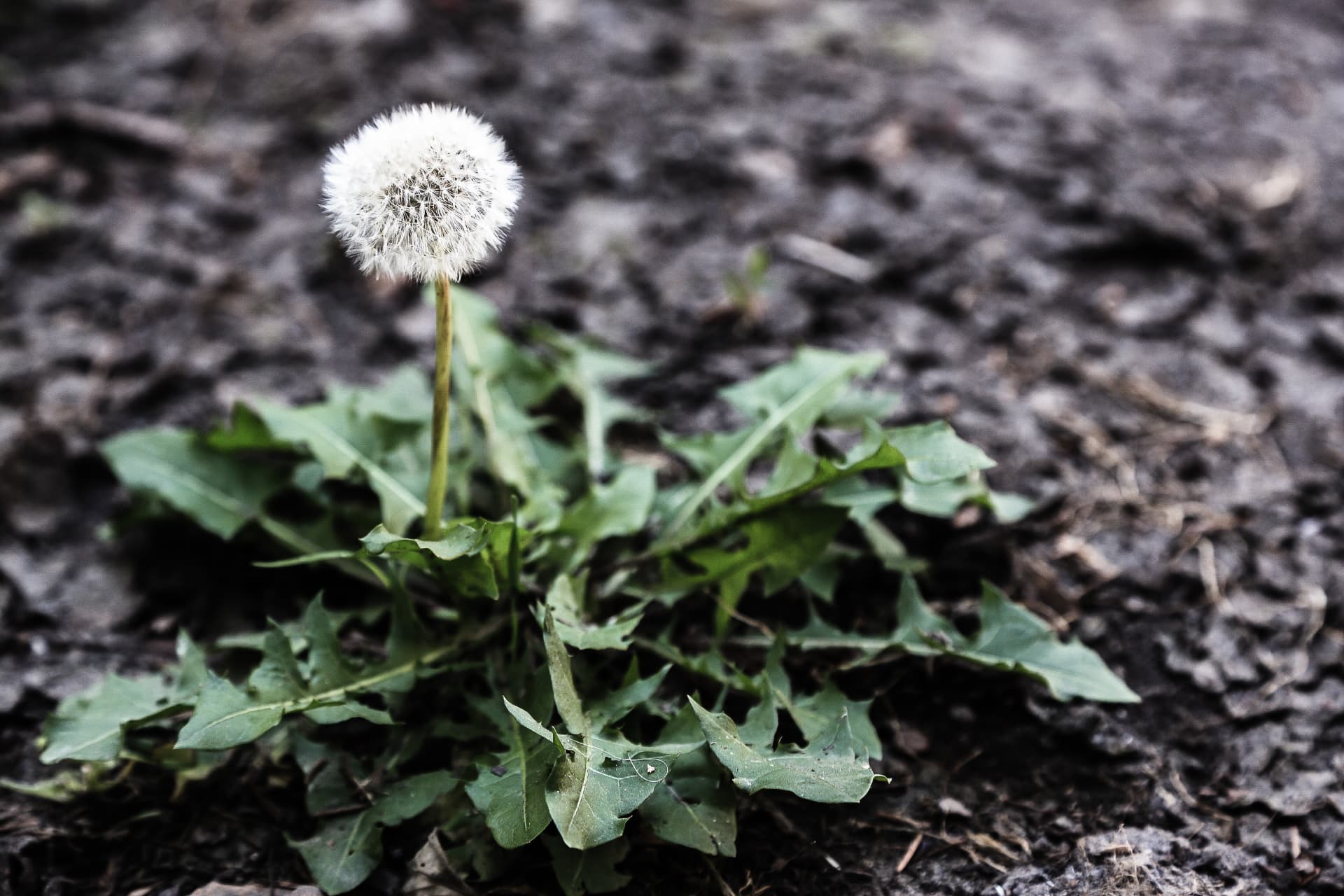
If you're switching to organic gardening in South Florida, I'll tell you right off the bat: you will have weeds in your garden. It's almost guaranteed.
That's because most landscaping keeps weeds down by drenching everything in systemic herbicides, that's weed killer the plant absorbs and carries all the way down to its roots. We don't do that. So the work moves to the front end, and the better you prep, the more success you have.
A casual weed vs. an infestation
There's a big difference between the two. A casual weed is a seed that blew over when your neighbor mowed, or one a bird dropped into your garden. An infestation is what happens when the prep gets skipped, there was already a really bad weed in the ground, and it's allowed to spread. You don't usually see that in mainstream landscaping because they're spraying everything, constantly. In an organic garden, prep is what keeps a casual weed from turning into an infestation.
Step one: know what you're up against
Before anything goes in the ground, I look at your soil, your sunlight, all of it. And I identify the weeds you already have, because that decides the whole plan.
If it's just St. Augustine grass, that's pretty simple. St. Augustine isn't a real threat. It has rhizomes, that means runners that spread underground, so it can come back up. But it's not flowering and reseeding like crazy, and the root system isn't impossible to deal with.
Then there's torpedo grass (Panicum repens) and Wedelia (Sphagneticola trilobata). I'd put both in the top five most invasive garden weeds we have. They'll take over a whole field. Their root systems are insanely tough and insanely deep. I've seen torpedo grass straight up laugh at synthetic herbicide. Even if you dug it out by hand, you probably wouldn't get it all.
So it comes down to two things: prep and mulch. Those are your best friends. And the more mulch, the better.
Strategy one: take it out
The first way is to physically remove what's there. Dig it out by hand, use a sod cutter, or bring in a stump grinder to grind up the yard. It works pretty well.
Here's the honest downside. Ripping everything out also takes organic matter out of your soil, and organic matter and soil microbiology, that's the living community of fungi and bacteria in the dirt, are the most important things in any garden. But there's definitely a time and place for this, because the classic smother method doesn't always work, especially with torpedo grass or Wedelia.
Once it's cleared, I put down natural burlap instead of weed fabric. Some people use cardboard. I don't, because it's not just paper anymore. There's a bunch of chemicals in it. Then you plant into it: cut holes out where your plants go, or plant first and cut the burlap to fit around everything. Mulch goes on top, and there you go.
Strategy two: smother it
The second way is cheaper, and it's a good fit when the weeds aren't as bad. Weed whack your grass and weeds down to the ground. Blow all the debris off. Spray the whole area with an organic herbicide or vinegar, or flame it. Then put your new plants in, lay your burlap down, and if you want, add new organic soil. Mulch goes over all of it.
You're building layers that smother what's underneath. What I love about this way is you're not taking away soil or organic matter. That old grass and those weeds break down and give back to your soil. It's almost like a kickstart for the microbiology.
The caveat: if it's the wrong weed, it can push through the mulch aggressively, and that's when you have a problem.
The first 6 to 12 months decide everything
It doesn't matter if you did every bit of prep or took the shortcut. A weed is going to pop up in your new garden. That's why the first 6 to 12 months are so crucial.
If you let weeds come up through the mulch, flower, and go to seed, you've just spread millions of little seeds on top of your brand new mulch. That's how you get the infestation. Now your whole project is basically ruined, because all you're doing is chasing weeds. But if you put the time in early and stop those weeds before they flower and seed, you will get ahead tremendously. It makes all the difference. Trust me on this one.
This is the tricky part of organic gardening. A traditional mow-blow-and-go crew comes every week and hits everything with systemic herbicide. That's not our approach, so it takes a little more hands-on work.
How I knock weeds down in new mulch
I don't like pulling weeds out of new mulch. Pulling opens up the seed bank, that's all the dormant weed seeds waiting in the soil, and it disturbs the mulch. So in a new garden, I spray instead. A few options:
Vinegar.
Flame. Burning weeds works, but fresh mulch can burn too, so it takes real care.
Organic herbicides. I use OMRI-listed products, that means they're allowed for use in certified organic growing. The one I use is made from caprylic and capric acid, fatty acids extracted from plants and animals. It works really well, and it doesn't pollute the environment.
Why it works: starve the roots
Here's the science. A plant feeds its roots through its leaves, by photosynthesis, that's the plant turning sunlight into food. So even if there are still live roots under your mulch, if they can't push leaves up into the sun, they eventually run out of stored energy. Then they die, break down, and become food for your new plants.
Even St. Augustine needs watching, though. Walk away from a new landscape for three or four months and it'll probably grow right back through.
The long game is in the design
A new garden has a lot of open mulch. But when we plan for it in the design phase, your plants take up that space over time. Five, six years down the road, they're blocking the sun, taking up nutrients, and shading out the ground underneath. That small tree you planted is going to be huge one day, and it'll shade out the garden, which means fewer weeds overall. Your plants end up helping fight your weeds. The early work is about protecting your new garden until they can.
You can do it, or I can
Either way, you need to invest some time and some money at the beginning. You can pay me to come back and handle it through my garden care program, or you can do it yourself and I'll tell you exactly how. Weeds are also a big part of why there's no such thing as a no-maintenance garden.
If you're about to start a new garden, or you're fighting one that got away from you, let's talk. It starts with a consultation.